Solitude


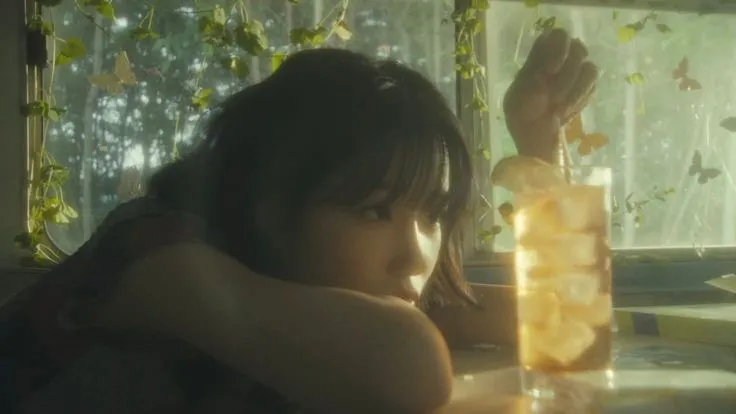
I’ve always loved my solitude.
Coming from an introvert, this probably isn’t surprising. Social interactions leave me drained, and soon after an outing, I’m craving serious alone time to recover from all the sensory overload — the different personalities and energies all flaring up for attention.
What’s interesting is that the peace and quiet of my sanctuary in isolation isn’t what my extroverted friends or family picture. They think when I stay home, leave my phone on airplane mode (because “Do Not Disturb” just doesn’t cut it sometimes), that I must be in some kind of emotional crisis. “Are you okay?” they’ll ask, with genuine, though misplaced, concern. Meanwhile, I’m home having deep conversations with my different personalities (we’re a lively bunch, don’t worry), laughing at inside jokes no one else would get, and dancing to my favorite music like no one is watching — because, spoiler alert, no one is.
The misconception people have about solitude is that it’s inherently negative — that being alone must mean something’s wrong with you, that it’s some kind of emotional deficiency. People think it’s loneliness, when in reality, solitude and loneliness are two very different things.
Loneliness is a negative emotional state that arises from a perceived gap between the social connection one craves and the connection one actually has. It’s subjective — you can be alone and not feel lonely, or be surrounded by people and still feel profoundly isolated.
Solitude, on the other hand, is a choice. It’s the intentional act of being alone, a conscious retreat into seclusion, reflection, and presence with the self. Unlike loneliness, which stems from a feeling of disconnection, solitude is often sought for its clarity, stillness, and dare I say, peace. It’s a conscious shift inward, recognized in psychology as voluntary social withdrawal, offering space for self-awareness to grow.
But somewhere along the way, we forgot there’s a difference. The moment you’re not constantly chatting, posting or replying — people assume something’s wrong. That you’re retreating because you’re sad. That you’ve gone quiet because life must be falling apart. We’ve tied our worth to visibility and presence in the crowd. We’ve made a cocktail out of loneliness and solitude and decided it’s something to avoid at all costs.
It’s easy to see why solitude is feared, though. Being alone forces us to face ourselves — the good, the bad, and everything in between. And that’s not always comfortable. It’s not easy facing oneself with honesty.
The truth is, solitude can feel threatening. It forces us to confront what we’re avoiding. It amplifies the inner voice we usually try to drown out, the one that points out our flaws, our regrets, and our unspoken fears. It’s in solitude that the rawest parts of ourselves rise to the surface — the parts we don’t always know how to handle, let alone accept.
But here’s the thing: If we don’t face those parts, if we don’t make peace with them, how can we ever fully know ourselves? How can we ever build the foundation for true identity and self-acceptance if we’re always running from who we really are?
How Solitude Reveals and Shapes the Self
Socialising is great and fun sometimes, but being constantly surrounded by people is the easiest way to lose yourself. Unintentionally, you start picking up ways of thinking, expressions, even mannerisms that aren’t yours. It’s subtle. Maybe it’s the way your friend group responds to conflict, the slang everyone’s using, the opinions that get the most nods. Every friend group has unofficial job titles. There’s the “let’s do shots” person, the “I brought a first aid kit” person, the “I read a book about this” person. And just like that, you fall into your character — costume optional, self-editing guaranteed.
And maybe it doesn’t feel like a big deal — until you’re left alone long enough to notice how much you’ve started to mimic others. By no means am I against friendship. I love my friends. But there is a time for everything, and being surrounded by constant noise — however well-meaning or fun — can become damaging for self-discovery and identity-building.
This is why solitude matters — it clears the static and brings us face to face with our most authentic selves.
See, when we step away from the gaze, the pressure, and the constant need to explain or impress — when we stop performing — we get the space to see ourselves more clearly. We notice the roles we’ve been playing without thinking: the agreeable one, the cool one, the chill one, the one who doesn’t mind.
Solitude removes the audience. It quiets the background noise. And suddenly, you’re not being anything for anyone — you’re just being. That’s where the magic happens. When you’re no longer editing yourself in real time or calculating reactions, you begin to notice what you actually think, feel and want. You meet yourself — not the socialised version, but the real one underneath all that conditioning.
In that space, we begin to ask the important questions: What do I actually like? Not what’s trending, not what’s popular — what genuinely makes me feel alive? In solitude, we find the space to discover our true preferences, our values, free from the pressure of everyone else’s opinions.
We also face what hurts us. Without distractions, the wounds we’ve been numbing or pushing aside begin to surface. It’s uncomfortable, sure, but it’s necessary. Because healing can’t happen until we see the wounds in the first place.
And then there’s the longing — the deep, unspoken desires that we often bury under the weight of social expectations. What do I really want, not what I think I should want? In solitude, the masks fall away and we begin to confront the truth about what we truly long for, even if it doesn’t fit neatly into the boxes society hands us.
When solitude is intentional, it doesn’t isolate you. It reconnects you to your inner world and helps everything make sense again. It’s the process of synthesizing the parts of yourself that you’ve fragmented or ignored. When you’re alone with yourself, you’re given the opportunity to reconcile the different versions of you — the person you were, the person you are, and the person you could become.
And once you’ve experienced the clarity that solitude offers, you start to become more selective about what — and who — you allow into your space. That’s when you notice how often people fill their time with noise, not connection.
Frankly, a lot of people aren’t intentional about who they give their time to. I’ve seen way too many people choose the company of folks they can’t stand — and I don’t mean mild irritation; I mean full-on detest — just to avoid being alone. Can you believe that? Personally, I don’t make it a habit to hate or dislike people, but if I find you disagreeable, I am not volunteering my valuable time to sit in your presence. Why would I? Time is precious. Peace is sacred. And honestly, silence is better than shallow conversation with someone I have to spiritually squint to tolerate.
Using Solitude for Self-Discovery
To truly harness the power of solitude, it must become a conscious practice. Don’t wait for life to push you into isolation — carve out intentional moments for yourself. Time alone isn’t something to feel guilty about; it’s something to cherish.
Start by creating space in your routine for solitude — a quiet haven where you can sit with yourself and explore the depths of your mind. It doesn’t need to be grand or ritualistic. Just a few minutes here and there, moments where you’re fully present without distraction, are enough.
Get Ivy Bealtaine’s stories in your inbox
Join Medium for free to get updates from this writer.
Begin simply. Maybe it’s a quiet morning with coffee, phone out of sight, disconnected from the world. Or after a chaotic week, you find a pocket of stillness — your room or a nature trail — anywhere that allows your mind to breathe. The goal is to build a habit that feels nourishing and natural. You don’t need a retreat in the mountains or a vow of silence (unless that’s your thing). Sometimes, the smallest acts of solitude spark the greatest revelations.
In these moments, let yourself ask the questions you’ve been avoiding.
What have I been ignoring in myself?
What dreams have I silenced because they seemed impractical?
What parts of me remain unexamined?
Don’t rush the answers. Let the questions linger. In stillness, when the external noise fades, the truth tends to surface. Trust that even the uncomfortable, contradictory thoughts are guiding you toward something essential.
Try journaling. Let the words flow without judgment or expectation. Begin with a question like, What’s been on my mind lately? and see where it takes you. Don’t censor yourself — let the words be messy and honest. Later, if it feels right, return to them and reflect. But in the moment, let the writing be for you. Just you.
Another practice: mindful meditation. Not the rigid, performance-driven kind — but a soft, open awareness. Sit with your thoughts. Watch them drift by like clouds. What keeps resurfacing? What emotions are you avoiding? Solitude gives your mind a rare space to show you its patterns — things easily missed in the hustle of daily life. Clarity won’t come immediately. But over time, you’ll notice what shapes your inner world — what shapes you.
A lot of people fear solitude because, in the silence, the wounds caused by trauma become glaringly apparent. Life doesn’t come without its complications, its challenges, and it’s deep scars. Trauma takes many forms, and healing looks different for everyone. You’ve probably heard it all before — the standard advice on how to heal or grieve. Go for therapy. Journal. Practice mindfulness. Meditate. Take walks in nature. Disconnect from the noise.
These solutions might feel cliché in a world where mental health advice is handed out like slogans on social media. But here’s the truth: these methods work. Healing doesn’t happen when you’re drowning in distractions. You can’t just scroll past your pain or keep it buried behind a mask of constant activity. Healing requires presence — sitting with yourself and facing the things you’ve been running from.
The silence, uncomfortable as it may be, is where the real work begins. Not in noise. Not in distraction. But in that stillness where you’re finally forced to listen.
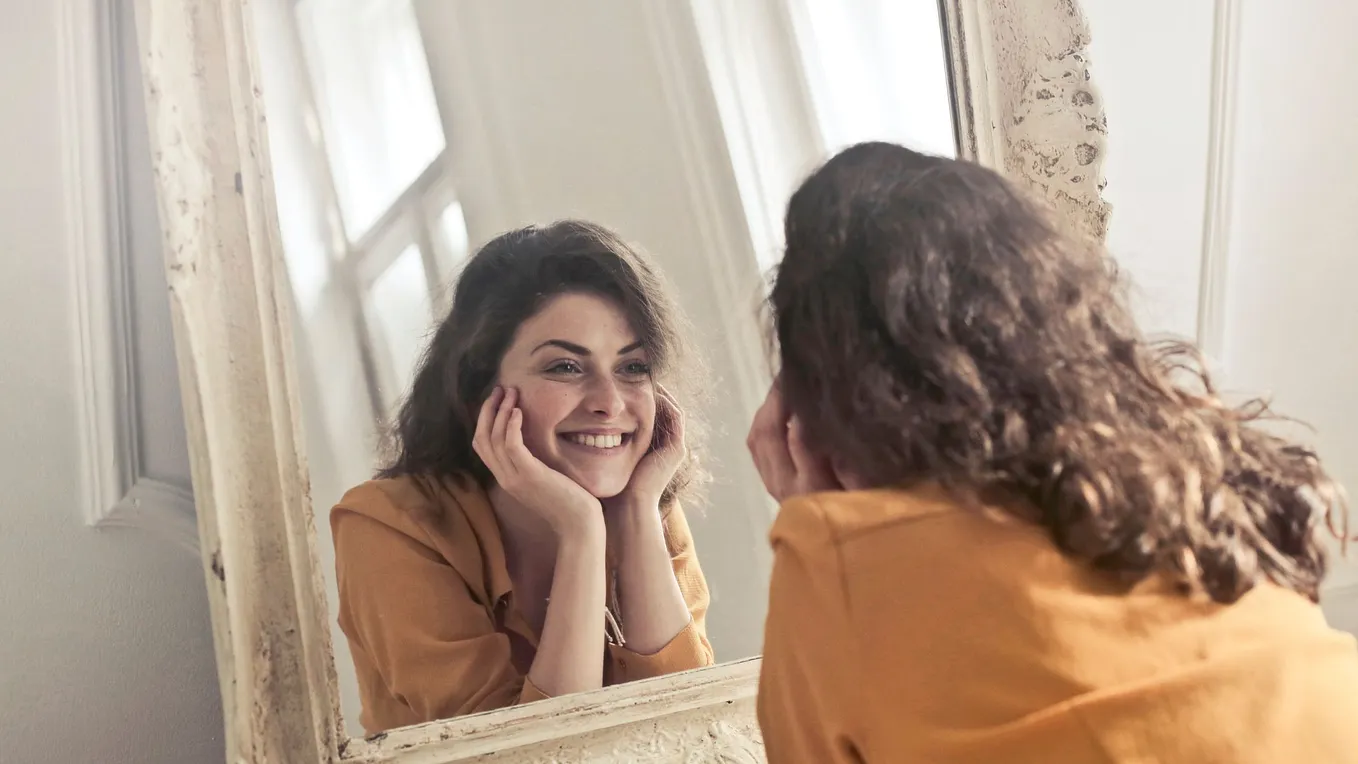
Try true silence — no music, no podcast, no background noise. Just you. At first, it might feel heavy. But sit with it long enough, and it shifts. That discomfort transforms into something sacred: a space where your dreams, your memories, your identity can rise to the surface, unfiltered. Silence is a mirror. It reflects who you are when no one’s watching.
And most of all, don’t pressure yourself to fix everything or have yourself figured out all at once. The path to knowing yourself and healing isn’t rushed — it unfolds as you stay present. Sometimes the most powerful moments come from simply sitting with what you’ve uncovered. Solitude offers a rare chance to meet yourself with honesty and depth.
For me, art — or art therapy — has been one of the most powerful ways to process emotions that might arise in solitude and, most importantly, to define and heal myself. There’s something sacred about creating — whether through painting, sculpting, dancing, or writing — especially in solitude. The more I create, the more I move the emotions through my body. The more I let them exist outside of me, the more I begin to heal and discover myself.
There are moments in life that make you feel voiceless — like you’ve been muted by circumstance, or like language simply can’t hold the weight of what you’re carrying. In those moments, I write. I let the words fall onto paper, not as confessions, although that could work. But I write characters. Characters who feel what I feel. Who carry the burdens I can’t speak aloud. In their world, they find closure, justice, and healing. And somehow, that becomes enough. Or at least — a beginning.
If writing doesn’t quite clear the pain, I move. Sometimes yoga. There’s something deeply spiritual about stretching through tension, holding discomfort, and breathing through it. You’ve probably heard this a thousand times, but maybe it’s repeated for a reason — because it works. And if the emotions are too loud, too jagged for gentle movement, I shift into something more intense — HIIT workouts, dance cardio. I pour the grief and soul exhaustion into every drop of sweat. And even if the pain that brought me there hasn’t disappeared by the end, my body feels strong. My mind clears. That post-cardio stillness? Unmatched.
But one of the most sacred ways I’ve healed through art therapy is by turning pain into beauty. I know art therapy isn’t supposed to be about how something looks — but when life hands you sorrow, why not alchemize it? I climb into the silks — freedom suspended in the air. Think of it as gravity’s poetry. I wrap myself in motion, stretch into shapes that feel like truth, and let Lana Del Rey score the unraveling. And for those moments, I’m weightless. I’m flying. I’m somewhere between pain and beauty. A space that belongs only to me, untouched by the noise of the world. A moment of beauty born from hurt.
This is the heart of it: solitude gives you the space to listen, to feel, and to create without performance and to become. In that space, art is more than just healing — it becomes identity reconstruction. Every word, stretch, dance move or brushstroke is you meeting yourself again. The self formed in freedom. The one rising from the ashes of pain, piece by piece, into something truer.
The writers, mystics, and creators who’ve embraced solitude as a tool for self-discovery have found that it’s not just a time of reflection but also of alchemy. Take Virginia Woolf, who believed that every woman needed a room of her own to truly write and create. For her, solitude was a sanctuary where the mind could stretch and grow without limitation.
Thoreau, a transcendentalist philosopher and writer, would retreat into solitude to understand society better — from the stillness of Walden Pond, he observed life more clearly, using nature as a mirror to explore his own mind and the human condition.
These were writers, yes — but what they discovered through solitude isn’t limited to artists or philosophers. Their method — stepping back from the noise to listen inward — remains one of the most profound and accessible tools for self-discovery available to anyone willing to be still.
It’s long been part of spiritual traditions that treat silence as a vital path to clarity.
Monastic silence, for example, has been practiced for centuries across Christian and Buddhist communities. In monasteries and spiritual retreats, silence isn’t seen as a void but as a way of tuning out the noise of the world in order to hear what lies beneath it — the truths we rarely notice until everything else falls quiet.
Connection, Clarity and self discovery
As we lean into solitude, we may begin to notice a strange paradox: the more time we spend in quiet reflection, the more connected we become. Solitude, in its purest form, doesn’t pull us away from life — it deepens our relationship with it. It allows us to meet ourselves without distraction, to sift through the noise and find what is real.
In stillness, we stop performing and start simply being. We discover what matters to us — our values, our desires and our voice. That clarity becomes a compass. It allows us to return to the world recharged and realigned. It’s like coming home to yourself, and from that home, you’re free to reach out again — to love, to speak and share from truth.
Solitude cultivates a rare kind of self-trust. It teaches you to listen to your own intuition without constantly looking outward for direction. You begin to ask, What do I want? — not waiting for anyone to answer but yourself. In that space, resilience is born. Confidence takes root not in noise, but in knowing.
There is also something sacred in solitude — a kind of spiritual clarity that can emerge when we pause long enough to hear it. Whether it’s nature, the universe, or something unnamed, solitude opens a doorway to a connection that’s both intimate and expansive.
And here’s the truth: you don’t have to be an introvert to seek solitude, nor does solitude mean you’ll live alone in a cabin forever. Extrovert or introvert, artist or analyst — we all need time away to truly come home to ourselves. This isn’t about withdrawing forever, it’s about stepping back long enough to meet yourself — to shape who you are with intention.
Because once you know yourself, once you’ve sat in your own silence and learned what it means to belong to yourself — then you can return. Fully, joyfully, powerfully. To speak, to create, to connect. And this time, not to be seen — but to be known.
Solitude isn’t a retreat from life. It’s a return to self. And from there, everything begins.