Why Steel Mills Lose Millions to Positioning Errors — And How Modern Encoders Prevent It


In a steel mill, a positioning error of just a few millimeters can trigger a chain reaction of costly consequences.
A slab enters a rolling mill slightly off position. The rollers compensate imperfectly. Material thickness varies. Quality defects increase. Scrap rates rise. Production slows. Delivery schedules slip.
What appears to be a minor control issue can quietly cost steel manufacturers millions of dollars annually. The business impact of equipment reliability is substantial. Deloitte estimates that industrial manufacturers lose approximately $50 billion every year due to unplanned downtime, much of it caused by equipment failures that could be detected or prevented earlier.
As steel producers face mounting pressure to improve efficiency, reduce waste, and maintain consistent product quality, precise motion control has become a business-critical capability. This is why the role of encoders in metal industry applications is receiving renewed attention from operations leaders and plant managers.
Why Are Positioning Errors So Expensive in Steel Manufacturing?
Steel production is built around precision.
From rolling mills and cut-to-length lines to cranes, coilers, and material handling systems, every movement must occur at exactly the right position and speed.
When positioning accuracy degrades, manufacturers may experience:
- Increased scrap and rework
- Product quality deviations
- Equipment wear and damage
- Unplanned downtime
- Safety risks for personnel
- Missed delivery commitments
The financial impact adds up quickly.
According to the World Steel Association, steel manufacturers operate in an industry where margins are often under constant pressure, making even small efficiency losses significant at scale. In high-volume facilities, minor positioning errors repeated thousands of times per day can translate into substantial operational losses.
What Causes Positioning Errors in Steel Mills?
Many positioning problems develop gradually rather than appearing suddenly.
Common causes include:
- Encoder degradation over time
- Harsh environmental conditions
- Poor or failed cabling
- Mechanical vibration and shock
- Dust, scale, moisture, and contaminants
- Signal interference
- Aging motion control infrastructure
Steel mills represent some of the harshest operating environments in manufacturing. Extreme temperatures, heavy loads, and continuous operation can challenge even robust automation systems.
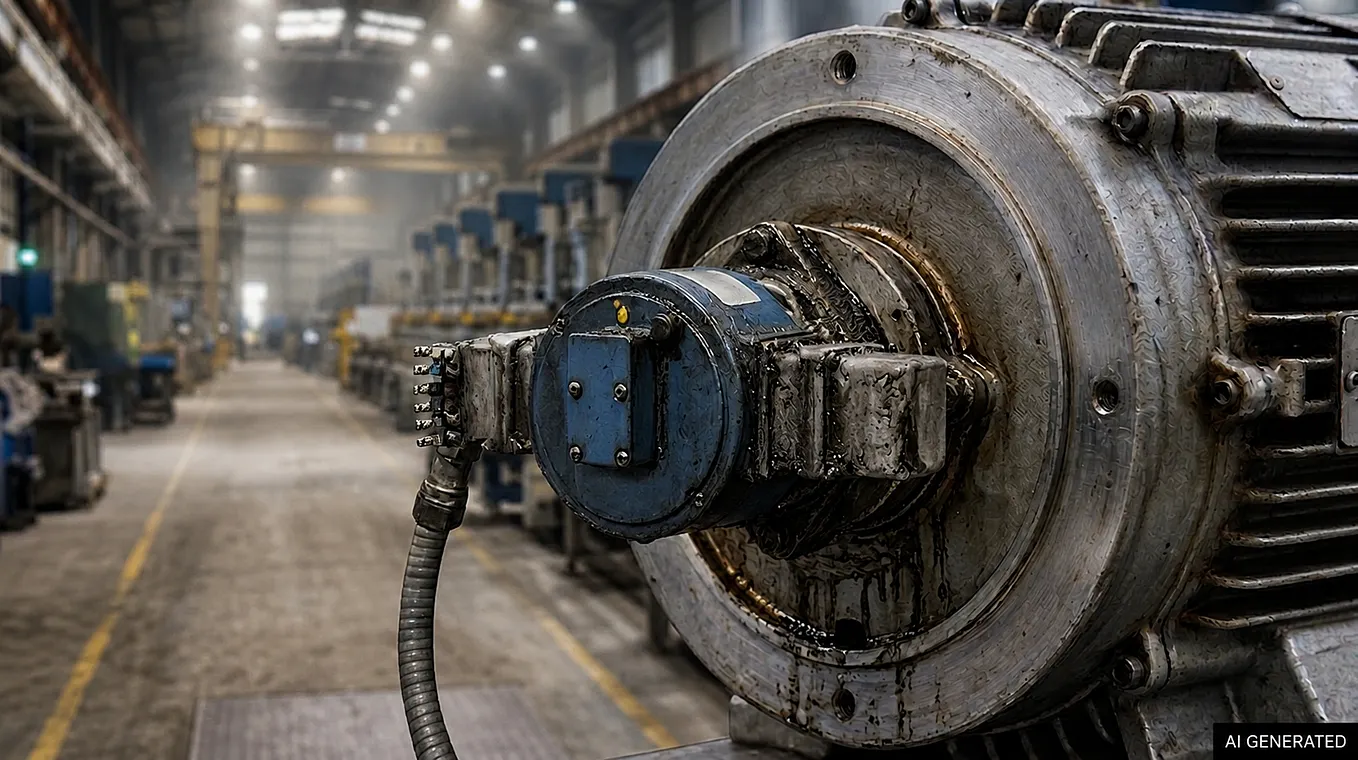
This is why reliable encoders in metal industry applications are essential for maintaining long-term positioning accuracy.
How Do Modern Encoders Prevent Costly Errors?
Modern industrial encoders provide highly accurate real-time feedback on position, speed, and movement.
This feedback enables control systems to make immediate corrections, ensuring that critical equipment operates within precise tolerances.
Predictive maintenance technologies built on accurate machine data deliver measurable operational benefits. Deloitte reports that manufacturers using predictive maintenance experience 53% less unplanned downtime, 79% fewer defects, and 49% lower lost sales compared with reactive maintenance strategies. Accurate encoder feedback is one of the critical data sources that enables these improvements.
Advanced encoders in metal industry environments help manufacturers:
Improve Product Quality
Accurate positioning ensures consistent thickness, dimensions, and material handling throughout production.
The result is lower scrap rates and fewer quality-related customer complaints.
Reduce Equipment Stress
When machinery operates with precise motion control, unnecessary strain on motors, drives, bearings, and mechanical systems is reduced.
This helps extend equipment life and lowers maintenance costs.
Minimize Downtime
Get Alejandro Casso’s stories in your inbox
Join Medium for free to get updates from this writer.
Positioning errors often contribute to jams, misfeeds, and production interruptions.
Reliable encoder feedback allows operators to detect deviations early, helping prevent costly downtime events.
Built-in encoder diagnostics allow operators to detect problems before they cause product scrap or downtime. Encoders can be serviced or replaced during scheduled outages, instead of creating downtime.
Can Encoders Improve Operational Efficiency?
Absolutely.
Modern steel facilities increasingly use motion data to drive performance improvements across their operations.
High-performance encoders in metal industry applications support:
- Better Overall Equipment Effectiveness (OEE)
- Higher throughput
- Reduced scrap generation
- Improved process consistency
- More predictable production schedules
For decision-makers focused on profitability, these gains often deliver a measurable return on investment.
How Do Encoders Support Safety and Risk Mitigation?
Positioning errors are not only expensive, they can also create serious safety concerns.
Safety and operational precision go hand in hand. According to the World Steel Association’s 2025 Safety and Health Report, member companies achieved a Lost Time Injury Frequency Rate (LTIFR) of 0.70, the lowest level ever recorded, highlighting the industry’s continued investment in technologies that improve operational control and reduce risk.
Many mills and metals processing operations are upgrading their lines to SIL 2 or even SIL 3 functional safety standards.
Steel mills rely on precise and safe control of:
- Overhead cranes
- Material transfer systems
- Rolling equipment
- Automated handling systems
Inaccurate positioning can increase the risk of collisions, equipment damage, and hazardous operating conditions.
Modern encoders in metal industry applications provide the accurate motion feedback required to support safer operations and maintain production continuity.
Should Steel Mills Upgrade Legacy Encoder Systems?
Many manufacturers continue to operate equipment that was installed decades ago.
While legacy systems may still function, they often lack the precision, reliability, and diagnostic capabilities of modern encoder technology.
Upgrading critical positioning systems can help manufacturers:
- Reduce operational risk to operators and equipment
- Improve product quality
- Lower maintenance costs
- Increase uptime
- Support digital transformation initiatives
In many cases, targeted upgrades deliver significant benefits without requiring major equipment replacement projects. Encoders can be replaced without replacing the legacy PLC, drive or DCS systems. Even old analog tachogenerators can be easily replaced with modern encoder technology. Cabling can often be replaced without significant mill downtime.
Investment trends also support modernization. Deloitte’s 2025 survey found that 78% of manufacturers allocate more than 20% of their improvement budgets to smart manufacturing initiatives, while 88% expect those investments to continue or increase over the next fiscal year.
The Cost of Inaction
Positioning errors rarely make headlines in a plant’s performance report.
Instead, they appear as rising maintenance costs, increasing scrap rates, declining productivity, and missed delivery targets.
Over time, these losses compound.
The cost of safety can overshadow all other operational costs. A stray ladle crane can destroy walls within a mill putting lives at risk! A single cobble can damage equipment and cause huge harm to operators and maintenance teams.
For steel manufacturers seeking to improve profitability and operational resilience, investing in advanced encoders in metal industry applications is not simply a technical upgrade, it is a strategic business decision.
The mills that achieve the highest levels of efficiency and safety tomorrow will be the ones that ensure precision today.