Saving Stellantis — Step 5: Reboot Alfa Romeo, Abarth and Lancia (and Dodge, Chrysler, Plymouth, Jaguar?)

This last article further expands the “Saving Stellantis” series, which describes the steps the author would expect to see, in order for the company to successfully relaunch and revamp its 14 brands. It thus builds on top of what has been discussed in prior articles. The following piece is hence set in the scenario in which former PSA brands have been spun off and Fiat has been merged with Tata Motors. Moreover, the scenario in which, at the very least, Jeep, RAM (and possibly Land Rover) have been spun off too is considered, due to the fact that sharing platforms and parts between sports cars (such as those from Alfa Romeo) and pickup trucks (such as RAMs) would be illogical and go against what some would define as “common sense”.
Under the FCA (former) and the Stellantis (latter) tenancies, Alfa Romeo and Lancia have lost their pride and seriousness and are now perceived by the many as flippant brands. Moreover, Chrysler and Dodge have also been neglected and mismanaged. Jaguar’s situation under their parent company Tata Motors is also no different at this point. Needless to say, investments in R&D and marketing are needed, as well as more attention devoted to shaping reasonable vehicle lineups.

From the author’s perspective, for brands such as Alfa Romeo, Abarth and Lancia (and possibly Dodge, Chrysler, Plymouth and Jaguar), the most suitable platform to use would be the acclaimed “Giorgio” (found on Alfa Romeo Giulia and Stelvio). Specifically, the Giorgio 1.5 platform (that of the Maserati GranTurismo) could be deployed as-is in the short term and could be improved and enhanced over the years. For instance, redesigning the platform to support a 48V electrical architecture (with a unified ECU) as well as the giga-casting manufacturing technology (assuming a fully aluminum-made construction) would ensure less parts and lower manufacturing times in the long term. Also…it would behoove the customer’s driving experience, as it would lead to lighter and better-handling vehicles, all other variables kept equal. This platform would underpin two types of vehicles:
- Rear-wheel-drive or all-wheel-drive (“Q4”) sports cars, sedans, estates, coupes, spiders and hatchbacks with a manual transmission and a manual handbrake. Such vehicles would be offered with an analog gauge cluster in place of a digital one.
- Rear-wheel-drive or all-wheel-drive (“Q4”), plug-in hybrid sports cars, sedans, estates, coupes, spiders, hatchbacks and crossovers with an automatic transmission and an electronic handbrake. A 5 to 7 kWh battery would be placed under the passenger’s seat to power the electric motor located inside the transmission. There would also be the option to drive in fully-electric mode at speeds lower than 60 km/h.
Q4 AWD vehicles should have the ability to switch to RWD mode on demand.

The first of the available engine options would be a diesel JTD inline-4. This engine would represent the only entry-level option and it would not be available in the North-American market. Such diesel engine would be any of these two:
- 1.6L I4 naturally-aspirated (or turbo) developing 100 kW (about 136 hp);
- 2.2L I4 available as naturally-aspirated outputting 100 kW (roughly 136 hp) or as turbo-charged developing 150 kW (approximately 200 hp).
The second engine option could be the “Nettuno” 90° 3.0L V6. However, this engine would only make sense in the scenario in which Lancia, Alfa Romeo, Abarth (and possibly Jaguar) are part of the same family, without any of the American brands. Indeed, the V6 does not bear the prestige typically associated with V8 engines, which are necessary for developing a cogent brand image, especially in markets such as the USA. This engine could be offered in a twin-turbo fashion outputting 500 kW (670 hp, dry sump) or 400 kW (540 hp, wet sump). There could also be a supercharged version developing 300 kW (400 hp, wet sump) and, finally, a naturally-aspirated version producing 200 kW (270 hp, wet sump), which would be a welcomed bridge between the high-output twin-turbo variants and the entry-level diesel options.
Get Carter’s stories in your inbox
Join Medium for free to get updates from this writer.
The second engine option, as an alternative to the Nettuno V6, could be a V8 option. A V8 would be suitable for building a strong brand image in profitable markets such as the North-American one and would enable a fair competition with the German brands. A V8 option would also make sense in case the Chrysler, Dodge and Plymouth brands were folded into the same Alfa Romeo-Lancia family. Moreover, a Dodge, Chrysler or Plymouth with a V6 would also contrast with the aforementioned “common sense”. This engine could also be shared with the MOPAR brands of Jeep, RAM (and possibly Land Rover). The author believes there are only two viable V8 alternatives:
- Nettuno-derived 90° 4.0L V8: this engine would “add back” the two missing cylinders that were removed from the Ferrari F154 engine, which is the Nettuno’s starting canvas. This option would be suitable in case a high-power and more modern V8 is wished. For instance this V8 could be offered in a twin-turbo fashion developing north of 600 kW (approximately 800 hp). However, recreating the V8 out of a V6 would probably take a while and is thus not the best “short-term” option. Moreover, this option would likely suffer from “youth” problems, since it would be a novel engine, and not a tried and tested one. It could possibly be more expensive to produce.
- Ferrari-derived 90° 3.8L V8: another option would be to adapt the Ferrari V8 previously found in the Maserati Ghibli/Levante. Specifically, a naturally-aspirated version producing 250 kW (340 hp) and a supercharged version producing 350 kW (470 hp) could be envisaged. Indeed, this option would probably enable a quicker development and would provide customers with an engine that has been manufactured for many years, meaning that more countermeasures could be taken to ensure reliability. This option would thus be the go-to, in case speed and reliability were prioritized over power figures.
No matter what, power figures higher than those mentioned for each option should be attainable by checking the “Direct Connection” booklet. Said booklet might include suggestions for extracting more power or preserving the engine’s longevity.

The Giorgio platform could be slated into two tiers. Indeed, the author believes that creating too many overlapping vehicles would result in a messy and complicated lineup (just like those of the German brands, each of which, in all fairness, move millions of units per year). For each brand there should be at most: one sedan, one large crossover, one compact crossover, one estate, one compact (front-engined) sports car, one hatchback, one spider gran-tourer and one coupé gran-tourer. Specifically, there could be vehicles of 4.30 meters (with a 2.70-m wheelbase) and 4.80 meters (with a 2.90-m wheelbase) in length such as:
- (8) Alfa Romeo: “Duetto” 4.30-m two-seater spider with Lotus-like hard top, “Giulietta” 4.30-m hatchback, “Romeo” 4.30-m crossover, “Giulia” 4.80-m sedan, “Giulia” 4.80-m estate/station wagon, “Stelvio” 4.80-m full-size crossover, “Brera” 4.80-m gran-tourer and “Brera” 4.80-m spider. Alfa Romeo would feature a very sensual and rounded design, similar to the one showcased on the limited-run “33 Stradale”.
- (8) Lancia: “Beta” 4.30-m two-seater spider with Lotus-like hard top, “Delta” 4.30-m hatchback, “Musa” 4.30-m crossover, “Flavia” 4.80-m sedan, “Flavia” 4.80-m estate/station wagon, “Gamma” 4.80-m full-size crossover, “Aurelia” 4.80-m gran-tourer and “Aurelia” 4.80-m spider. Lancia would feature a retro-looking and squared-off design, similar to that of the original Lancia Delta HF and of the last-generation Dodge Challenger.
- (8) Jaguar: “G-Type” 4.30-m two-seater spider with Lotus-like hard top, “H-Type” 4.30-m hatchback, “H-Pace” 4.30-m crossover, “S-Type” 4.80-m sedan, “S-Type” 4.80-m estate/station wagon, “S-Pace” 4.80-m full-size crossover, “R-Type” 4.80-m gran-tourer and “R-Type” 4.80-m spider. Jaguar would adopt a design similar to that of the currently-sold Maserati GranTurismo, which is in itself very Jaguar-esque.
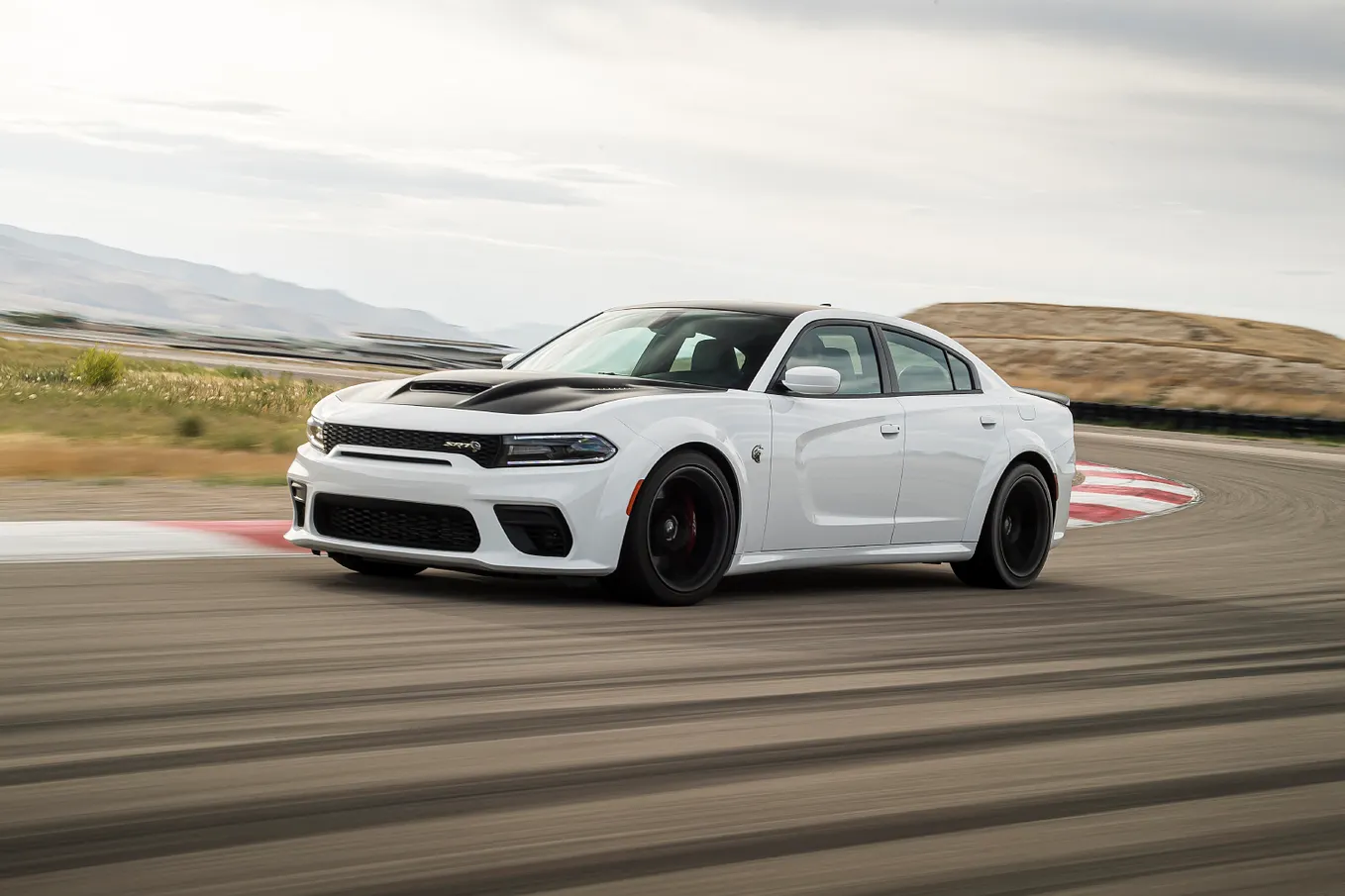
- (5) Dodge: “Viper” 4.30-m two-seater spider with Lotus-like hard top, “Magnum” 4.80-m sedan, “Magnum” 4.80-m estate/station wagon, “Challenger” 4.80-m gran-tourer and “Challenger” 4.80-m spider. Other than the Dodge Viper, all other Dodge vehicles listed here would be slightly redesigned versions of the comparable vehicles sold under Alfa Romeo, albeit with lesser interiors. In addition to these US-exclusive vehicles, Dodge could also sell the vehicles based on the Jeep-RAM platform mentioned in the previous article.
- (4) Chrysler: “300” 4.80-m sedan, “300” 4.80-m estate/station wagon, “Imperial” 4.80-m gran-tourer and “Imperial” 4.80-m spider. Other than the vehicles built on the Jeep-RAM platform (also mentioned in the previous article of this series), these vehicles would be rebadged, albeit slightly redesigned, editions of the comparable Jaguar models. They would also be available in the US only and would feature lower-quality interiors compared to those found on the Jaguar models.
- (4) Plymouth: “Road Runner” 4.80-m sedan, “Road Runner” 4.80-m estate/station wagon, “Barracuda” 4.80-m gran-tourer and “Barracuda” 4.80-m spider. These vehicles would be rebadged, redesigned and lower-quality models of the respective Lancia cars and would be exclusive to the USA.


Dodge, Chrysler and Plymouth vehicles would be officially available for sale only in the USA and Canada, but they should be eligible for shipping (with additional fees) globally. They would feature lesser interior designs developed by MOPAR to resemble those found in Jeep and RAM models. They would thus feature automatic transmissions only (and hence a virtual-AWD setup) and digital gauge clusters. They may offer the possibility to execute 4-wheel burnouts, whereby the rear wheels spin forward, whereas the front ones spin backwards. Ultimately, the author would imagine that Dodge, Chrysler and Plymouth are still co-owned by “MOPAR”, i.e. by the owner of Jeep and RAM (and possibly Land Rover).
In exchange for the synergies with MOPAR, Alfa Romeo, Lancia (and possibly Jaguar) might develop US-only SUVs on MOPAR’s body-on-frame platform. However, sales of such vehicles outside of the North-American market are rather scarce. Moreover, the presence of 4.80-m vehicles could (at least in part) cover that gap. Thus this synergy seems rather unrealistic.
Nonetheless, the alternative scenario in which Dodge, Chrysler and Plymouth develop (muscle) cars on top of the body-on-frame platform is also not to exclude.
Furthermore, in case Jaguar and Land Rover were not part of these Stellantis-related operations, then Alfa Romeo and Lancia vehicles would be sold as slightly redesigned under Dodge and Plymouth respectively and Chrysler would stick to marketing higher-end Jeep SUVs.
Moreover, Abarth could focus on selling limited-run and special versions of Alfa-Romeo and Lancia vehicles. Namely, more track-focused and lighter versions of the standard vehicles accomplished by using greater amounts of premium materials such as carbon fibre.
From the marketing perspective, Lancia would be expected to return to the World Rally Championship (WRC) and to the Dakar competition, whereas Alfa Romeo would be expected to join the Formula 1 and Le Mans competitions.
As far as the author is concerned, the most realistic and likely scenario is that of seeing Lancia, Abarth and Alfa Romeo together and on their own. Thus, in this case, there would be no collaboration with the MOPAR brands whatsoever, whose vehicles would be fully built on the Wrangler-Gladiator BOF platform. Due to them being already-used and already-homologated, the 1.6 diesel I4 and 3.0L V6 Nettuno engines are indeed the most likely powertrains expected for the Lancia, Alfa Romeo and Abarth models.
In conclusion, the last (and possibly most important) step in saving Stellantis is that of giving Alfa Romeo and Lancia the attention they need and deserve. In this way, both brands could rise to the global stage and compete in the evergreen mainstream-luxury segment with an Italian twist.
Sources: YouTube, Alfa Romeo, Stellantis, FiatGroupWorld.