My Dead Girlfriend(Shinda Boku no Kanojo): The Amateur Band That Predates the Word “Shoegaze” It Gets Filed Under


死んだ僕の彼女 (Shinda Boku no Kanojo, internationally known as My Dead Girlfriend) is routinely filed under “Japanese shoegaze” whenever the genre comes up — but the timeline doesn’t actually support that label the way it gets used. The band formed in July 2005. At that point, “Japanese shoegaze” was not yet in common use as a scene descriptor in either Japanese or English-language music writing, and the word “Haze Pop” obviously didn’t exist at all. Whatever this band was doing in a rehearsal space in Saitama in 2005, it wasn’t an attempt to join a named genre — the name came later, applied backward by people trying to describe a sound after the fact.
This entry treats My Dead Girlfriend as a Haze Pop act for the same reason it treats other bands that way: because that’s the shorthand critics and retailers reach for, not because the band ever set out to make “shoegaze,” Japanese or otherwise.
Formation and History
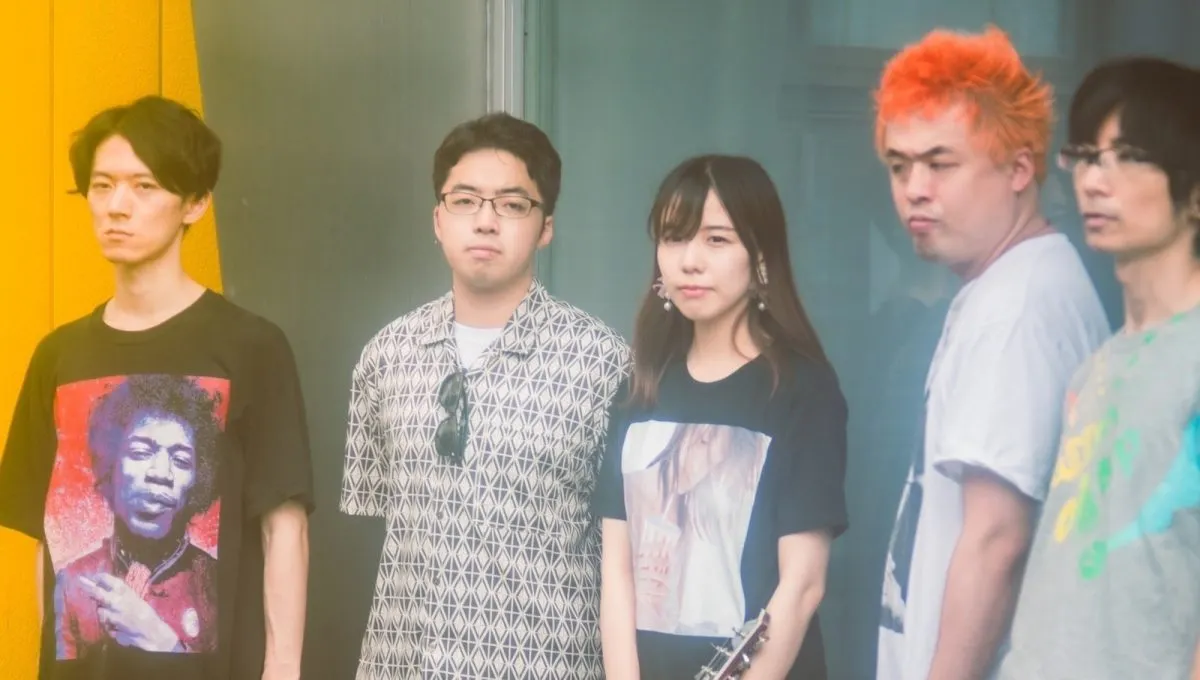
My Dead Girlfriend formed in July 2005 in Hiki District, Saitama Prefecture, built around university students Yuki Ishikawa (vocals/guitar) and Yuki Otsuka (bass), who were quickly joined by Takashi Shimano (drums), Megumi Ideta (vocals/synthesizer), and Fumiaki Arakawa (guitar) to form the band’s first lineup. Their first show was at Higashi-Koenji’s LA CLUB, where roughly ten people were in the room — likely a multi-band booking show, so there’s no reason to assume all ten were there specifically for them. Arakawa left in early 2006 and was replaced by Akihiro Kinoshita on guitar.
The band’s earliest catalogued release is 2songs+cassette tape/6songs from Happy Valley, self-released on July 25, 2007 under catalog number NGN-0003 — the first release on what would become the band’s own label. In 2008 — three years after forming — they contributed to Total Feedback, a compilation tied to a recurring live event of the same name hosted by Yūsuke Hata of Cruyff in the Bedroom, which put them alongside other Japanese guitar-noise bands of the period for the first time; the same year, they released a split, Sweet Days and Her Last Kiss, with Shojoskip (少女スキップ).

The band’s breakthrough release was ixtab, a debut mini-album put out on March 10, 2010, which brought them wider attention on Bandcamp and at shows and remains the release most fans point to first, home to still-played live staples like “Watashi no Aishita Manatsu no Shinigami” and “My Piggish Girl Died Miserably.” Underdrawing for Three Forms of Unhappiness at the State of Existence followed in 2012. Around this period the band’s lineup stabilized after several changes, including the departure of founding bassist Otsuka, who later passed away. Their most acclaimed full-length, Hades (The Nine Stages of Change at the Deceased Remains), came out on June 3, 2015, and is widely regarded as the band’s definitive statement. In the summer of 2017, shortly after its tenth anniversary, the band announced an indefinite halt to regular activity. They’ve stayed intermittently active since: a CD titled Shaman’s Daughter appeared in November 2020 (with a limited-edition LP following in December 2021), tied to the 2022 film シャーマンの娘 (Shaman’s Daughter), for which the band contributed music. In March 2025, ixtab was reissued on CD and LP through gendan records — a new imprint launched by the Harajuku select shop Yomukikunomu — remastered by Shoukichi Ishida; the “shoegaze” framing was pushed hard in that reissue’s own promotional copy, for the label’s own marketing reasons — and, ironically, that push likely does the band a disservice, burying what actually makes them shine as a piece of Japanese-language rock songwriting under a genre tag that isn’t quite the right fit. The band has kept playing live into 2026, including a China tour date in Guangzhou in July 2025 and Tokyo-area shows into early 2026.
Every one of these releases has come out through n_ingen RECORD (also seen as Natural Hi-Tech Records/ningen record on earlier catalog numbers) — a label that is, plainly, the band’s own self-run imprint for putting its own music out, not an outside company that signed them. That status is visible in the catalog numbers themselves: because n_ingen RECORD has never operated as a registered label issuing its own consistent product codes, the numbers attached to releases vary from retailer to retailer, assigned instead by whichever distributor or manufacturer happened to handle physical production at the time. A properly incorporated label wouldn’t produce that kind of inconsistency; here, it’s simply what self-releasing for two decades looks like. My Dead Girlfriend has never had a major-label release; this is, by design, an amateur project in the literal sense of the word — made by people doing it for its own sake, on their own label, for over two decades.
Get Eric’s stories in your inbox
Join Medium for free to get updates from this writer.
Sound & Style
It’s easy to see why the shoegaze tag sticks: My Dead Girlfriend plays heavily distorted, fuzzed-out guitar chords, wrapped in the kind of reverb-heavy wall-of-sound production the genre is known for. But listen past the guitar tone and the resemblance to Ride, Lush, or the rest of the UK shoegaze canon becomes much harder to pin down — the basslines and rhythm section don’t carry the UK-rock drive and surge of Ride or Lush, the distinctive riffing of My Bloody Valentine, a comparably distinctive bass phrasing, or the groove of Slowdive. No Japanese outlet, retailer, or liner note surveyed for this piece describes the band as sounding like Ride or Lush, or reaches for the well-worn “Japan’s My Bloody Valentine” comparison that gets applied to plenty of other acts in this space — that framing simply doesn’t appear anywhere in how this band has actually been written about. RateYourMusic tags the band’s catalog as Shoegaze, Noise Pop, Film Soundtrack, and — more specifically — Shimokita-kei, a label tied to Tokyo’s Shimokitazawa indie-rock scene rather than to any British genre lineage. The Shimokita-kei tag is worth sitting with for a moment, because of what it reveals about where the “shoegaze” framing actually comes from. It’s worth being precise about what “Shimokita-kei” even means: it isn’t a musical genre at all, but a scene label — roughly, “bands commonly associated with Shimokitazawa” — describing a local live-circuit affiliation rather than a sound. Overseas, there’s a strong pull toward lumping everything into one bucket called “Japanese shoegaze.” But for people actually living in Japan, the label reached for is “Shimokita-kei” instead — even though, geographically, it isn’t a perfect fit either: the band’s actual home turf was Koenji, not Shimokitazawa, built around the Koenji HIGH livehouse and the Total Feedback event series they were closely associated with. That domestic audiences still land on “Shimokita-kei” rather than any shoegaze-centered label makes something clear: this band, and plenty of the other bands introduced abroad under the “Japanese shoegaze” umbrella, aren’t actually discussed in shoegaze terms within Japan itself. The overseas “Japanese shoegaze” framing looks less like a reflection of how these bands are actually understood at home, and more like a label applied from the outside, for the sake of convenience.
What Japanese coverage keeps landing on, when it engages with the music itself rather than reaching for a genre tag, is the band’s arrangement sense within Japan’s amateur 邦ロック scene (hōrokku — the term used in Japan for “Japanese rock”) — shoegaze-style guitar treatment used as one tool inside otherwise melody- and lyric-forward Japanese rock songs, not as a wholesale genre transplant. That’s exactly what a blunt “shoegaze” marketing push risks burying: inside an amateur 邦ロック scene built on precisely this kind of songwriting, slapping “shoegaze” on a band first and loudest tends to flatten the very thing that makes them stand out in that scene. Haze Pop is meant to name that gap instead — guitar noise and reverb in service of a J-rock songwriting core, rather than a Japanese pressing of a British sound. Because the band’s music doesn’t map cleanly onto shoegaze’s actual sonic signatures — the rhythm section chief among them — “Haze Pop” is a more accurate description of what My Dead Girlfriend actually does than “shoegaze” ever was, even though it’s a description the band never had access to when they started.
Key Tracks & Releases
2songs+cassette tape/6songs from Happy Valley (2007) — earliest catalogued release, self-issued on the band’s own label Sweet Days and Her Last Kiss (2008) — split release with Shojoskip ixtab (2010) — debut mini-album and breakthrough release; home to “Watashi no Aishita Manatsu no Shinigami” and “My Piggish Girl Died Miserably”; reissued on CD/LP in 2025 via gendan records Underdrawing for Three Forms of Unhappiness at the State of Existence (2012) Hades (The Nine Stages of Change at the Deceased Remains) (2015) — widely considered the band’s landmark full-length Shaman’s Daughter (2020 CD / 2021 LP) — tied to the 2022 film of the same name
Where to Listen
My Dead Girlfriend’s catalog is on Bandcamp and major streaming platforms, all released through the band’s own n_ingen RECORD. ixtab remains the most-cited entry point, and its 2025 remaster is a reasonable place to start; Hades is the fuller, more ambitious listen once you’re in.
A Note on Terminology
This piece calls My Dead Girlfriend’s music Haze Pop rather than Japanese shoegaze for a simple chronological reason as much as an aesthetic one: the band formed in 2005, before either term was in general circulation, and their entire catalog has been self-released on their own label rather than shaped by any label or scene marketing itself as “shoegaze.” Calling them Japanese shoegaze is a label applied well after the fact, based on limited sampling of a guitar tone rather than a considered comparison of arrangement, rhythm section, or songwriting — and once you look past the fuzzed guitar chords, the resemblance to UK shoegaze bands like Ride or Lush is genuinely thin. Haze Pop, describing reverb-and-distortion guitar textures used inside a Japanese rock songwriting tradition, fits what the band actually recorded more closely than a genre name borrowed from a different scene entirely.
Final Thoughts
My Dead Girlfriend’s two decades of self-released, self-labeled output are a useful reminder that genre names are almost always applied after the music exists, not before — and that a band this independent, this amateur in the truest sense, was never trying to fit inside a box that didn’t exist yet when they started. Whether you call it Haze Pop, Japanese shoegaze, or just “an n_ingen RECORD release,” the music itself has stayed remarkably consistent across twenty years of doing it entirely on their own terms.