Cultural Archive Notes #37

When the Universe Wears a Face
COSMOS, COSMETICS, and the Ever-Changing Nature of Beauty
There was something strange about the faces of women in old films.
Their skin was unusually pale.
Their eyebrows were drawn in unfamiliar shapes.
Their lips were painted in colors that seemed almost unnatural.
Some were beautiful.
Some were mysterious.
And some seemed rather strange to my modern eyes.
Yet I began to wonder.
Were those faces strange to the people who lived at that time?
Or were they beautiful?
And if they were beautiful then, why do they sometimes appear strange to us now?
Perhaps the faces have not changed nearly as much as the eyes looking at them.
⸻
The Faces of Time
Throughout human history, people have decorated their faces.
In ancient Egypt, both men and women painted their eyes.
In Japan, women once blackened their teeth, whitened their faces, and sometimes removed their natural eyebrows to draw new ones higher on their foreheads.
In Europe, powdered faces, bright cheeks, and artificial beauty marks became fashionable among certain social classes.
Across different regions of the world, people have painted their faces with pigments, colors, and patterns.
Climate, geography, religion, social status, cultural traditions, and countless other circumstances may have influenced these practices.
Some forms of makeup expressed beauty.
Others expressed identity, maturity, marriage, spirituality, or belonging.
And perhaps some were simply enjoyable.
But something interests me more than the history of makeup itself.
Why did one generation find a particular face beautiful, while another generation might find the very same face strange?
Could beauty be something that changes with the world around us?
Could it be a kind of harmony?
⸻
COSMOS and COSMETICS
There is a curious connection between two English words.
COSMOS.
And COSMETICS.
Both are connected to the ancient Greek word kosmos, associated with order, arrangement, and adornment.
One word came to describe the ordered universe.
The other became associated with arranging and beautifying our appearance.
The connection is linguistic, but it suggests something philosophical to me.
Perhaps cosmetics are not merely an attempt to make a face beautiful.
Perhaps they are an attempt to bring that face into harmony with the world in which it exists.
A face painted in ancient Egypt belonged to a particular world.
A face painted in medieval Japan belonged to another.
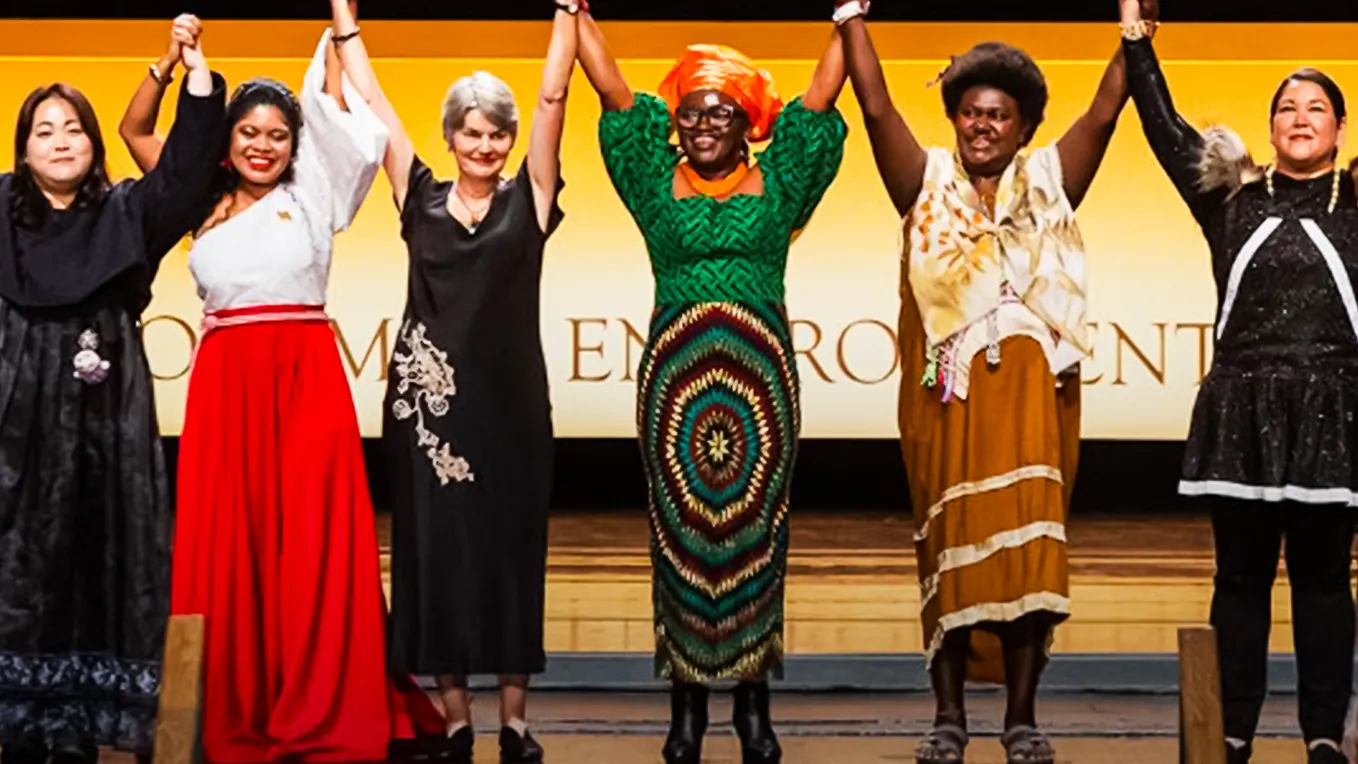
A face painted in the twenty-first century belongs to ours.
Each exists within its own time, culture, expectations, and understanding of beauty.
What appears harmonious in one world may seem unfamiliar in another.
Perhaps that is why the cosmetics of the past sometimes appear strange to us.
Not because the people of the past failed to understand beauty.
But because we no longer live in the same harmony.
Or perhaps, more precisely, because we no longer recognize it.
⸻
Who Is Beauty For?
I have another question.
Why have women so often decorated their faces more elaborately than men?
Of course, this has not always been the case.
Men have worn cosmetics throughout history, sometimes as symbols of power, spirituality, status, or beauty.
And even today, the meaning of cosmetics continues to change.
Still, in many societies, women have been expected to pay far more attention to their appearance than men.
Was this because women wanted to attract men?
Perhaps sometimes.
But surely that cannot explain everything.
Women may enjoy the process of changing their appearance.
They may enjoy colors, shapes, experimentation, or the feeling of becoming someone slightly different.
They may decorate their faces for themselves, for other women, for their communities, or for reasons that have nothing to do with attracting anyone.
And men may admire those faces from an entirely different perspective.
The person who creates beauty and the person who observes it do not necessarily experience the same thing.
One may enjoy the act of creation.
Another may enjoy the result.
And sometimes the same person enjoys both.
I wonder whether the human face is more than a biological feature.
Perhaps it is also a small space in which the universe expresses itself.
A canvas upon which nature, history, society, and individual imagination meet.
⸻
A New Harmony
Today, the boundaries surrounding beauty are changing again.
Men wear makeup.
Women reject makeup.
Some people change their appearance in ways that challenge traditional distinctions between masculine and feminine.
And people of diverse sexual orientations and gender identities are increasingly visible in societies where they were once expected to remain hidden.
Such diversity is not a new invention.
But the social conditions under which people can express themselves have changed.
Perhaps greater freedom and material security can create more room for individual expression.
Although freedom and prosperity do not always arrive together, and acceptance does not advance equally everywhere.
Still, I wonder whether we are witnessing another transformation in what a society considers harmonious.
What once seemed unfamiliar may become ordinary.
What once seemed unacceptable may become beautiful.
And what seems perfectly natural to us today may someday appear strange.
Perhaps harmony is never permanently fixed.
Perhaps it is constantly being rearranged.
⸻
The Cosmetics of Tomorrow
What will human faces look like five hundred years from now?
Will people still paint their lips?
Will eyebrows remain fashionable?
Will they change the color of their skin according to their mood?
Perhaps cosmetics will no longer require pigments at all.
Perhaps artificial intelligence, biotechnology, or technologies we have not yet imagined will allow people to change their appearance in extraordinary ways.
Or perhaps future generations will abandon cosmetics almost entirely.
We cannot know.
But I suspect that people in the future will look back at photographs of us and wonder.
Why did they paint their faces like that?
Why did they consider those features beautiful?
Why did they spend so much time trying to look that way?
And perhaps they will smile.
Just as we sometimes smile when we look at the faces of the past.
They may never fully understand the beauty we believed we saw.
Because the world that gave that beauty its meaning will no longer exist.
Get Fndr.Memo’s stories in your inbox
Join Medium for free to get updates from this writer.
⸻
Can We Control Harmony?
We often believe that humans create culture.
We invent fashions.
We establish customs.
We decide what is beautiful.
But do we really control these things?
A fashion designer may introduce a new style.
An artist may paint an unfamiliar face.
A single person may begin doing something entirely unexpected.
Yet whether that idea becomes part of a culture depends on countless other people and circumstances.
Most new fashions disappear.
Some survive.
A few become so widely accepted that future generations regard them as perfectly natural.
No single person controls this process.
It emerges through innumerable interactions.
Of course, people, institutions, and powerful industries can deliberately influence what a society considers beautiful.
And not every form of social harmony is fair or desirable.
Sometimes what is called harmony is simply conformity.
Yet even with all these influences, no one can fully determine what future generations will find beautiful.
Perhaps culture is not entirely designed.
Perhaps much of it emerges.
Like a pattern forming on water.
Like clouds gathering in the sky.
Or like countless stars gradually becoming part of a galaxy.
Not because someone planned every detail.
But because many different forces came together.
⸻
The Observer
And this brings me to a rather strange thought.
What if cosmetics are not limited to the human face?
Consider a flower.
Its colors, its shape, its fragrance.
We find it beautiful.
Yet the flower did not evolve for the purpose of pleasing human eyes.
Its appearance emerged through a long history of life, adaptation, and interaction with its surroundings.
Consider a bird’s feathers.
A butterfly’s wings.
The colors of a coral reef.
Or the countless forms of life that have appeared and disappeared on Earth.
Each is the result of processes unfolding within nature.
And now consider the human face.
Is it really so different?
Perhaps everything we call beautiful is, in some sense, part of the universe’s continuous rearrangement of itself.
The Earth.
Its oceans.
Its forests.
Its animals.
And us.
Life itself could be imagined as one of the COSMOS’s countless COSMETICS.
Not cosmetics applied by a conscious cosmic hand.
But forms, colors, and patterns arising through the universe’s own unfolding processes.
And we are here to witness them.
We are observers.
We look at the universe and call certain things beautiful.
We look at one another and do the same.
Yet we are not standing outside the universe.
Our eyes, our preferences, our imagination, and even our ideas of beauty are products of the very world we observe.
We are both the observers and the observed.
We create beauty.
We recognize beauty.
And we ourselves are among the things being created.
⸻
A Face in the Universe
Perhaps there has never been one perfect human face.
Perhaps there never will be.
There are only faces belonging to particular moments in the history of the universe.
Some decorated with ancient pigments.
Some covered with white powder.
Some painted with colors that future generations may never understand.
Some left entirely untouched.
Each belongs to a world that will eventually disappear.
And each may have been beautiful to someone.
I find that thought strangely comforting.
It suggests that beauty does not have to remain unchanged to have meaning.
Something can be beautiful for a moment.
For a generation.
For a civilization.
And then vanish from the world’s understanding.
Yet the fact that its beauty was temporary does not make it meaningless.
Perhaps that is also true of human life.
We are born into a world whose customs we did not create.
We learn what others call beautiful.
We sometimes question it.
Sometimes change it.
And eventually leave behind a world that will continue changing without us.
The universe does not stop rearranging itself.
Neither does beauty.
And perhaps that is the most remarkable harmony of all.
Not that everything remains in its proper place.
But that everything continues to change.
A face becomes beautiful.
A generation admires it.
Time passes.
Another generation sees something different.
And somewhere, in another corner of the universe, a new form of beauty may already be emerging.
Perhaps we will never see it.
Perhaps no human being ever will.
But for a brief moment in cosmic history, we are here.
Looking at the faces around us.
Trying to understand what beauty means.
And perhaps, without realizing it,
the COSMOS is looking at its own COSMETICS through our eyes.
Discover COSMOS
A cultural inheritance and rediscovery system.
https://cosmosrecord.com
https://cosmosrecord.com/discovery-layer