Code’s New Reality: Why Golang’s Design is Perfectly Timed for the Future ⏰


Hey there, fellow tech enthusiasts! Ever feel like the whole software world is just… shifting under our feet? I mean, remember when writing code felt a bit like a secret society’s ritual? A true art form, something only a select few wizards could master. Well, confession time: that vibe? It’s really, really changing. We’re on the cusp of a pretty big idea, one that might even make some folks a little squirmy: code, the raw stuff we type, is actually becoming a commodity. And here’s the wild part — the Go programming language, often just lovingly called Go or Golang, it feels almost like it was designed just for this moment. Like, seriously, they had a crystal ball or something. 🔮
But what in the world does it even mean to say code is a commodity? And why, among all the cool, brilliant languages out there, does Go seem to hit the nail so perfectly on the head for this new era? Let’s dive in, because I think this is a super important conversation for us, right now.
The New Reality: Code as a Commodity 💥
So, what’s the deal with calling code a “commodity?” Think about stuff like sugar, or steel, or even electricity. Once upon a time, producing those was a huge, complex undertaking. Now? They’re everywhere, right? Readily available, pretty easy to make more of, and their value often comes down to how you use them, not just the fact that they exist. Well, guess what? Code is kinda heading that way.
This doesn’t mean our skills as developers are suddenly worthless — absolutely not! Please don’t misunderstand me. Instead, it’s a nod to a few really big, powerful things that are all happening at once, here in October 2026:
- AI-assisted coding is exploding: Honestly, it’s mind-blowing! Tools like GitHub Copilot, Cursor, and even Claude Code are practically drafting boilerplate for us, squashing bugs, and getting us a solid head start on complex functions. They’re becoming, like, our super-fast coding sidekicks, pushing the whole “lines of code written” thing further into the background. Wild, isn’t it?
- Open-source reigns supreme: We live in a world overflowing with amazing open-source libraries, frameworks, and tools. Seriously, when was the last time you truly built everything from scratch? Need a quick web server, a database connector, or maybe some fancy machine learning bits? Chances are, someone’s already built a super solid, community-loved option. It’s a huge time-saver!
- Cloud infrastructure abstracts away complexity: Platforms like AWS, Google Cloud, and Azure are practically magic. They offer managed services for, well, almost anything you could dream of — databases, message queues, serverless functions… you name it. This seriously cuts down on us needing to write custom, fiddly low-level infrastructure code. Big relief, I’d say.
- Microservices and API-first design: Everything’s getting broken down into smaller, bite-sized services that talk to each other. This modular way of building stuff means pieces are way more interchangeable and less tangled. So, each little code snippet becomes more focused, and, dare I say, a bit more like a commodity part.
The real game-changer? The value isn’t just in typing out the code anymore. Oh no. The true brilliance, the real magic, is in how cleverly you put all these commoditized pieces together, how lightning-fast you solve actual business problems, and how reliably you deliver something truly valuable to the folks using your software. That’s the stuff that makes heads turn!
The Shift in Value: Beyond Raw Lines of Code 💡
So, if simply writing code is becoming more of a baseline, where does the real treasure lie for us developers? That’s a killer question, one I think every single developer and tech leader should be mulling over. The spotlight has totally moved from just slinging code to these absolutely crucial areas:
- Speed of Delivery: In our hyper-competitive world, getting new features out the door, pronto, is non-negotiable. Companies gotta move fast, test their ideas quickly, and react to user feedback at warp speed. Every day, every hour even, can make a difference!
- Reliability and Maintainability: When our systems are a big spiderweb of interconnected parts (which, let’s be honest, they usually are), every single piece needs to be rock-solid. Code has to be tough, easy to debug, and a breeze to keep running over its whole lifespan. Because trust me, the headache and cost of bugs or downtime? Absolutely bonkers.
- Operational Efficiency: Running stuff in the cloud isn’t free, you know? Efficient, resource-savvy code directly translates into smaller infrastructure bills. And a dev process that’s smooth, with super straightforward deployments? That saves so many hours and precious resources.
- Scalability: Modern apps just have to handle crazy, unpredictable loads. The ability to scale up and down effortlessly, without tearing everything down and rebuilding it, isn’t a fancy extra anymore. It’s a must-have.
- Team Collaboration and Onboarding: With teams often scattered everywhere and projects getting bigger and hairier, having a consistent, crystal-clear codebase is pure gold. New developers need to jump in and get productive without feeling like they’ve landed on an alien planet. And existing teams? They need to work together without constant bickering over code styles or trying to decipher super convoluted logic.
This big shift means that any programming language or toolset that champions these values? They’re getting a huge leg up. And guess what? That brings us straight to Go.
Go: The Language Built for the Commodity Age 🚀
When Robert Griesemer, Rob Pike, and Ken Thompson cooked up Go over at Google, they weren’t just adding another language to the pile. Nope. They were actively tackling huge, thorny problems they saw in building massive software systems — you know, exactly the kind of challenges that define our current “commodity code” era. It’s almost spooky, like they saw the future! Even now, in October 2026, with Go’s latest stable version hovering around 1.27.3, those core design ideas are still its absolute superpowers.
Get Hitesh Gera’s stories in your inbox
Join Medium for free to get updates from this writer.
So, let’s peek at how Go’s foundational design choices slot perfectly into what our commoditized code world demands:
Simplicity and Readability: No Room for Complexity 📖
Go’s syntax is famously, almost stubbornly, minimal. It’s like, there are only a few “right” ways to do things, which is fantastic! Less arguing, less head-scratching complexity, and way more consistency across all your code. Plus, gofmt just sorts out your formatting automatically. Bam! No more silly debates about tabs vs. spaces.
package main
import "fmt" // Gotta import what we need, right?
func greet(name string) string {
    return fmt.Sprintf("Hello, %s!", name) // A nice, friendly greeting
}
func main() {
    message := greet("World") // Let's say hi to the world!
    fmt.Println(message)      // And print it out for all to see
}
See? Simple, clear, and perfectly formatted code is just easier to read and, dare I say, fun to maintain. This makes getting new developers up to speed a total breeze, which is super important when your code is a shared commodity.
This whole “keep it simple” philosophy totally nails the need for maintainability and team collaboration. When code is just another interchangeable part, you want it to be as easy to grok and swap out as possible. It seriously cuts down on brain-drain and speeds up development. Plus, it’s kinda cool how even the AI-generated Go snippets (which are becoming super common!) can be so easily understood and integrated by us human devs, leveraging Go’s strong typing and awesome performance.
Performance and Efficiency: Lean and Mean Operations ⚡
Go compiles straight to machine code, which means it runs fast. We’re talking performance pretty close to languages like C or C++. But here’s the kicker: unlike those old-schoolers, Go comes with automatic memory management (hello, garbage collection!), making development way faster and, honestly, much safer. Its runtime is super light, leading to tiny binary files and less hungry memory usage.
This translates directly into serious operational efficiency. In the cloud, every little CPU cycle and megabyte of RAM has a price tag, right? Go’s efficiency means you can run more services on less hardware, which is a massive win for cutting down operational costs. Total no-brainer when your infrastructure itself is a commodity. Oh, and those “Green Tea garbage collector” improvements from Go 1.25/1.26? Chef’s kiss for efficiency!
Concurrency Done Right: Scaling with Ease 👨💻
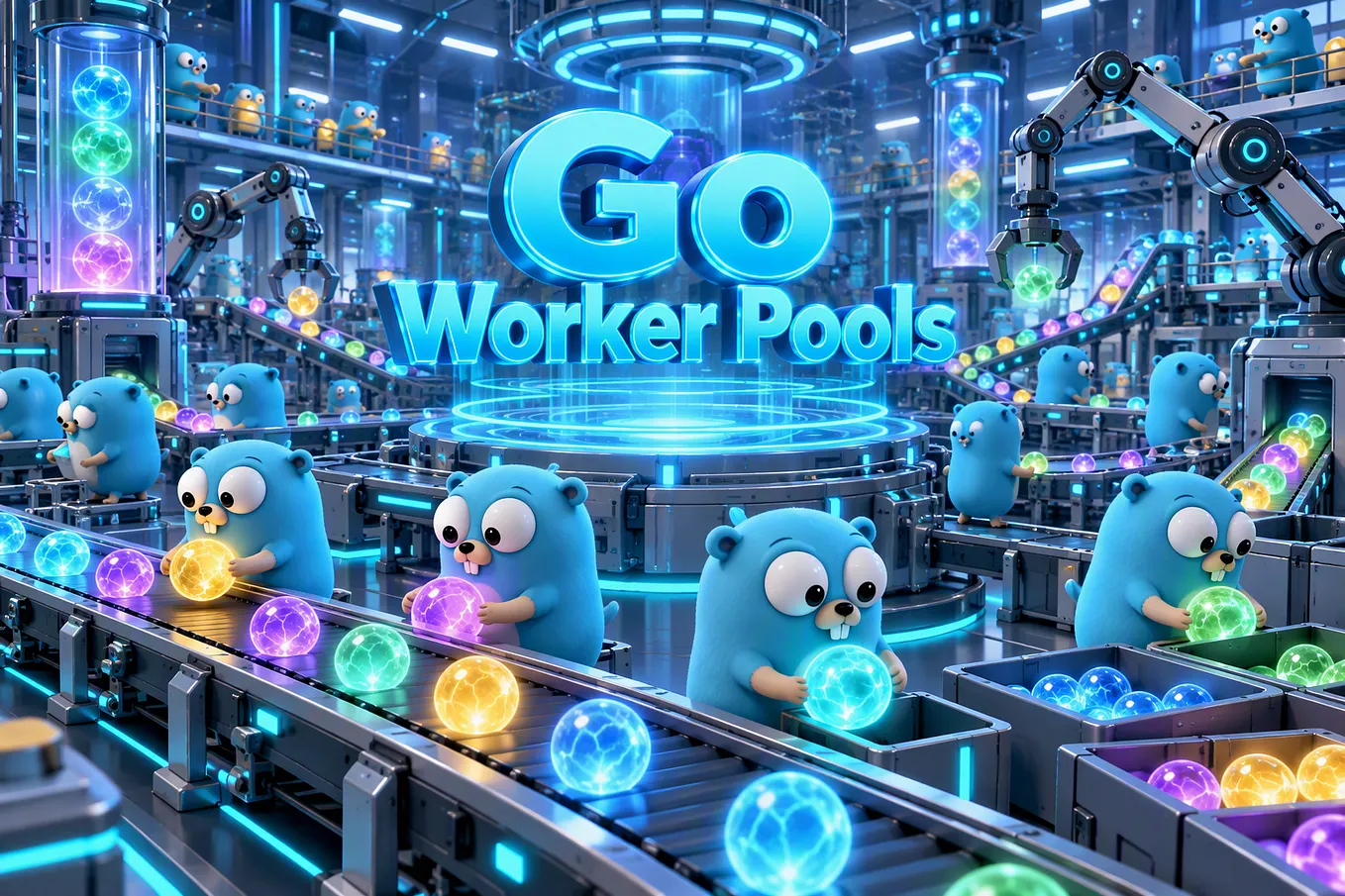
Okay, this is one of my personal favorite Go features: its built-in concurrency model. It’s all about goroutines and channels. Think of goroutines as super-lightweight, nimble little workers managed by Go itself, and channels? Those are the safe, simple pipes they use to chat with each other. It’s brilliant!
package main
import (
    "fmt"
    "time" // Gotta simulate some work, right?
)
func worker(id int, jobs <-chan int, results chan<- string) {
    for j := range jobs {
        fmt.Printf("Worker %d starting job %d...\n", id, j)
        time.Sleep(time.Second) // Pretend to do something important for a second
        results <- fmt.Sprintf("Worker %d finished job %d", id, j) // Send back the good news
    }
}
func main() {
    jobs := make(chan int, 5) // Our job queue, can hold 5 tasks
    results := make(chan string, 5) // Where we'll put our results
    // Let's get 3 workers going! Go, go, go!
    for w := 1; w <= 3; w++ {
        go worker(w, jobs, results)
    }
    // Now, let's send them 5 jobs to do
    for j := 1; j <= 5; j++ {
        jobs <- j
    }
    close(jobs) // No more jobs coming, folks!
    // Time to see what our workers accomplished!
    for a := 1; a <= 5; a++ {
        fmt.Println(<-results)
    }
    close(results) // All results collected, channel closed
}
Seriously, Go’s concurrency model makes building super scalable network services so, so much easier. Imagine microservices that can totally crush thousands of requests per second without even breaking a sweat. It’s pretty awesome.
This stuff is absolutely critical for scalability. In this age of microservices and cloud-native everything, being able to effortlessly build concurrent services that can handle tons of traffic isn’t just nice-to-have; it’s a must. Go somehow makes this really tricky task feel incredibly natural, helping us devs build robust, distributed systems way faster. And who doesn’t love that?
Robust Tooling and Ecosystem: Batteries Included 🔋
One thing I genuinely appreciate about Go is that it comes with a fantastic standard library and some seriously powerful tools built right in. We’re talking everything from managing packages (go mod) to running tests (go test) and even profiling your code. You don't need to hunt down a million external tools just to get your project off the ground. It's all there, waiting. Actually, the Go 1.27 release, for example, brought even more cool refinements to the tools and standard library, including a spiffy new uuid package and some neat tweaks to encoding/json.
This whole “batteries included” philosophy is a direct boost to our developer productivity and speed of delivery. Less time fiddling with configs and installations means more time actually writing code that does something. Plus, that consistent ecosystem really smooths things over when you’re jumping between different projects or teams.
Static Binaries: Simplified Deployment 📦
When you compile a Go program, what do you usually get? A single, self-contained little executable file. How neat is that? This means way fewer dependencies to wrangle when it’s time to deploy your app, which simplifies your CI/CD pipelines immensely and makes deployments incredibly solid. It’s like magic, but, you know, real.
This totally nails operational efficiency and speed of delivery. Single-file deployments are an absolute dream for containerized environments and serverless functions. It means your commoditized code is easier to get into production and, crucially, keep it running smoothly. Less headache for everyone involved!
The Future of Programming is Already Here 🔮
Look, the idea of code becoming a commodity isn’t some scary monster under the bed. Nah, it’s just another step in our wild, ongoing evolution. It’s pushing us, in a good way, to look past just the lines of code and really focus on the bigger picture: the architecture, the actual business problems we’re fixing, and how ridiculously efficient our entire development process can be.
Go, to me anyway, isn’t just another language. It’s more like a philosophy poured into a tool. Its core ideas — simplicity, efficiency, amazing concurrency, and a solid set of tools — are exactly what we need to really shine in a world where raw code is, well, just a given. The real value now comes from how expertly you wield it. As we push further into October 2026 and beyond, I truly believe languages like Go will keep empowering us devs to build robust, scalable, and cost-effective solutions faster than we ever thought possible. It’s a seriously exciting time to be building stuff, especially if you’re comfortable speaking the language of commodity code.