10 Costly Wedding Planning Mistakes Couples Make (And How to Avoid Them)
Planning a wedding is one of the most exciting things you’ll ever do — and one of the most overwhelming.

You get engaged, you celebrate, you’re on cloud nine. Then someone asks, “So, have you picked a venue yet?” and suddenly the cloud nine feeling is replaced by a spreadsheet you don’t know how to fill, a budget that already looks terrifying, and a guest list that’s somehow already a source of family drama.
Planning a wedding can quickly become exhausting if you’re not careful. And the worst part? Many of the biggest stressors are completely avoidable. From what I’ve researched and observed, couples tend to make the same mistakes over and over — not because they’re careless, but because no one told them what to watch out for.
So here are 10 of the most common (and costly) wedding planning mistakes, and what you can do instead.
1. Setting a Budget Too Late
Many couples start booking vendors before they’ve had a real, honest conversation about money. It feels awkward, so they avoid it — until they’re $10,000 over budget and stressed out of their minds.
How to avoid it: Sit down together before you do anything else and agree on a total number. Factor in who’s contributing (parents, family), what your priorities are, and where you’re willing to cut back. Everything else flows from that number.
2. Booking a Venue Without Reading the Fine Print
The venue is usually the biggest expense — and the biggest source of surprises. Many couples fall in love with a space, sign the contract, and later discover it comes with a mandatory catering minimum, noise curfews, or a very short setup window.
How to avoid it: Ask every question you can think of before signing. What’s included? What’s not? What happens if you need to cancel or reschedule? Read the full contract, not just the summary.
3. Underestimating How Long Everything Takes
Couples often assume six months is plenty of time. Sometimes it is. But popular venues book up 12–18 months in advance. Dress alterations can take 4–6 months. Photographers, florists, and caterers fill their calendars fast — especially in peak seasons.
How to avoid it: Start earlier than you think you need to, especially for the big-ticket vendors. And build buffer time into every deadline on your timeline.
4. Trying to Please Everyone
This one quietly ruins a lot of weddings. You start making decisions based on what your mom wants, what your future in-laws expect, what your friends think looks good on Instagram. Before long, it doesn’t feel like your wedding anymore.
How to avoid it: Be clear early on — kindly but firmly — that the two of you are making the final calls. It’s okay to take input. It’s not okay to let input become pressure. This is your day.
5. Forgetting Hidden Costs
The quoted price is rarely the final price. Gratuities, cake-cutting fees, corkage fees, overtime charges, delivery costs — these add up in ways couples never anticipate.
Get Rajae’s stories in your inbox
Join Medium for free to get updates from this writer.
How to avoid it: When you receive a quote, ask explicitly: “What additional fees might appear on the final invoice?” Build a 10–15% buffer into your budget just for surprises.
6. Neglecting the Guest Experience
It’s easy to get so caught up in the aesthetics and logistics that you forget what your guests are actually going to feel on the day. Long gaps between ceremony and reception, confusing parking, no food during cocktail hour, unclear schedules — these things stick with people.
How to avoid it: Walk through the day from a guest’s perspective. How are they getting there? What are they doing between events? Do they know where to go? Small thoughtful touches make a big difference.
7. Skipping the Wedding Insurance
Nobody wants to think about things going wrong. But vendors do go out of business. Venues do flood. Illnesses happen. If something forces you to postpone or cancel, you could lose thousands of dollars with no recourse.
How to avoid it: Look into wedding insurance early. It’s often surprisingly affordable and can cover everything from vendor no-shows to extreme weather. Think of it as peace of mind, not pessimism.
8. Leaving the Honeymoon as an Afterthought
After months of planning the wedding, many couples are so burnt out that the honeymoon gets thrown together at the last minute — and either costs way more than planned or ends up being underwhelming.
How to avoid it: Start researching and booking the honeymoon at least six months out. Set a separate budget for it from the beginning so it doesn’t compete with wedding expenses.
9. Not Having a Day-Of Point Person
You’ve planned everything. But on the actual day, you do not want to be the one answering questions from the florist, redirecting the caterer, or tracking down the photographer. That’s not what the day is for.
How to avoid it: Hire a day-of coordinator if it’s in your budget. If not, designate a trusted friend or family member who is not in the wedding party to handle logistics. Give them a detailed timeline and let them manage it.
10. Keeping Everything in Your Head (or Scattered Across 12 Apps)
This might be the most underrated mistake. Planning a wedding generates an enormous amount of information — vendor contacts, contracts, payment schedules, guest counts, timelines, seating charts, to-do lists. Without a clear system, things get missed, double-booked, or forgotten entirely.
How to avoid it: Get organized early and keep everything in one place.
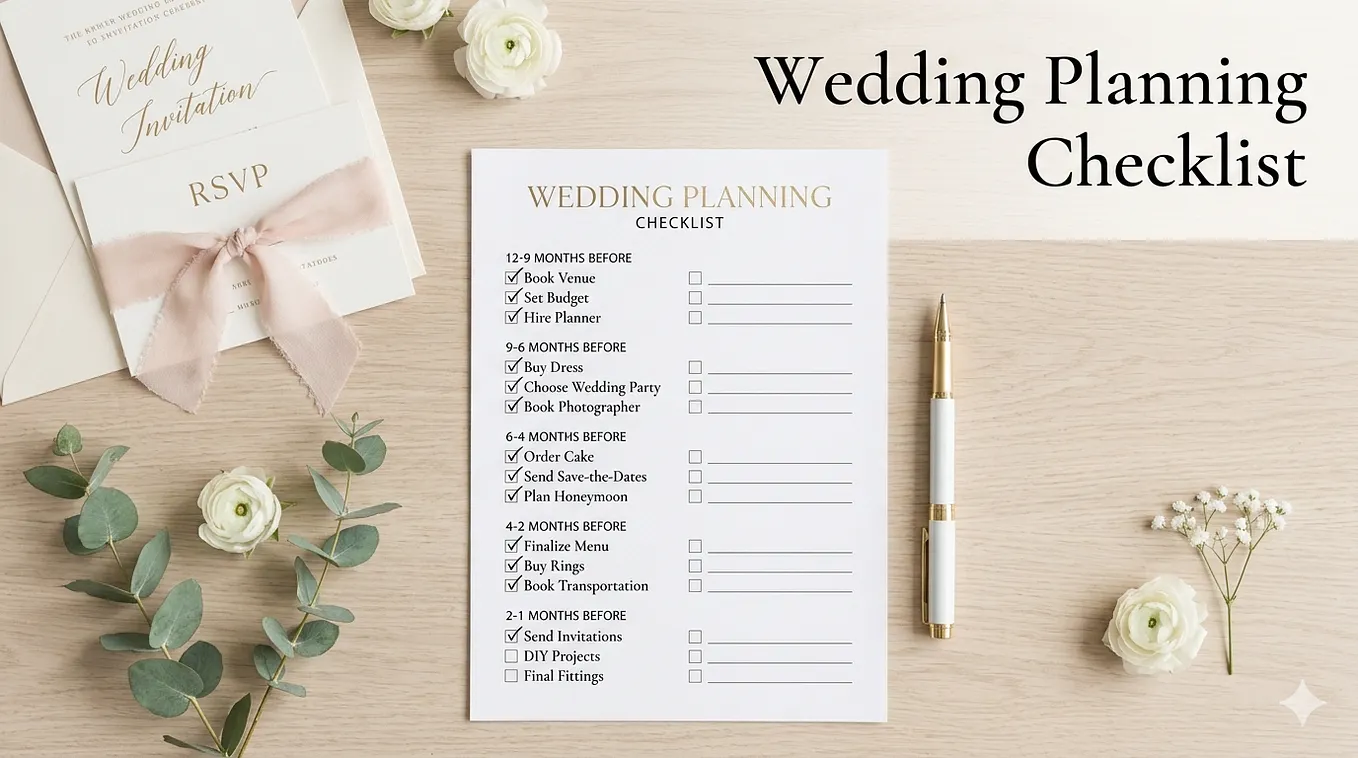
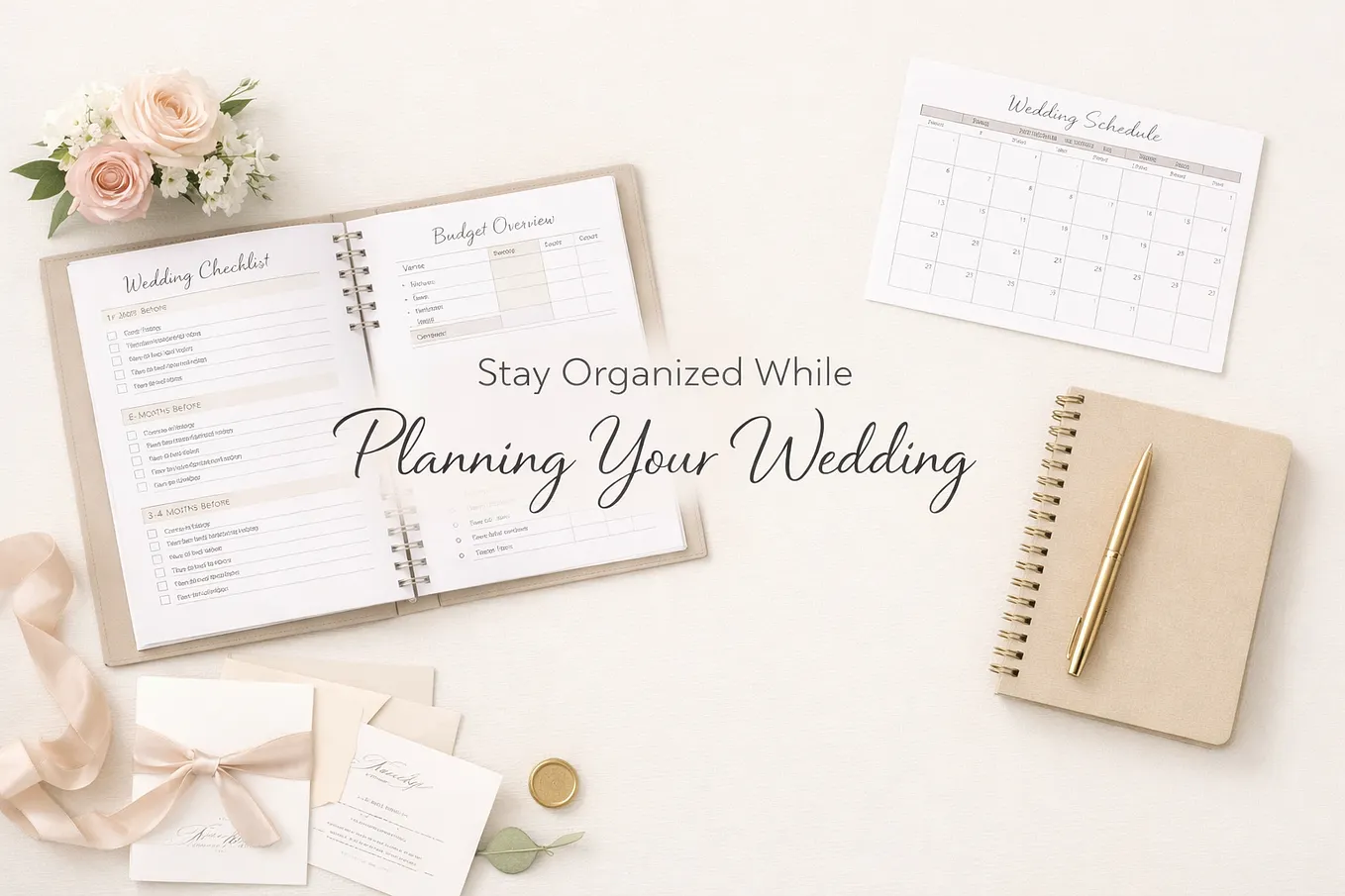
One thing I noticed while researching wedding planning is just how quickly things fall through the cracks when there’s no central system. That’s actually why I created a printable wedding planner — to help couples track their budget, checklist, vendor contacts, and timeline all in one simple document. No apps to learn, no subscriptions. Just print it and use it.
If you want something simple to stay on top of everything, you can check it out here: The Wedding planner
Final Thoughts
Planning a wedding doesn’t have to feel like a second job. Most of the stress that couples experience comes from a few avoidable mistakes — moving too fast, skipping important conversations, or just not having a clear system in place.
The good news? Once you know what the pitfalls are, they’re surprisingly easy to sidestep. Take it one step at a time, communicate openly with your partner, and don’t be afraid to ask vendors the hard questions.
Your wedding day should feel like a celebration, not the finish line of an obstacle course.
Found this helpful? Share it with a couple who’s currently in the middle of planning — they’ll thank you for it.