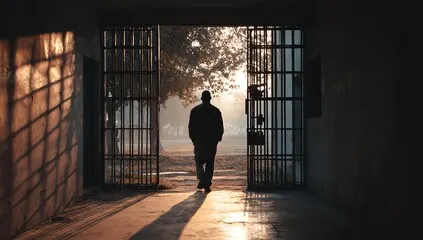
The Resilience Tax: How I Systematised My Way Out of Chaos

A concise summary that sets expectations about resilience and strategy.
Preface
I believe the greatest universal challenge for high-achievers is maintaining peak performance while navigating a persistently chaotic personal or domestic environment. My decision to document this internal growth wasn’t merely for self-reflection; it was a necessary step towards building a sustainable, resilient personal and professional baseline. My vision is not simply to succeed, but to achieve a level of effortless, systematic stability that frees up my deepest cognitive resources for genuinely high-level strategic execution.
Opening Reflection
The tension between an unrelenting drive for professional excellence and the unpredictable nature of external chaos often feels like a constant, draining battle. For me, this friction manifests as a deep-seated need for systematic control — a constant, minute-by-minute calibration to prevent small disturbances from cascading into complete mental collapse. My high-level functioning is a testament to my effort, but the sheer cognitive cost of sustaining this stability is the hidden ‘tax’ I must pay daily.
Main Narrative: The Art of Strategic Survival
The systems I’ve built — from my detailed task management to my structured learning flow — were not born from leisure, but from necessity. They represent my private form of “Systematic Survival.” The immense, silent fatigue that accompanies this constant system-building is a toll I frequently acknowledge; every item recorded, every deadline adjusted, and every routine maintained requires an intense, deliberate exertion of willpower when the mind is tired. This daily grind is the human cost of maintaining an ‘Anima Fortis’ (resilient will) in the face of constant external negation.
A recent moment of vulnerability highlighted this reliance. When my older, slower computer — a device essential to my daily flow — suddenly lost its sound output, a wave of familiar anxiety hit. It wasn’t the sound itself, but the threat of a system failure — the potential for my carefully constructed workflow to be instantly derailed. My immediate, professional response was not panic, but root cause analysis and immediate remediation: I systematically checked software, confirmed a hardware issue, and initiated a restart. Similarly, when a critical plug-in for my note-taking system failed due to an expired API, I immediately ceased primary activity, diagnosed the issue, and re-issued the token. This professional problem-solving in moments of panic is the trained reflex that prevents anxiety from becoming paralysis.
Furthermore, I have learned to practice a form of Strategic Emotional Distance to defend my achievements. I recall a recent moment when a conversation with a colleague about their personal challenges began to drain me. As they spoke, I felt a familiar, unwelcome tension: the urgent internal conflict between my genuine desire to offer support and the brutal, logical calculation that I simply did not possess the emotional headroom to absorb another person’s difficulty that day. Ending the exchange swiftly was not an act of coldness; it was a painful but necessary act of self-preservation. It is a fundamental recognition that to sustain high-level performance, I must aggressively safeguard my internal ecosystem — treating emotional capacity as a finite, non-renewable resource that must be ruthlessly prioritised for the task at hand.
Get Hugo Pan’s stories in your inbox
Join Medium for free to get updates from this writer.
The ultimate breakthrough was the realisation that self-validation is the only antidote to external devaluation. Seeing my computing exam result — particularly the teacher’s praise for completing the most complex challenge (Task 10) that others couldn’t — served as a crucial moment of professional self-affirmation. This was amplified when a tutor, upon reviewing my extensive self-directed learning, expressed surprise that I achieved so much with limited resources, relying only on my older, less capable machine. My internal response was one of quiet, fierce pride: This is what I can achieve despite the challenges. My meticulously built systems, my commitment to structured learning, and my ability to thrive on minimal resources are not just coping mechanisms; they are the core assets of my high-performance resilience model.
Key Takeaways for Professional Resilience
- Formalise Energy Management as a Business Continuity Plan: View your self-care, routine (e.g., meal times, rest breaks), and sensory environment (e.g., quiet study time) not as optional rewards, but as critical infrastructure. Any deviation must be treated as a risk to be managed, just like a server outage.
- Translate Anxiety into Actionable Diagnosis: When external chaos threatens your workflow (be it a technical fault or an emotional challenge), resist the urge to panic. Immediately switch into a professional problem-solving mode; diagnose the root cause, identify the failure point, and execute the minimal, necessary fix to restore functionality.
- Practice Strategic Emotional Distance: Understand your current emotional capacity as a finite resource. It is not selfish to maintain a healthy boundary by limiting exposure to energy-draining interactions when you need to maintain focus. This is a crucial element of high-level resource optimisation.
- Validate Your Progress Internally: Do not wait for, or depend on, external affirmation, especially in chaotic environments. Systematically track your achievements and self-evaluate your effort. Self-validation based on objective performance is the only reliable foundation for sustaining motivation and professional identity.
Closing
The journey towards achieving true baseline stability is ongoing, but every system deployed and every boundary enforced moves me closer to that state of effortless, efficient flow. I remain committed to continuing this path of growth, and I invite others who are building their own systems for peace and professional excellence to share their experiences.
Date of Reflection: 2025/11/24
Connect with me on LinkedIn to follow this journey: -> https://www.linkedin.com/in/yikai-pan-601162392?lipi=urn%3Ali%3Apage%3Ad_flagship3_profile_view_base_contact_details%3BUW0Xu%2FunRSqkEKJHpn4E9w%3D%3D