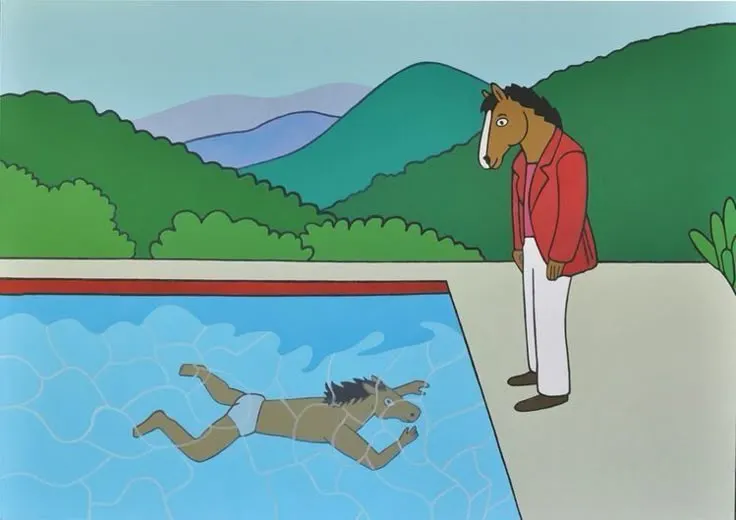
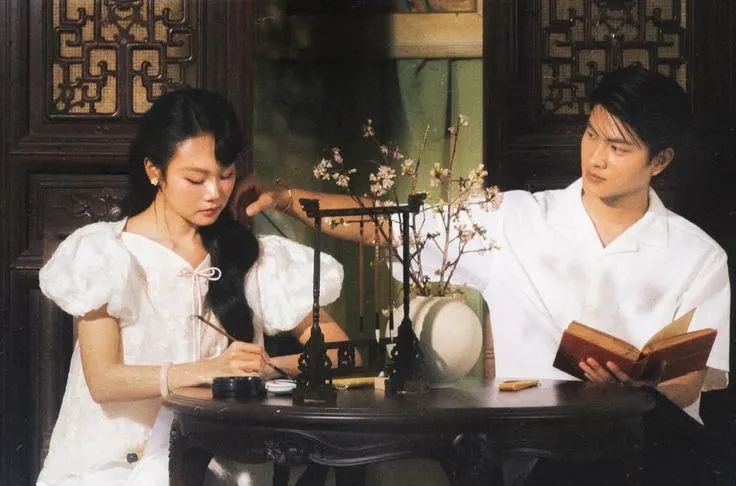
the ultimate diastole is to cease the contraction

There is a vital role that plays into why we live, but the real question is how.
Diastole is the exact moment the heart muscle relaxes. During diastole, the heart chambers open up, soften, and allow themselves to be filled with blood. Systole, on the other hand, is when the heart muscle tightly squeezes and exerts immense pressure to pump blood out to the body. If the heart stays contracted and never stops squeezing, you die.
It must stop contracting to survive.
In other words, the greatest act of love is to let go.
Diastole and Systole is a part of the Cardiac Cycle, an occurring event daily that is quite often overlooked. Its importance is what we heavily rely on during our day-to-day tasks.
In Season 1, Episode 6 of Grey’s Anatomy, Izzie Stevens dealt with a patient (Warren Sterman) with bowel issues, he could not pass gas or excrete waste. Her patient was an old man, a former medical student who did not push through his final year at clinical.
Mr Sterman stated: “Yeah, dropped out my last year at clinical. Too many hours and I was staring into the ice-cold eyes of divorce.”
“Yeah, I do research now. And I have a life, a family. No offense. I mean…”
Izzie: No, no. It’s okay. I’m just one of those people who believe you can have both.
Mr. Sterman: Maybe so, but your first responsibility is always going to be your patient.
In line with Izzie’s storyline, her hockey-player long distance boyfriend, Hank, planned a visit to see her. Izzie, before becoming an intern, had been a model. She’d be at all the photoshoots and extravagant parties her boyfriend attended too. To surprise him during his visit, she had planned a party for a chance for her boyfriend to meet her co-workers; to show him that doctors weren’t all workaholics with God-complexes, similar to the parties they’d attend when she was a model.
Get solaire ⋆.ೃ࿔🌸*:・’s stories in your inbox
Join Medium for free to get updates from this writer.
Hank had arrived at the party, searching the crowd for his former-model-now-intern-girlfriend, but to no avail. Izzie Stevens had been held up in the hospital, a first for her boyfriend to be alone at a party, without her. He meets her at the hospital, and finds himself questioning if from here on out, this would be his life.

No one to stand by his side during massive events, or being in the same room cheering Izzie on, just someone on the sidelines, outside the O.R. waiting.
The argument was entirely autoregulated; the air was thick with grief, but neither could bear to shatter the quiet.
Grief that making them work would be impossible for the two’s distinct lives from one another.
Chivalry falters as he would be the one to walk away from the argument, as Izzie walks back into the hospital she came from, truly contemplating how her life would be now.
Would it hurt to hold on to something systematic that manually keeps a heart beating, or to let a good one go by letting it naturally thump its last?
Becoming a medical practitioner would mean sacrificing a huge part of yourself, a family you dreamt of building, the house you prayed to turn into a home, or simply a knot to be tied. There will come a time where only the strongest shall choose that decision, but the weakest shall face it.
We are taught in medicine that a flatline is a tragedy. We spend our lives charging defibrillators, demanding one more squeeze, one more contraction, one more mechanical proof of life. But we forget that the heart’s truest genius lies in its willingness to yield. Standing outside the hospital, watching her old life walk away, Izzie Stevens learns her first real clinical lesson: you cannot save a life by refusing to let it rest. The ultimate diastole is to cease the contraction. And sometimes, the most profound medical miracle you can perform is simply allowing a natural death.