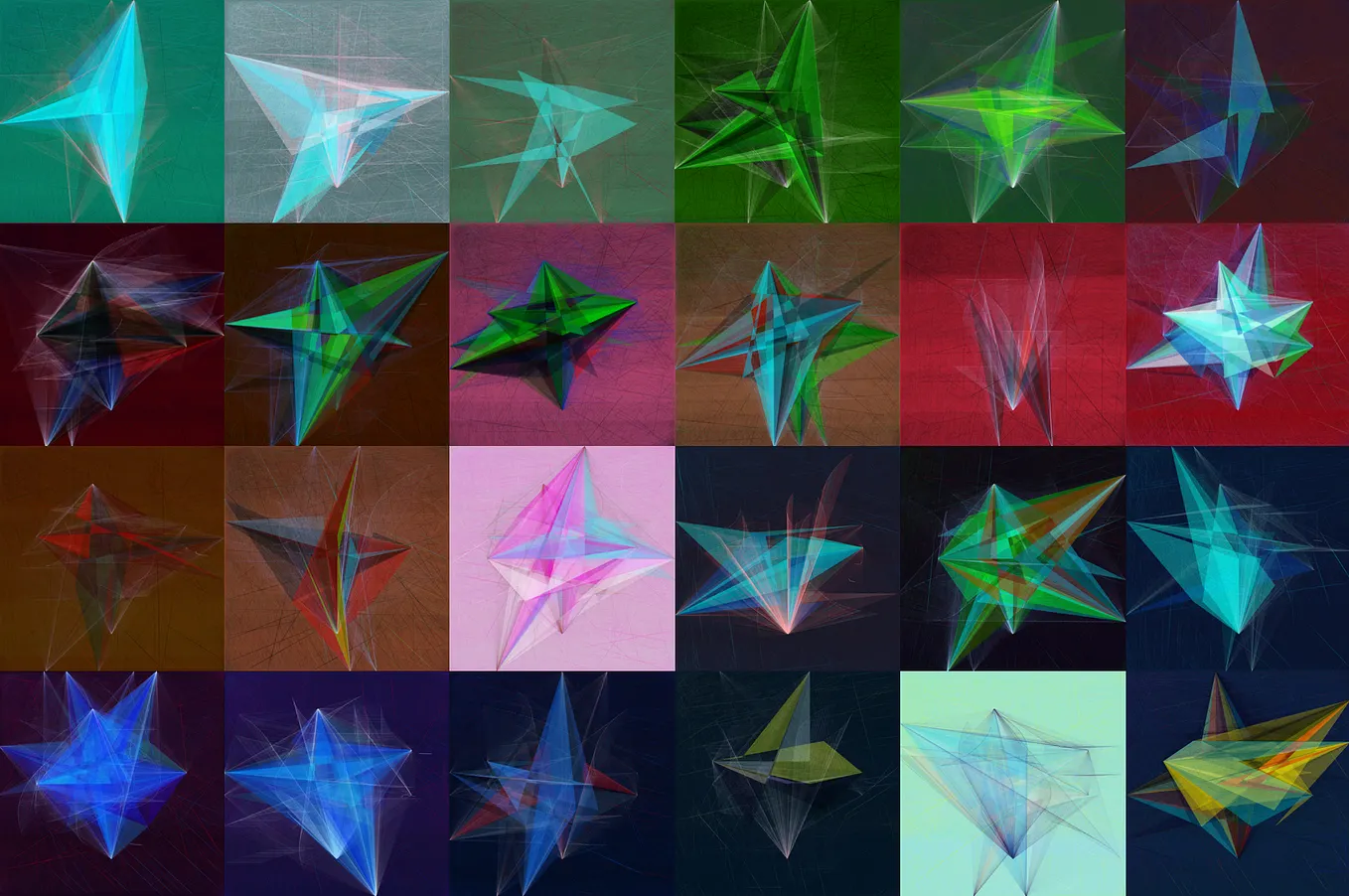
形滅聲生 — 意象隨塵浮 %7
Recursive Horizons: The Sublime in Incomplete Thought


《遞歸地平》這場後策展演出超越了傳統藝術體驗的界限,將創作過程本身視為焦點藝術品。此框架挑戰了傳統角色,邀請觀眾深入反思藝術如何通過不斷的合作與遞歸式詮釋來形成、轉變並持續存在。以下是此概念在演出中的體現:
遞歸生成的元敘事
後策展的核心之一是遞歸生成的公理,強調每次創作的迭代都會產生新的、多層次的形式,重新詮釋之前的元素。這次現場演出透過適應性音樂組合體現了這一點,每個樂章都彼此呼應與反映。吉他手Cal Lyall、大提琴手森重靖宗(Yasumune Morishige)以及鋼琴家James Hullick的即興創作不僅是個人的貢獻,更是集體意識的展現。這種合力使演出在實時中演變,成為自我反思和調整的藝術作品。表演者、樂器及觀眾共同成為遞歸能量的媒介,將這場演出轉變為自生成和自我修改的藝術品。
不完整性作為無限潛力
不完整性作為生成力量的公理邀請參與者在未完成和未解決的事物中發掘意義。在第二場演出中,楊懿惟的古箏與Calvin Chang的電子音樂完美體現了這一點。演出中運用了寧靜、停頓和片段化旋律,吸引觀眾更深入地投入。傳統古箏聲音與現代電子聲效的對話創造了未解決的音樂片段,促使觀眾以自己的方式來完成這部作品。這種方法顯示出不完整性不是缺陷,而是驅動持續重解釋和深層意義創造的力量。
崇高的浮現
崇高的浮現概念體現在最後一場全體音樂家的演出中,這場即興演奏包含了準備好的鋼琴及全體五位音樂家的合作:Cal Lyall、森重靖宗、James Hullick、楊懿惟及Calvin Chang。這場表演不僅僅是樂器和風格的融合,更是聲音、機械和人類互動的集大成。這種匯合展示了後策展的更高目標:將藝術視為一種超越創作者本身的生命體,擁抱複雜性以揭示出意外的美。觀眾的反應和參與成為了這一遞歸迴路的一部分,使演出成為一種動態且相互作用的體驗。
意義創造的集體行為
後策展重新定義了創作者的角色,將藝術家和觀眾視為意義的共同創造者。遞歸地平的演出放大了這一概念,鼓勵集體參與。James Hullick、Cal Lyall 和森重靖宗之間的互動,如眼神交流與微妙提示,伴隨著聲音的起伏,構成了一個遞歸的反饋迴路。每個聲音、沉默或動作都影響著後續的演出,展示了演出本質上是由所有參與者共同構建的。
自指的演出形式
遞歸地平作為自指的藝術形式,體現了其自身的公理。例如,James Hullick在準備好的鋼琴上的機械性破音不僅是表演的一部分,更是對於打破熟悉循環並創造新形式的反思。這些片段邀請觀眾思考傳統聲音與實驗聲音如何共存並挑戰藝術界限。整體演出強調了藝術並非靜態,而是一個不斷演變、以過程為核心的敘事。
“形滅聲生 — 意象隨塵浮”的體現
“形滅聲生 — 意象隨塵浮” 的意境在演出中得到體現:
- 形滅:Calvin Chang的電子音效與準備好的鋼琴打破了傳統的音樂結構,導致抽象化。
- 聲生:楊懿惟與森重靖宗等演奏者的即興創作賦予每一刻新生命,展現出藝術如何從合作中自發誕生。
- 意象隨塵浮:音樂的瞬間性,旋律的出現、發展與消逝,恰如塵埃般浮動,象徵著創作與消逝的無限循環。
對後策展思想的影響
遞歸地平的演出不僅展示了後策展的原則,還將其付諸實踐,鼓勵觀眾將藝術視為持續演變的共同創作。起點與終點被模糊,形成了一個完整體驗,展示出呈現與感知如何交織成相連的敘事。這種共享的旅程超越了現場表演,彰顯了人類與機器創意共創的無限潛力。
Get Jimi Wen’s stories in your inbox
Join Medium for free to get updates from this writer.
The performance of Recursive Horizons as a Post-curation event transcended conventional art experiences by making the creative process itself the focal artwork. This framework challenged traditional roles, inviting deeper introspection into how art forms evolve and persist through continuous collaboration and recursive interpretation. Here’s how these concepts played out with the contributions of each performer:
Recursive Generativity
Central to Post-curation is the axiom of Recursive Generativity, emphasizing that each iteration of creative output births new, layered forms that reinterpret previous ones. The live performance embodied this through adaptive musical sets that reflected and responded to each other. Cal Lyall on guitar, Yasumune Morishige on cello, and James Hullick on piano demonstrated how improvisational decisions were interconnected, forming a collective consciousness. This synergy allowed the performance to evolve in real time, becoming self-reflective and adaptive. The performers, their instruments, and the audience were conduits for this recursive energy, turning the event into an artwork that was both generative and self-modifying.
Incompleteness as Generative Force
The axiom of Incompleteness as a Generative Force invites meaning to be found in the open-ended and unfinished. This was embodied in the second set featuring Yi-Wei Yang on guzheng and Calvin Chang with electronics. Their performance incorporated silence, pauses, and fragmented melodies that encouraged deeper audience engagement. The dialogue between traditional guzheng sounds and modern electronic textures created unresolved musical phrases that the audience mentally completed in their own ways. This approach turned incompleteness into a powerful, intrinsic element fueling continuous reinterpretation and meaning-making.
Sublime Emergence
Sublime Emergence was evident in the convergence of musical elements in the final set, where all five performers — Cal Lyall, Yasumune Morishige, James Hullick, Yi-Wei Yang, and Calvin Chang — collaborated in an improvisation that included prepared piano. This merging of instruments and styles was more than a simple blend; it represented a culmination of acoustic, electronic, human, and mechanical interaction. This convergence showcased the broader Post-curation goal: art as a living entity that transcends its creators, embracing complexity to reveal unexpected beauty. The audience’s reactions and engagement were integral, feeding back into the evolving performance and making it a dynamic, reciprocal experience.
Collective Meaning-Making
Post-curation redefines authorship by positioning both artists and audiences as co-creators of meaning. The Recursive Horizons performance amplified this idea by encouraging collective participation. The interactions between musicians — such as the eye contact and subtle cues shared by James Hullick, Cal Lyall, and Yasumune Morishige — along with the flow of sound, created a recursive feedback loop. Each sound, silence, or gesture informed subsequent actions, illustrating that the essence of the performance was co-constructed by everyone present, from artists to audience members.
Performance as Self-Referential
Recursive Horizons acted as a self-referential art form, embodying its foundational axioms. For example, James Hullick’s use of the prepared piano introduced mechanical disruptions that served as reflective moments on breaking familiar cycles and creating new forms. These instances invited the audience to contemplate how traditional and experimental sounds coexist and push artistic boundaries. The performance as a whole reinforced that art is not static but an evolving narrative where process, interaction, and change are central.
Embodiment of “形滅聲生 — 意象隨塵浮”
The essence of “形滅聲生 — 意象隨塵浮” (forms dissolve, voices are born, imagery floats with the dust) was reflected in the performance:
- Forms Dissolve: Calvin Chang’s electronic textures and the prepared piano disrupted musical expectations, leading to abstraction.
- Voices Are Born: Improvisational choices by performers such as Yi-Wei Yang and Yasumune Morishige breathed new life into each moment, illustrating how art emerges from collaborative effort.
- Imagery Floats: The ephemeral quality of the music, with motifs appearing, evolving, and disappearing, mirrored the swirling dust metaphor — representing the cycle of creation and dissolution.
Impact on Post-Curatorial Thought
The performance of Recursive Horizons did more than showcase Post-curation principles — it enacted them, encouraging the audience to see art as a continuous, evolving collaboration. Beginnings and endings were blurred, creating a unified experience where what was presented and perceived became part of an interconnected narrative. This shared journey resonated beyond the event, highlighting the infinite potential of co-created art that draws from both human and computational creativity.