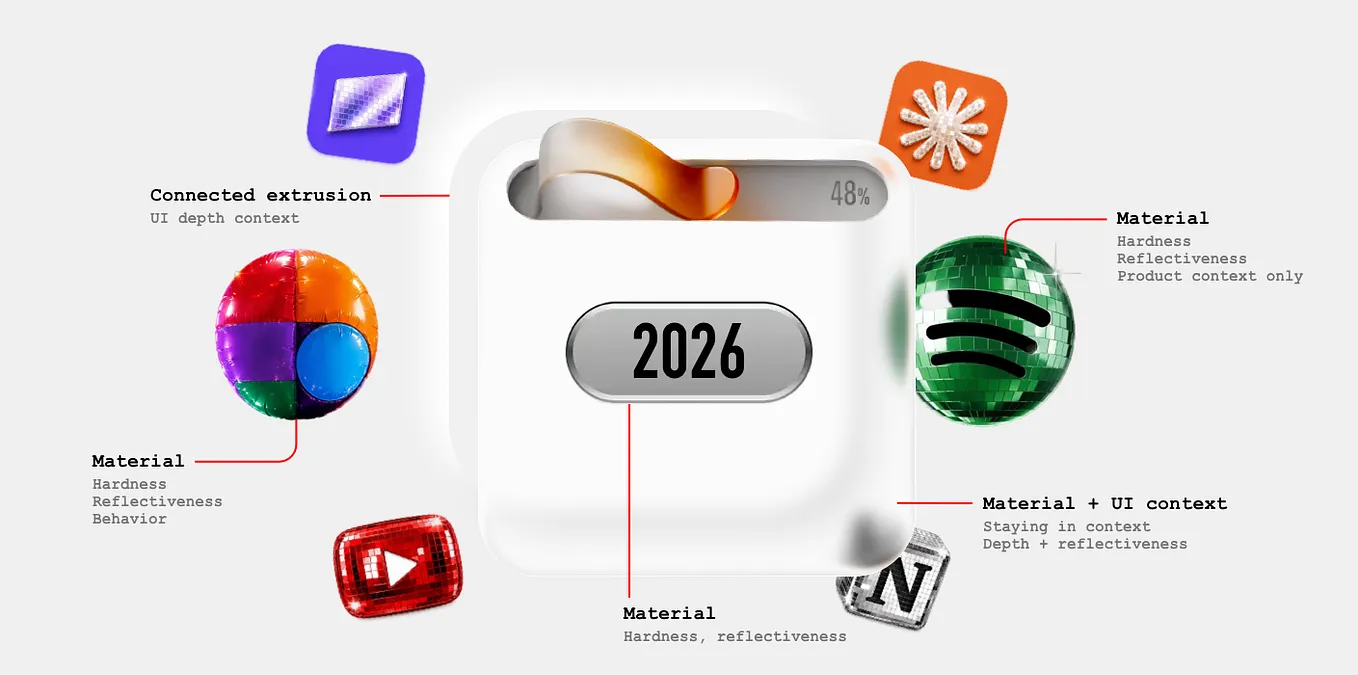
Aesthetic Fatigue Is Not a Personal Problem

Why Feeling “Visually Tired” Is a Systemic Outcome
Aesthetic fatigue is often framed as a personal issue. People describe themselves as bored, overstimulated, or increasingly difficult to impress. The assumption is subtle but persistent: if beauty no longer feels effective, the problem must lie with individual taste or attention.
But aesthetic fatigue is not a personal failure. It is a systemic outcome.
It emerges not because beauty has diminished, but because it has been produced at a frequency that exceeds our capacity to absorb it.
Beauty Produced at Industrial Speed
In contemporary visual systems, aesthetics are generated continuously. Images, objects, and designs are released in fast cycles, each one competing for immediate recognition. Visibility becomes the primary condition for relevance.
Within this structure, beauty is rarely allowed to unfold over time. It is compressed into moments, judged quickly, and replaced just as fast. The goal is not endurance, but performance within a narrow attention window.
This constant production does not accumulate aesthetic experience. It exhausts it.
Oversaturation, Not Insensitivity
When people say they feel numb to visual stimuli, it is often mistaken for desensitization. In reality, what is happening is saturation.
Each new aesthetic encounter consumes attention. As exposure increases, the threshold for what feels noticeable rises. What once felt sufficient now feels ordinary. What once felt striking becomes baseline.
This escalation is not driven by a lack of sensitivity, but by repeated depletion of attention. Aesthetic fatigue is the predictable result.
How Fatigue Becomes Normalized
Because aesthetic fatigue develops gradually, it is easy to normalize. Faster updates are interpreted as progress. Stronger stimulation is framed as innovation. Replacement becomes the default response.
Within this logic, the responsibility is quietly shifted onto the viewer or user: if something no longer feels engaging, it must be time for something new.
Get Flowerva’s stories in your inbox
Join Medium for free to get updates from this writer.
What remains unexamined is whether constant renewal is necessary at all.
Physical Objects Pulled Into the Same Cycle
This logic does not remain confined to screens. Physical objects — especially decorative ones — are increasingly shaped by the same expectations.
Decorative elements are introduced for seasons, events, or trends. Their relevance is tied to timing rather than integration. Once their visual moment passes, replacement feels natural, even expected.
In this environment, decoration is rarely designed to build familiarity. Longevity becomes secondary to update potential.
An Alternative Relationship With Aesthetics
If aesthetic fatigue is systemic, the response cannot be purely individual. It requires reconsidering how aesthetics are designed in the first place.
Some design practices move away from novelty-driven logic and toward long-term presence. Rather than competing for attention, these objects coexist with it. Their value does not depend on constant stimulation, but on stability.
Large-scale fabric-based installations offer a clear example. Instead of functioning as temporary decoration, they operate as spatial elements. They are designed to remain, allowing perception to shift gradually over time rather than resetting with each update.
When Objects Are Allowed to Stay
Objects designed for long-term presence behave differently. They do not demand immediate recognition. They do not need to outperform their surroundings. They allow familiarity to develop naturally.
This does not make them static or invisible. It makes them resilient to saturation.
Practices such as Flowerva approach aesthetics from this perspective, focusing on continued presence rather than momentary attention. The goal is not to eliminate beauty, but to slow its consumption.
Reframing Aesthetic Fatigue
Understanding aesthetic fatigue as a systemic outcome changes the question we ask. Instead of wondering why we feel tired of beauty, we begin to ask why beauty is produced in ways that require constant replacement.
Fatigue, in this sense, is not rejection. It is a signal.
It suggests that aesthetics may need more time, fewer cycles, and less pressure to perform.
When beauty is allowed to stay, it no longer needs to exhaust itself to be seen.