The Intentional Stance

What Daniel Dennett Can Teach Us About Our Relationship with AI

When your GPS instructs you to make a U-turn, do you assume it is like a copilot talking to you? You don’t, because you know the device is a collection of circuit boards. Yet almost everyone has caught themselves saying, “It wants me to make a U-turn; it’s mad at me.” We don’t say this because we believe the device has feelings; we say it because pretending it behaves like us is the easiest way to navigate traffic without questioning how it works.
The American philosopher Daniel Dennett called this mental shortcut the Intentional Stance. He pointed out that whenever we want to predict how something will behave, we can look at it from three different stances:
The Physical Stance is when we consider the raw physical material. If you push a glass off a kitchen table, you predict it will shatter because of gravity, mass, and the brittle nature of glass. You don’t ask what the cup wanted; you just do physics.
The Design Stance is when you think about how an object was engineered to function. When you set your alarm clock for 6:00 AM, you predict it will wake you up because of its internal programming, not because the clock cares about your morning routine. You trust the design.
The Intentional Stance is when you treat an object as a rational agent with beliefs, desires, and goals. When you play chess against a computer, you don’t calculate the flow of electricity through its silicon chips (the physical stance), nor do you read through thousands of lines of code (the design stance). Instead, you simply say: “The computer wants to take my rook, and it believes my bishop is unguarded.” You assign intention to the algorithm.
Get Laurent Cailliette’s stories in your inbox
Join Medium for free to get updates from this writer.
In short, the intentional stance is a strategy for predicting and explaining behaviour. It works brilliantly on people, animals, and complex machines, but it comes with a delusion: because the strategy works so well, we easily trick ourselves into thinking that our mental model is an actual property of the machine.
This is precisely where our confusion around modern artificial intelligence begins.
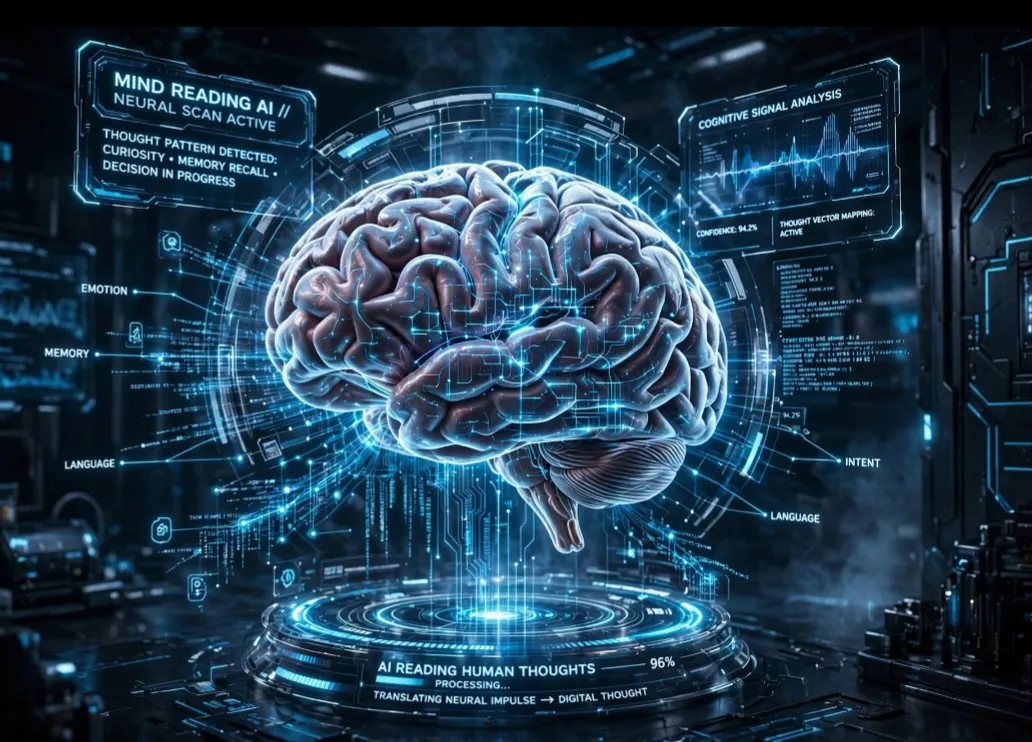
When a large language model generates a fluent, well-crafted paragraph, or asks, “Do you like this tone, or would you prefer something warmer?” our brains reflexively adopt the intentional stance. We deem the machine polite and competent. We instinctively infer that an agent is present, that someone is choosing their words in order to please us.
In reality, the software is simply following lines of code. It does not possess agency, cannot be held accountable, and has no inner thoughts; it’s just calculating the statistical likelihood of the next word in a sentence.
The intentional stance reminds us that attributing a mind to a machine is something we do, not something the machine is. The question is not whether the code has quietly developed a soul, but why we are so quick to project one. Treating a tool as if it has intentions can help us interact with it efficiently, but forgetting that it is just a tool leaves us vulnerable to anthropomorphism.
So, the question is not whether the machine has a mind, but why we are so willing to believe it does?
Originally published at https://laurentcailliette.substack.com on October 28, 2026.