5 Ways to Improve Your HRV Score

You wake up, and before your feet hit the floor you’ve already checked it. The number on your Oura app, your Whoop band, your Garmin. Green, yellow, or red — recovered, borderline, or not today. HRV has become the single most obsessed-over metric in the quantified-self world, and for good reason: it’s the closest thing wearables offer to a real-time readout of your autonomic nervous system, the system that governs how well you recover from stress, training, and everyday life.
The problem is that most advice on “how to improve your HRV” stops at the same four or five suggestions, and even those get repeated without much nuance about which ones actually move the needle. Here’s a rundown of what the research actually supports, plus one variable that almost nobody puts on the list — not because it’s been ruled out, but because almost nobody is testing it.
1. Fix your sleep before you fix anything else
Of every intervention studied, sleep produces the most consistent HRV gains. Consistent sleep and wake times, 7–9 hours a night, and reducing pre-bed stimulation all help balance the sympathetic and parasympathetic nervous system, and sleep is consistently ranked as the single highest-leverage HRV intervention across clinical reviews. Advanced Integrated Health’s breakdown of seven science-backed HRV methods puts sleep at the top of the list for a reason — it’s the intervention with the clearest, most repeatable effect size.
If you’re chasing HRV gains and haven’t nailed sleep consistency first, everything else on this list is working against a weaker foundation.
2. Practice slow, controlled breathing
Slow, deep breathing — particularly “coherent breathing” at around 5–6 breaths per minute — has a well-documented, almost immediate effect on HRV. It directly stimulates the vagus nerve, shifting the nervous system toward parasympathetic dominance within minutes. Breathless Expeditions’ guide to breathing and HRV covers the mechanics of why slow exhale-biased breathing works better than generic “deep breaths,” and why the effect compounds with regular practice rather than staying a one-off trick.
Get Aires Tech’s stories in your inbox
Join Medium for free to get updates from this writer.
This is also one of the few interventions on this list with same-day, same-session feedback — most HRV wearables will show the shift in real time if you do a five-minute session mid-day.
3. Use cold exposure, but keep your expectations calibrated
Cold showers and cold plunges get a lot of attention in the biohacking world, and there’s a real mechanism behind it: cold exposure triggers a hormetic stress response, and the parasympathetic rebound afterward can improve HRV over time. That said, it’s worth being honest about where it ranks. Sleep.me’s roundup of 12 ways to increase HRV notes plainly that “sleep, alcohol reduction, breathing, and balanced training usually give clearer HRV returns for most people” than cold exposure does. It’s a legitimate tool, just not the highest-leverage one — despite being the one most people reach for first because it’s the most photogenic.
4. Balance your training load and cut back on alcohol
Overtraining is one of the fastest ways to tank HRV, and it’s also one of the easiest to miss because the instinct when recovery scores drop is often to push harder, not back off. Periodizing training intensity — hard days followed by genuinely easy ones, not just “easier” ones — gives the autonomic nervous system room to recover. Alcohol is the other big lever here: even moderate drinking measurably suppresses overnight HRV, and the effect is dose-dependent and shows up the same night. Evolutions Behavioral Health’s guide to increasing HRV covers both of these in more detail, including how quickly the alcohol effect reverses once you cut back.
Between sleep, breathwork, training balance, and alcohol, you’ve now covered the interventions with the strongest evidence behind them. Most HRV advice stops here. But there’s a variable that’s been sitting in plain sight the entire time you’ve been tracking this number, and it’s the one almost nobody has actually tested.
5. Audit the electromagnetic environment you sleep and recover in
Here’s the thing about the four items above: they’re the ones everyone checks. Every HRV article, every wearable app’s coaching tips, every biohacking podcast covers sleep, breathwork, cold exposure, training load, and alcohol. That means when one of those is dragging your score down, it usually gets found — people are looking there constantly. The electromagnetic environment doesn’t get that same scrutiny in almost anyone’s routine, which means there’s no real way to know how often it’s quietly part of the picture for people whose HRV won’t budge despite doing everything else right.
The mechanism isn’t speculative. Multiple controlled studies have found measurable HRV reductions and sympathetic-dominant shifts during and after mobile phone and Wi-Fi exposure, via voltage-gated calcium channel activation in autonomic neurons — a real, documented pathway, not a hypothetical one. If your phone is on the nightstand transmitting all night, or your router sits a few feet from your bed, your sympathetic nervous system may be getting a low-level activation signal for eight hours straight — one that would show up on your wearable, but that you’d have no way to attribute unless you specifically tested it. Aires’ breakdown for the biohacking and HRV-tracking community lays out exactly how to run this as a self-experiment: two weeks of baseline HRV data with your environment unchanged, then four weeks with your phone on airplane mode overnight and your router relocated or scheduled to power down, comparing the trend.
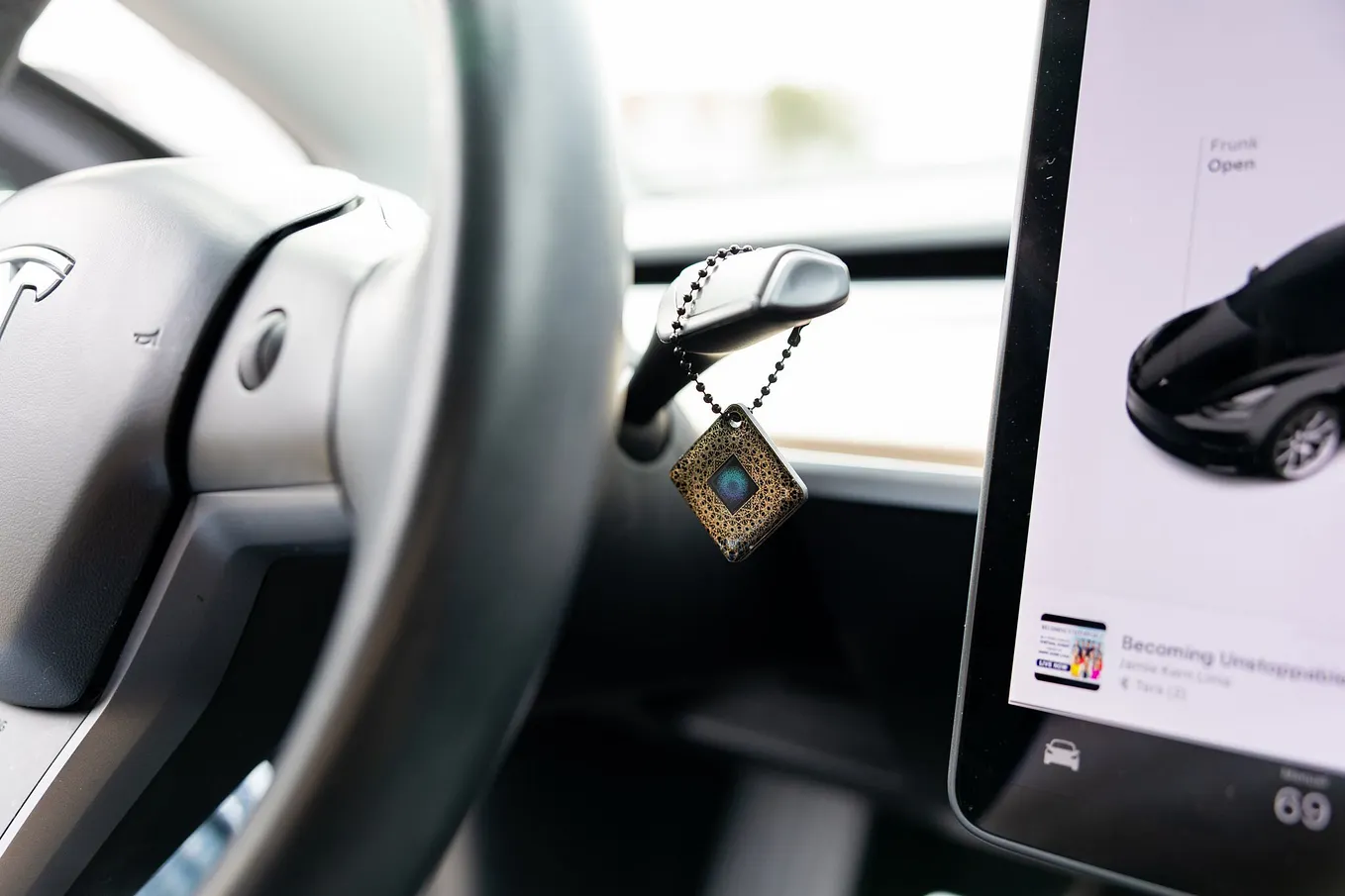
It’s worth taking seriously for the same reason cold exposure and breathwork are taken seriously: there’s a documented mechanism, it’s measurable with the tool you already own, and it costs nothing to test. Aires’ own research program has run controlled HRV studies on this exact question — the Datova 2013 study documented autonomic regulation improvements in 92.3% of subjects when field modulation was introduced — and their deeper dive into the HRV-autonomic-EMF connection covers the full mechanism if you want to understand the “why” before running your own version of the experiment. For anyone who wants to test structural field modulation specifically — rather than just removing devices, which changes your connectivity too — the Aires Lifetune devices are built to be placed directly on a router or phone as a third arm of the experiment.
Putting it together
Sleep first, breathwork second, sensible training and alcohol moderation third — these are the interventions with the clearest track record, and they’ll do more for your score than anything else on this list. Cold exposure is real but overrated relative to the hype. And the electromagnetic environment isn’t a last resort you get to after ruling everything else out — it’s a variable that’s been sitting in every bedroom this whole time, untested, simply because it’s never been on the list. If your HRV has plateaued despite doing everything “right,” it might be worth finding out.