Types of Drones: How Different UAVs Work and Where They Are Used


Drones have evolved from recreational gadgets into powerful tools used across agriculture, photography, surveying, infrastructure inspection, logistics, research, and emergency response. With so many models available, understanding the types of drones can help businesses, professionals, and enthusiasts choose the right technology for their needs.
From compact quadcopters to long-endurance fixed-wing aircraft, each drone design offers different advantages. This guide explores the major drone categories and their most common applications.
What Are Drones?
A drone, also known as an unmanned aerial vehicle (UAV), is an aircraft that can operate without a human pilot onboard. Depending on the model, it may be controlled remotely or operate partially or fully autonomously.
Modern drones commonly use GPS, cameras, sensors, flight-control systems, batteries, and software to perform specific tasks. Their capabilities have made them valuable across both commercial and recreational markets.
Types of Drones Based on Design
1. Single-Rotor Drones
Single-rotor drones are similar to miniature helicopters. They use one large main rotor to generate lift and usually have a smaller tail rotor for stability.
Their design can provide good endurance and payload capacity, making them suitable for specialized surveying, mapping, and industrial applications. However, they can be more complex to operate than smaller multirotor drones.
2. Multi-Rotor Drones
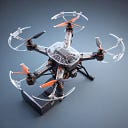
Multi-rotor drones are among the most widely used types of drones. They use multiple motors and propellers to achieve stable flight and precise maneuvering.
Quadcopters with four rotors are particularly popular. Hexacopters and octocopters provide additional lifting capacity and redundancy.
Multirotor drones are commonly used for:
- Aerial photography
- Videography
- Roof and infrastructure inspections
- Agriculture
- Thermal imaging
- Mapping
- Real-estate marketing
Their main limitation is flight endurance because the motors must continuously generate lift.
3. Fixed-Wing Drones
Fixed-wing UAVs resemble airplanes. Instead of relying entirely on rotors, their wings generate lift as the aircraft moves forward.
They are highly efficient for covering large areas and can remain airborne longer than many multirotor systems. Fixed-wing drones are commonly used for mapping, surveying, environmental monitoring, and agricultural analysis.
The major limitation is that conventional fixed-wing drones generally cannot hover in place and require suitable launch and landing arrangements.
4. Hybrid VTOL Drones
Hybrid VTOL drones combine fixed-wing flight with vertical takeoff and landing capabilities. They can rise vertically like a multirotor and then transition into forward flight like an airplane.
This combination makes them useful for large-area mapping, search and rescue, infrastructure inspections, and surveillance.
Types of Drones by Application
Different industries require different UAV capabilities. As a result, types of drones can also be categorized according to their intended purpose.
Agricultural Drones
Agricultural drones help farmers collect aerial information about crops and fields. They can support crop monitoring, field mapping, plant-health assessment, and precision agriculture.
Specialized agricultural UAVs can also be designed for spraying applications, subject to local regulations and operating requirements.
Photography Drones
Photography and videography drones use stabilized cameras to capture aerial images and footage. They are widely used by filmmakers, photographers, real-estate professionals, tourism companies, and content creators.
Features such as obstacle detection, automated flight modes, GPS positioning, and image stabilization make modern camera drones easier to operate.
Delivery Drones
Delivery drones are designed to transport lightweight goods such as packages, food, and medical supplies. Drone delivery technology is being explored for faster logistics and improved access to remote locations.
Racing and FPV Drones
Racing drones are designed for speed, agility, and rapid maneuvering. First-person-view (FPV) systems provide pilots with a live video feed from the aircraft.
Get Robodronetech’s stories in your inbox
Join Medium for free to get updates from this writer.
These drones are popular in competitive racing as well as recreational flying.
Inspection and Surveying Drones
Drones equipped with high-resolution, thermal, LiDAR, or multispectral sensors can collect valuable data without requiring workers to access difficult or hazardous areas.
They are used for inspecting buildings, bridges, power infrastructure, construction sites, mines, and large properties.
Types of Drones by Power Source
Battery-Powered Drones
Battery-powered UAVs dominate the consumer and commercial drone market. Rechargeable batteries provide convenient operation, although flight duration depends on battery capacity, payload, weather, and flying conditions.
Fuel-Powered Drones
Fuel-powered drones can provide longer endurance in certain specialized applications. They may also support heavier payloads, but their engines generally require more maintenance and operational planning.
Hydrogen-Powered Drones
Hydrogen fuel-cell technology is being explored for UAVs requiring extended flight times. These systems can potentially offer longer endurance than conventional batteries in suitable applications.
Solar-Powered Drones
Solar-powered UAVs use solar energy to supplement their power requirements. They are particularly interesting for long-duration research, environmental monitoring, communications, and scientific missions.
Types of Drones by Number of Rotors
Rotor configuration is another way to distinguish different UAV designs.
Tricopters use three rotors and can offer agile flight characteristics.
Quadcopters use four rotors and are one of the most common drone configurations.
Hexacopters use six rotors, providing additional lifting capability and redundancy.
Octocopters use eight rotors and can support heavier professional payloads while providing strong stability.
Coaxial drones use multiple rotors positioned along the same axis, allowing a compact design with significant lifting capability.
How to Choose the Right Drone
Selecting among the various types of drones depends primarily on what you need the UAV to accomplish. A beginner interested in aerial photography may prefer a compact camera quadcopter, while a surveying company covering hundreds of acres may benefit from a fixed-wing or hybrid VTOL platform.
Before choosing a drone, consider:
- Flight time
- Maximum range
- Payload capacity
- Camera and sensor requirements
- Portability
- Takeoff and landing requirements
- Weather resistance
- Ease of operation
- Maintenance requirements
- Local aviation regulations
- Total operating cost
The Future of Drone Technology
Drone technology continues to develop rapidly. Improvements in battery systems, autonomous navigation, artificial intelligence, sensors, cameras, and communications are expanding the capabilities of UAVs.
Agriculture, logistics, construction, environmental monitoring, emergency services, and infrastructure management are among the industries where drones can provide valuable aerial data and automation.
As technology becomes more accessible, understanding the different types of drones will become increasingly important for businesses and individuals looking to use UAVs effectively.
Final Thoughts
There is no single drone that is ideal for every purpose. Multirotor drones excel at hovering and precise maneuvering, fixed-wing UAVs are efficient for covering large areas, and hybrid VTOL models combine vertical takeoff with long-range flight.
By evaluating design, size, application, power source, rotor configuration, payload capacity, and flight endurance, users can identify the drone that best matches their objectives. Understanding the types of drones is therefore an important first step toward making a smart decision in the growing UAV industry.
Originally Published By ROBODRONETECH