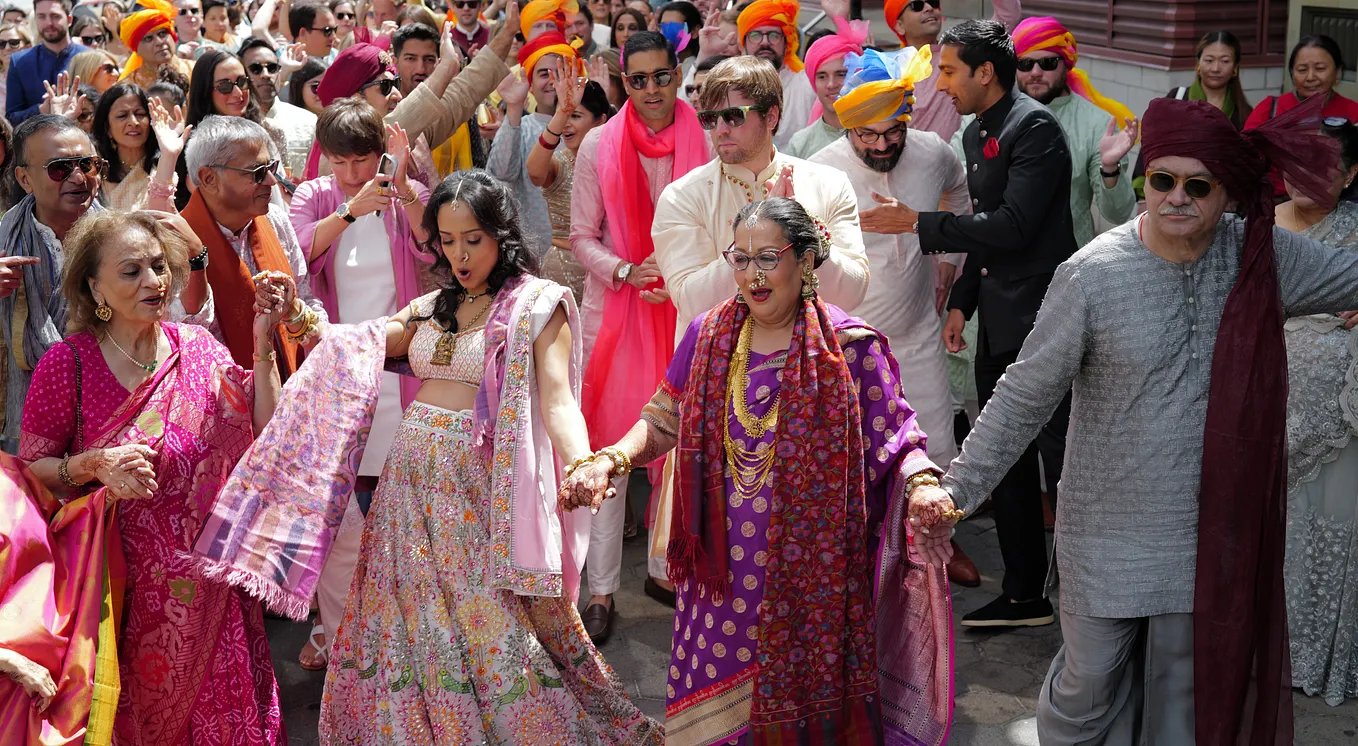
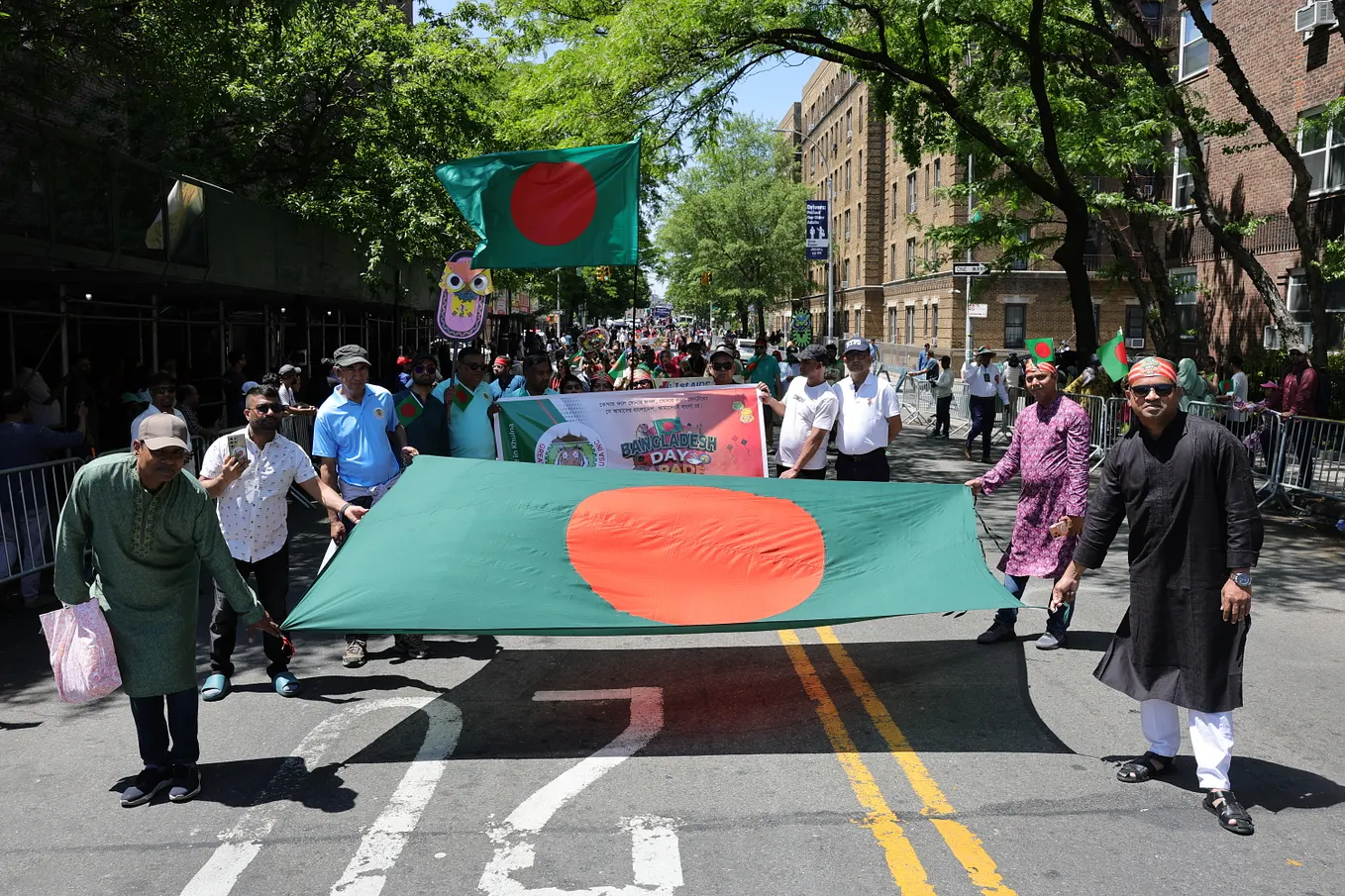
A decade is a long time in the life of a diaspora, and on Sunday, the Nepali American community paused on Madison Avenue to mark exactly that. The 10th Annual Nepal Day Parade brought thousands of Nepalis from across the East Coast to the heart of Manhattan, transforming the stretch from 38th Street down to 25th Street into what organizers fondly called a “miniature Nepal.” Under blue spring skies, the parade unfolded as a vibrant tribute to language, identity, and the long journey from the foothills of the Himalayas to the towers of New York. Sal Media was on the scene to capture these moments through the lenses of their photographers, Sal Sayed and Ash Makhdoom.
The parade officially kicked off at 1:00 PM, though participants began gathering as early as 11:00 to assemble their floats and form contingents. Organized by the New York Chapter of the Non-Resident Nepali Association (NRNA), in collaboration with the Federation of Indigenous Nationalities of Nepal-America (FIPNA) and roughly 50 community organizations, the parade drew an estimated 4,500 to 5,000 participants. Some 100 volunteers in white “Nepal Day Parade” T-shirts moved up and down the route, helping coordinate the procession and answering questions from curious passersby.
What unfolded on Madison Avenue over the next few hours was, in every sense, a portrait of Nepal itself — a country whose remarkable ethnic and linguistic diversity often surprises those who know it only by its mountains. Jhalkis, or tableau floats, represented the country’s many indigenous groups, including the Rai, Limbu, Sherpa, Tamang, Newar, Magar, and others, each one carrying its own traditional attire, instruments, and dances. The sound of the panche baja — Nepal’s traditional five-instrument ensemble — wound through the avenue, joined at different points by hudkeli, deuda, sorathi, Maithili songs, and the unmistakable rhythm of Tamang Selo.
For Basu Lamichhane, president of this year’s organizing committee, the milestone of a decade carried particular weight. “Since 2016, our goal has been to showcase our heritage and support tourism in Nepal,” he had told reporters in the lead-up to the event. “Over the last decade, we’ve had ups and downs, but this year is special because we have successfully brought together various groups and ‘mended hearts’ to ensure a collective celebration.” That sense of restored unity was palpable on the avenue, where organizations that had at times pursued separate cultural events marched together in a single procession.

A central theme of this year’s parade was the message of Nepal as the birthplace of Lord Buddha — a point of cultural and historical pride that organizers wanted to highlight in front of an international audience. Several floats incorporated Buddhist imagery, with prayer flags fluttering above marchers and devotees turning small handheld prayer wheels. Just behind them, a contingent of dancers in vivid traditional attire performed routines from Nepal’s varied ethnic traditions, the bells on their ankles keeping time with the music.
The parade also served, as it has in years past, as a touchpoint for civic engagement. Diplomats from the Consulate General of Nepal in New York joined senior NRNA leaders and U.S. elected officials in walking part of the route, greeting community members along the way. The Nepali American community has become one of the fastest-growing immigrant groups in New York City, and the parade’s growing prominence in the city’s calendar reflects that demographic reality.

Perhaps the most touching element of the day was the deliberate emphasis on the next generation. Organizers had made a concerted effort to involve second- and third-generation Nepali-Americans, encouraging youth to perform traditional songs and dances onstage near the conclusion of the route. For many of these kids — born in New Jersey, Queens, or the Bronx, and often more fluent in English than in Nepali — the parade is a yearly opportunity to connect viscerally with the culture of their parents and grandparents. Onlookers smiled as small children in dhaka topi caps and bhoto-suruwal practiced their steps on the sidewalk, waiting for their turn.
As the procession reached 25th Street, the energy shifted to the central stage area, where cultural performances were scheduled to run until 6:00 PM. Conveners had made a point this year of integrating the floats directly with the stage area, addressing a longstanding complaint that the parade’s momentum used to dissipate once the marchers turned the corner. The result was a continuous flow of color and sound — singers, folk dancers, and storytellers performing for a crowd that packed the streets nearby. Food vendors offered momos, sel roti, chowmein, and steaming cups of milk tea, and lines stretched a half-block deep for the most popular stalls.

For the Nepali diaspora, this annual gathering has come to occupy a special place. It is, on one level, a celebration of homeland. But it is also a moment of self-recognition — a chance to see the breadth of one’s own community made visible on one of the most prominent avenues in the world. As one organizer put it, it is a “moment of self-satisfaction for those of us living abroad to see our soil’s beauty reflected on the streets of Manhattan.”
By late afternoon, as the program drew toward its close, volunteers had already begun the community-led cleanup of the route, a quiet but meaningful tradition that mirrors the cooperative ethos of village life back home. Ten years in, the Nepal Day Parade has grown from a modest community gathering into one of Manhattan’s most distinctive cultural events. And if Sunday’s celebration was any indication, the next decade promises to be even louder, more colorful, and more deeply rooted in the soil — Nepali and American both — that makes it possible.
Get Sal Media’s stories in your inbox
Join Medium for free to get updates from this writer.
For more information on Sal Media, check out our website and our Instagram page.


© 2026 Sal Media Inc. All rights reserved.
Disclaimer: All photographs, video, and editorial content in this article are the exclusive property of Sal Media Inc. and protected by copyright. Unauthorized use, reproduction, distribution, or republication — in any form or on any platform — is strictly prohibited and subject to legal action under U.S. and international copyright laws.