The Real Reason ChatGPT “Understands” Some People Better Than Others (It’s Not Luck)

You’ve seen it happen. Two people ask ChatGPT almost the same question. One gets an answer that feels like it was written by someone who actually knows them. The other gets something generic, slightly off, technically fine but forgettable. Same model. Same day. Wildly different result.
The easy explanation is luck, or that one person “just gets AI” in some vague, innate way. Neither of those is true, and both of them let you off the hook from the actual answer, which is a little less magical and a lot more learnable.
It’s not the words. It’s the model of the reader in their head.
Here’s what’s actually happening. ChatGPT doesn’t understand you. It doesn’t have a memory of who you are unless you give it one, in that conversation, explicitly. The person getting the “understood” response isn’t being read better by the model. They’re feeding it a clearer picture of themselves to respond to.
Think about the difference between “give me advice on my career” and “I’m three years into a role I don’t hate but don’t love either, I’m risk-averse, and I’ve turned down two opportunities already because the timing felt wrong — give me advice on my career.” The second one isn’t a better-written prompt in some technical sense. It’s a smaller, sharper version of a person for the model to actually respond to. The output feels “understood” because there was finally something specific enough to understand.
Most people skip that step entirely. They ask the question they’d ask a friend who already has twenty years of context on their life, then get frustrated when a system with zero context gives them a twenty-years-of-context answer that doesn’t land.
The second thing — they don’t accept the first draft as the ceiling
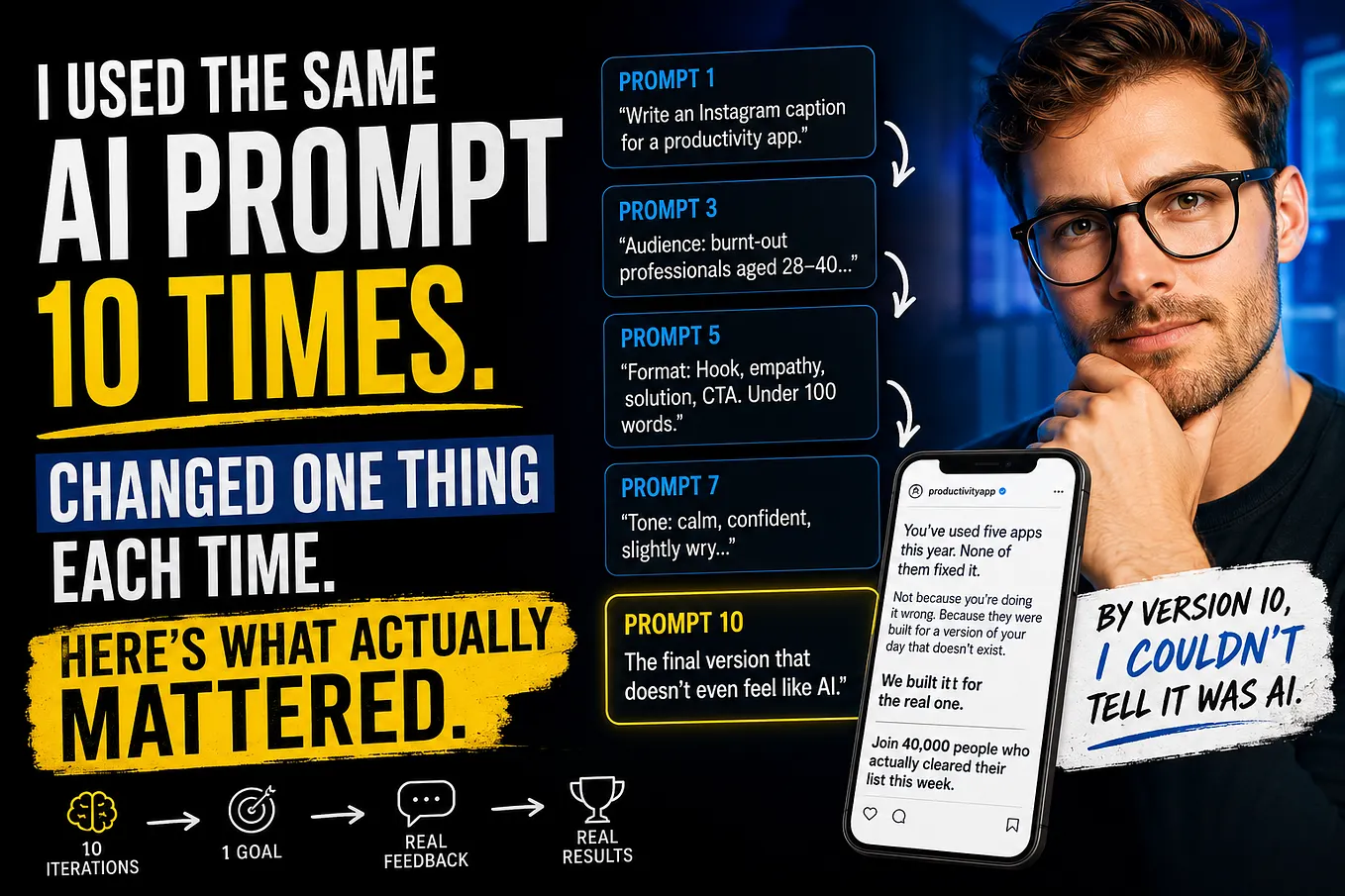
Watch someone who consistently gets good results, and you’ll notice they almost never treat the first response as final. Not because the first response is always bad — sometimes it’s fine — but because they treat it as information. This is close. This part’s off. This assumed something about me that isn’t true. Then they correct, once, specifically, and the next response usually closes most of that gap.
Get Samia Afzal Writer’s stories in your inbox
Join Medium for free to get updates from this writer.
The people who feel unseen by these tools are often the ones who ask once, get something mediocre, and conclude the tool just doesn’t get them — without ever telling it what it got wrong. That’s not a criticism. Nobody teaches you that a follow-up correction is normal and expected, not a sign you did the first prompt “wrong.” It’s baked into how these systems actually improve within a conversation. One shot in, one shot out, isn’t how anyone gets a genuinely good result out of a person either.
The third thing, and probably the biggest one — they give it a role, not just a task
“Help me write this email” gets you a competent, faceless email. “You’re helping me write an email to a manager who responds well to directness and doesn’t like long preambles — help me write this” gets you something that actually sounds like it was aimed at a real person, because now the model has a lens to generate through, not just an empty instruction to fill.
This is the part that looks like magic from the outside and isn’t. It’s just the difference between handing someone a blank page and handing them a blank page with a sentence at the top telling them who they’re writing to and why. Same task. Completely different constraint space to work inside.
What this actually means
The people who get “understood” by ChatGPT aren’t more intuitive, luckier, or more technical. They’re doing three unglamorous things most people skip: giving specific context instead of assuming shared history, treating the first answer as a draft instead of a verdict, and framing a role instead of just a task.
None of that requires being technical. It requires being willing to be specific about yourself in a way that feels, honestly, a little exposing the first few times you do it. That’s probably the real reason so many people don’t do it by default — not because it’s hard, but because it asks you to describe yourself clearly to something that’s going to answer back immediately, with no social cushioning if the description was off.
It’s not luck. It’s just a slightly different, slightly more deliberate way of showing up to the conversation.
I write about prompt engineering and what actually separates the results people get from AI tools. If that’s useful, I’d love for you to follow along.