Member-only story
The Weak Link
AI’s Productivity Paradox and Asymmetric Risk!!


Global AI investment now exceeds $500 billion annually. OpenAI’s valuation tripled to $500B in a single year. Enterprise AI spending tripled from $11.5B to $37B between 2024 and 2025. And yet — total factor productivity growth across the OECD remains flat.
Ninety percent of firms in a recent NBER survey of 6,000 CEOs reported no measurable productivity improvement from AI.
Something is off. The technology works — individual studies show 14–55% productivity gains on specific tasks. The spending is real. The investment is unprecedented. So where are the results?
I wrote recently about the inverted stack — how AI’s value chain runs backwards compared to cloud, with semiconductors capturing 79% of gross profits while applications scrape by at 33% margins. That piece mapped where the money goes. This one asks another question: why isn’t the money producing measurable economic returns yet?
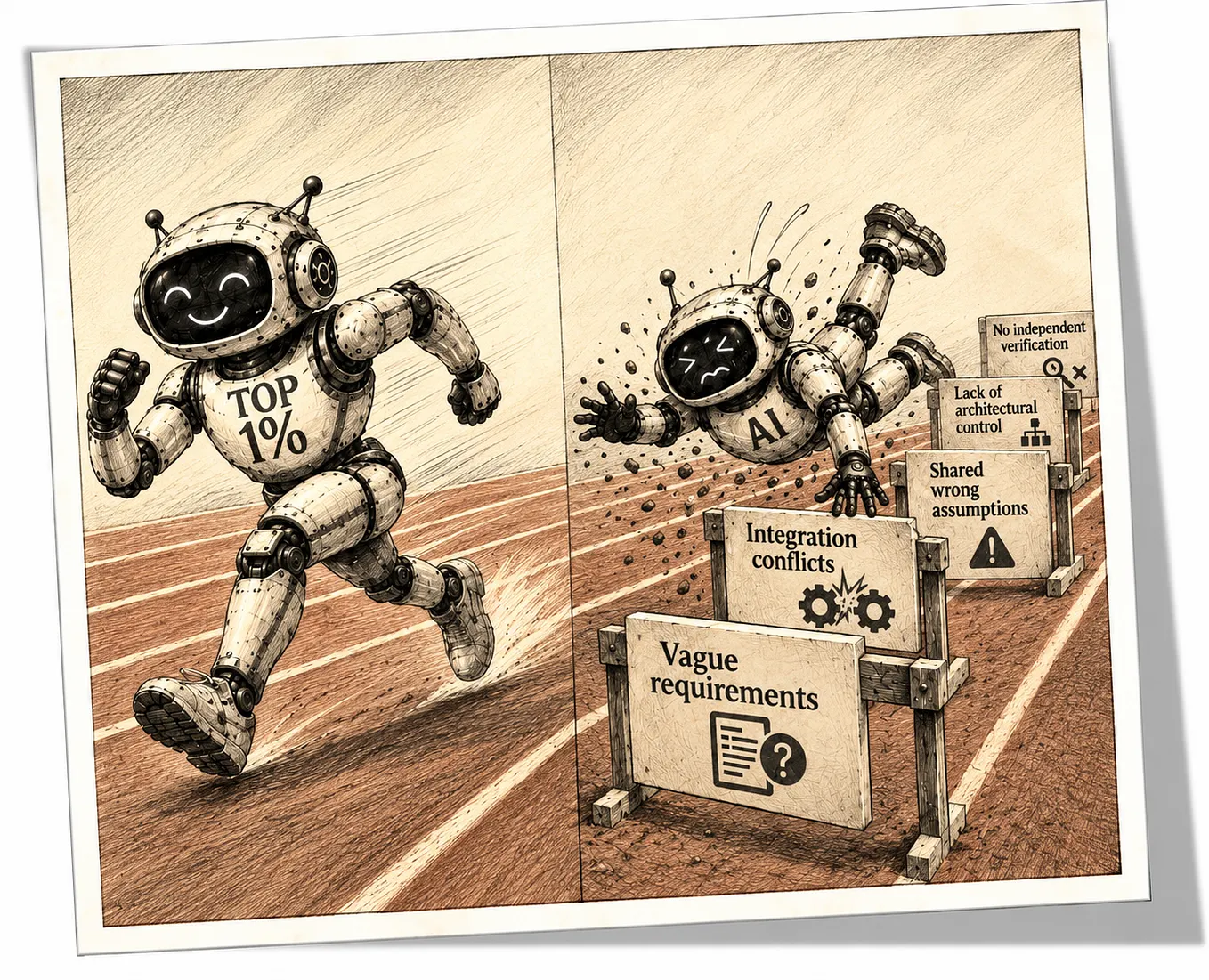
Chad Jones, an economist at Stanford GSB, published a paper earlier this year called “AI and Our Economic Future” that contains what I think is the most useful mental model for answering this. He calls it the weak link problem. It’s simple, it’s counterintuitive, and it explains a…