At 11:08 AM, the monitoring dashboard at a fictional e-commerce company, Northstar Retail, turned red.
API latency had jumped from 200 ms to several seconds.
SQL Server was healthy. CPU was normal. Redis was fine.
The team initially blamed the database.
They were wrong.
The problem was hiding inside a frequently executed method:
public async Task<Customer?> GetCustomerAsync(int id)
{
    using var client = new HttpClient();
    var response = await client.GetAsync(
        $"https://customer-api/customers/{id}");
    return await response.Content
        .ReadFromJsonAsync<Customer>();
}
It looked harmless.
It wasn’t.
Press enter or click to view image in full size
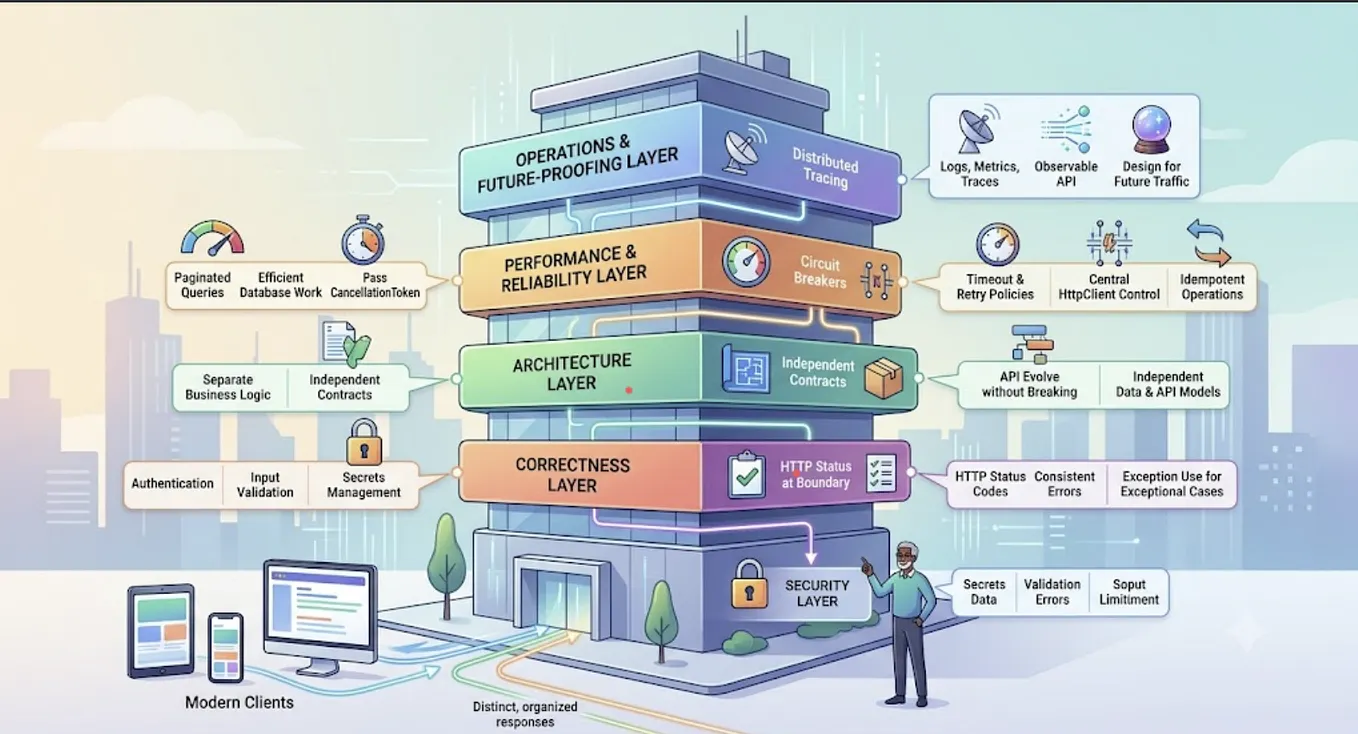
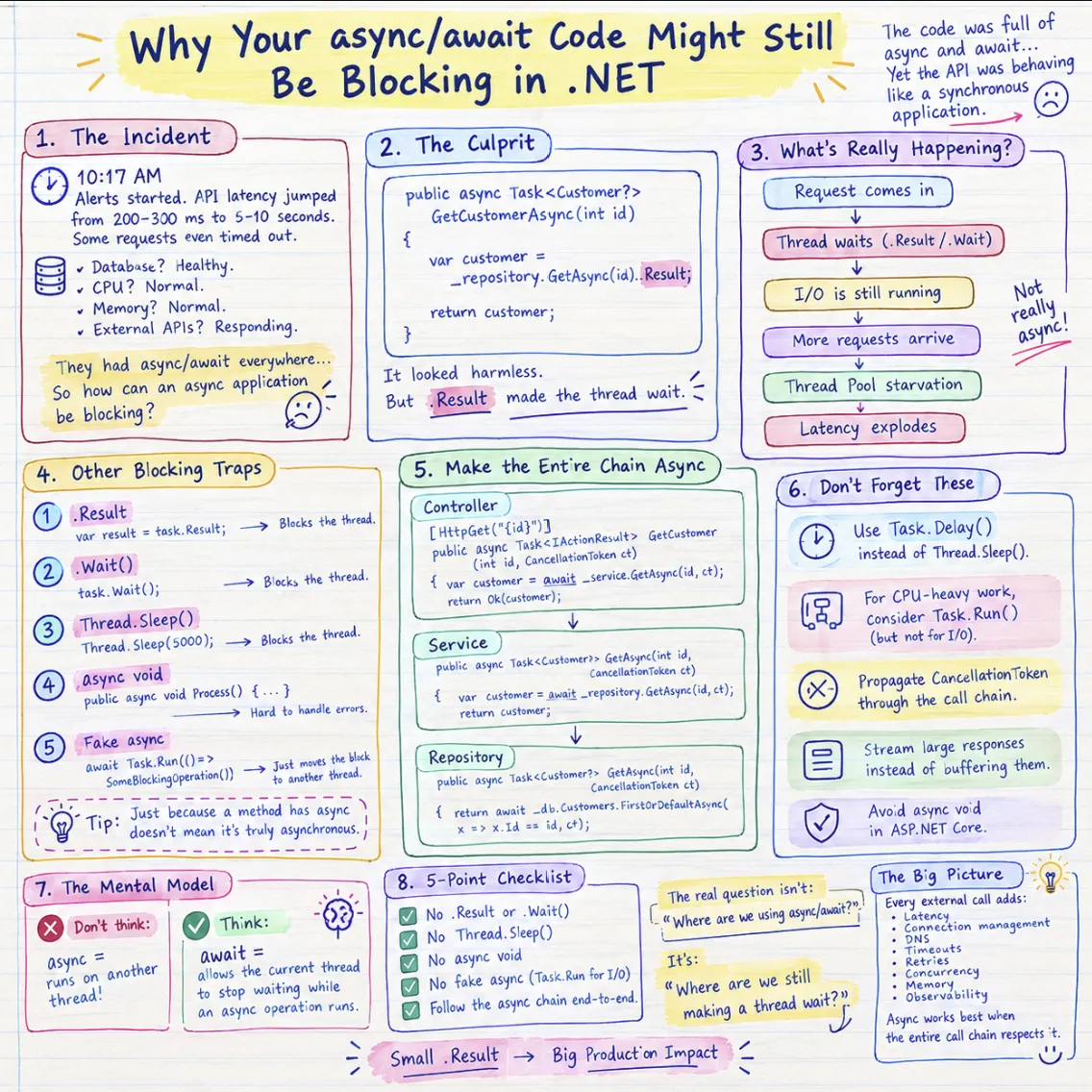
One tiny HttpClient mistake can turn a fast .NET API into a production bottleneck.
The “1,000 requests per minute × 3 APIs” bit is where caching deserves a line too. For read-heavy calls whose data doesn’t change every second, a short cache in front of the typed client cuts outbound traffic before concurrency limits even come into…