The Weight I Refuse to Carry
Five words that cost her nothing — and cost me everything


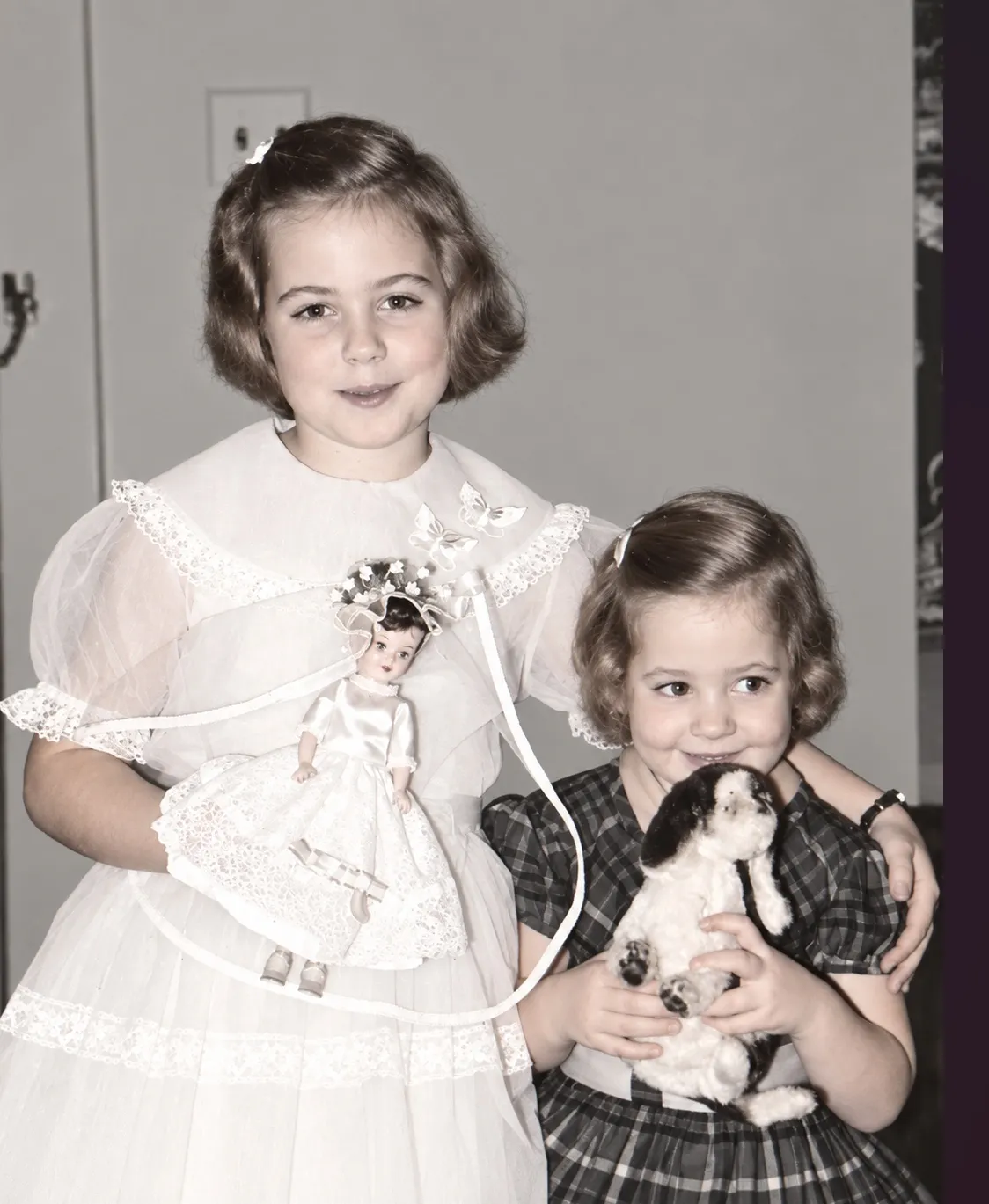
When I was a kid, my parents made a videotape.
I don’t know what was on it. I only know my sister had dropped out of college, pregnant, and stopped speaking to the family. My parents drove to her apartment, handed me the tape, and pointed toward her door.
I ran it up and left it on the step and ran back to the car, and we drove away.
That was how my family handled its pain. Through proxy. The adults stayed in the car while the child carried whatever they couldn’t take the last few feet themselves.
I’ve done it my whole life. I just didn’t have a name for it until someone handed me the worst thing I’ve ever been asked to carry.
I’ve written this a hundred times. I keep writing it because the page is the only place I get to finish a sentence about how I feel without it turning, somehow, into a sentence about how I’m wrong. That’s what happens when I try to say it out loud. I open my mouth about my own life and by the end I’m the one apologizing, I’m the one who’s hurt someone, and the thing I needed to say is gone.
She’s my biggest fan
People want to know why I don’t call my mother. They ask it the way you’d ask why someone won’t go to the dentist. Like it’s avoidance. Like it’s something I’d fix if I were braver, or healthier, or had done the work. I’ve let them think that, because the true answer is longer and it doesn’t make me look the way not calling makes me look.
My mother tells people she’s my biggest fan. I believe she means it. She would walk into traffic for me and she would also, in the same year, ask me if I molested my niece.
According to my mother, my niece claimed that when she was a baby, lying in her cradle, I pulled my dick out in front of her and traumatized her.
I don’t remember that happening. I don’t know how anyone remembers something like that from infancy. My sister has never liked me, and part of me suspects the story came from her as another way to push me out of the family. But I don’t know. That’s the problem. I don’t know where the story began. I only know where it ended up.
My mother asked me if I had done it.
I said of course not.
She said she believed me.
Then the subject was gone.
There’s a version where I defend myself, and the defense isn’t the point — I defended myself the second she asked. The point is what happened next.
Nothing.
The question and the belief weighed the same. Both set down and walked away from in the same breath. If she believed me, why ask? If asking was nothing, why was my uncle completely unfazed and unsurprised when I mentioned how much it bothered me?
Like he’d heard it before.
It wouldn’t be the first time my mother put someone else’s name on something she carried to me.
Years ago, when I was doing gay porn, I posed for a photographer who sold my pictures to Playgirl. The magazine made me its Hot Man of the Month — a two-page spread with a fake interview I had never given. I didn’t know any of it existed until my mother called. She said my aunt had found the magazine in a bookstore. We laughed about it.
Years later, I mentioned it to my aunt as a joke. She said she had never seen the pictures. She had only heard about them. Then she looked at my mother.
Nobody said anything else. My aunt didn’t accuse my mother of lying, and my mother didn’t admit she had been the one who found the magazine. I can’t prove what that look meant. I only know that the person my mother named as the source said she wasn’t the source.
So when my mother tells me my niece said something about me — something my niece supposedly remembers from infancy — I’m left with a story serious enough to change my place in the family and no reliable way to know where it began. I know where it ended up.
With me.
Chaos wasn’t a crisis
I’ve always been transparent about who I am, and they never threw it in my face. They never spoke down to me or treated me poorly. They even came to visit me in rehab. They knew about the addiction, the homelessness, the porn, all of it.
They accepted the wreckage so completely that it just became the baseline of who I am. To them, my survival inside that chaos wasn’t a crisis to be solved; it was just the weather of my life. They looked at me and accepted what I was, without ever wondering how I got there.
She was relieved about the gender of the water
Years later I called my mother, scared in a way that sends a grown man back to his mother’s voice before he can think better of it. I thought I might have given a girl HIV. I’d talked myself all the way down to nothing. And my mother heard the fear and the girl and the maybe-dying, and the thing she landed on, the thing she was glad about, was that I’d been with a girl.
I was drowning and she was relieved about the gender of the water.
I never tried to talk to my mother about anything again.
He was loving and protective
My father worked hard when I was a kid. He was the superintendent for a construction company, which meant he was usually working or home exhausted from working, so he wasn’t really present as a father. But he was loving and protective, and everyone else looked up to him. I remember sitting in the back seat on the way home from visiting someone, listening while he and my mother discussed the person we had just left. They were polite while we were there. The judgment came afterward, in the privacy of the car, when the person could no longer answer for themselves. My parents always knew what everyone else was doing wrong. In our family, they were the ones who knew better.
That was the most intimate we ever were
Colin Campbell was the retired attorney who took me in when I had nowhere left to go. He lived in a house overlooking the Pacific in Gualala, California, and used a wheelchair after losing a leg. He gave me my own room, fed me, and listened without requiring me to explain myself into someone he could approve of. In return, I did yard work and gave a lonely old man someone to talk to.
The only time my parents met Colin, he and I were flying to the East Coast for an annual gathering at his favorite piano bar in Ogunquit, Maine. At my request, we flew into Washington, D.C., so I could see them. My mother pulled me aside and asked if Colin and I were having sex.
We weren’t.
Back in Gualala, I slept in my own room. I’d wake up and find him making breakfast in the kitchen. He spent most of the day working in his office. Sometimes I’d walk up behind his wheelchair and run my fingers through his hair. I initiated it. That was the most intimate we ever were.
Right before we left, my father told me that a man needed to be his own man. He shouldn’t allow another man to take care of him. It sounded like advice. I carried it back to California.
After that, the things Colin did for me began to look different. If he asked me to wear a nice shirt to the piano bar it started to feel like control. Dependence started to feel like weakness. I got angry with him over nothing, accused him of controlling me, moved out, and went back to San Diego.
My father didn’t make me leave Gualala. I did that. He handed me an explanation for my life, and I started finding evidence to make it true.
Years later, during the last real conversation I remember having with my father, I told him I missed Colin. I missed having someone I could talk to without being judged. My father said he had never known anyone like that.
I think that may be the saddest thing he ever told me.
He couldn’t recognize what Colin had given me because nobody had ever given it to him. Then he taught me to be suspicious of it, and I listened. For a while, I had someone who saw me without first deciding what I was. Then I carried my father’s explanation home and used it to make Colin disappear.
Pain was treated as evidence
A while back she told me about my nephew. He’d been a prison guard. He came to her and broke down — the things he’d seen in there, what it had done to him — and he wept, and my mother and my aunt looked at this grown man falling apart and they moved. They got him help. They closed ranks around his pain the way a family is supposed to. They saw a man suffering in front of them and they did not ask him what he’d done to deserve it.
I had been ridiculed when I begged for help because my uncle (not the same one) decided I had inflicted my suffering on myself. He thought I was on drugs. I wasn’t. I had already lost everything I owned and spent three days walking around trying to find someone who would help me. I even went to a rehab program where I’d previously donated $500 during a fundraising event a couple years earlier — they told me to come back on Tuesday for an AA meeting.
At the last place I thought I would be safe, I was raped.
No one asked whether he’d brought it on himself. No one asked what choices had led him there. They saw someone they loved in pain, and that was enough. When it was me, pain was treated as evidence. Evidence that I’d done something wrong. Evidence that I’d earned it.
Then I was told that was my fault too. What did I expect to happen at a sex club? I was friends with all the employees. No one other than the employees were even there.
I locked myself in my room and passed out from exhaustion. I didn’t expect to wake up 16 hours later and find my door opened, my underwear on the floor, or the condom in the trashcan.
She could have said, Enough
When I tried to tell my mother what happened when I was sixteen, she said she wasn’t there.
She was sitting a foot from me with her eyes on the windshield, not turning her head, and that is a different thing than not being there. I wasn’t there is what you say about a place you couldn’t reach.
She told me she couldn’t have protected me from what I brought on myself that night.
Maybe she couldn’t have protected me from what happened after I left the house. She still could have protected me from my father. She could have stopped him from teaching a frightened sixteen-year-old that he was disgusting, that who he was made him unworthy of love, that his future had already been decided. She could have refused to let him stand over a boy and shrink him down to nothing. She could have said, Enough.
Instead, she looked through the windshield.
By the time the night came, there was almost nothing left to protect.
Certainty is the evidence
When I was sixteen I worked at Kmart, stocking shelves. A kid came up — ten, maybe twelve — wanting to see the paintball gun locked in the case in sporting goods. Nobody was working that department. I had a key. So I opened the case and held the thing up so he could see it.
A minute later his mother had him by the arm and was screaming that I’d pointed a gun at her child.
I hadn’t. And it didn’t matter, because the only thing I said — to the manager, the police, my parents — was the truest and most useless thing a person can say:
Look at the cameras. You’ll see.
No one looked. Or they looked and it changed nothing, because the woman had been certain, and I was learning the thing this whole essay is about: certainty doesn’t need evidence. Certainty is the evidence. They sent me to juvenile hall for three or four days. I don’t know which anymore. I spent so many years pretending it never happened that I couldn’t say with complete certainty it ever did until my mother confirmed it.
It was only a couple of days. It was nothing.
In there they put me in a padded vest, the kind for inmates who’ve threatened to kill themselves. I hadn’t threatened anything. I’d asked them to watch a videotape. They told me to shower with the other boys, and I couldn’t, for reasons I had no words for yet — the same wordless wrongness I’d carried in my body since before I understood it. My refusal became one more proof of what they already knew.
Wouldn’t.
Difficult.
Dangerous.
It wasn’t the first time. I’d failed gym in high school because I couldn’t make myself undress in front of other boys. Back then it became another mark against me. In juvenile hall it became another piece of evidence.
My mother knew I’d done nothing. She told me so. She told me thirty some odd years later.
Three decades she held the one sentence that could have changed how I understood that weekend, carried it like a receipt she meant to throw out. When she finally handed it over, it was too late to reach the boy in the vest.
That’s the thing about her I keep walking into. It’s not that she didn’t have the truth. She had it the whole time. It just weighed so little to her that she could carry it for thirty years and forget she was carrying it.
I know exactly how little
Before I flew to Virginia to stand at my grandmother’s deathbed, my mother told me a story on the phone. I don’t know why she chose then. She said that when I was a baby, not yet one year old, she’d taken me and my cousin to get our hair cut, and she’d had mine cut too, and that my grandmother and my father had been furious with her, because there’s a superstition — you don’t cut a child’s hair before his first birthday. She broke it. And so, she said, she had cursed me. To a hard life. And the hard life came, exactly as ordered, because she’d let someone cut a baby’s hair.
She handed me a story that reached backward through my entire life and made every wound feel inevitable.
So when I stood over my grandmother as she was dying, my father on one side of the bed and my uncle on the other, I asked the only question I’d ever get to ask the only other people who’d been in the room when it happened. I asked why I’d been cursed.
I have never felt air leave a room so fast. My father went red. And they had no idea what I was talking about.
Maybe they’d forgotten. Maybe my mother remembered something that never happened. Maybe she invented the story without ever meaning to. I don’t know. I may never know.
Get David Lee Condrey’s stories in your inbox
Join Medium for free to get updates from this writer.
My father believes I made the whole thing up to make him hate my mother. Maybe my mother would say something equally certain about me.
I don’t know. That’s the problem. I have spent my life inside other people’s certainty about things none of them can prove.
She told me my father was dyslexic. She told me my grandmother secretly had millions of dollars in gold hidden away. She told me a haircut before my first birthday had cursed my life.
I don’t know which things she believed when she said them. I only know I was expected to carry them afterward.
But by then it didn’t matter.
The verdict that defines your whole life can mean almost nothing to the people who handed it to you. It was never about me. It was about their need to have me explained. And they didn’t even need to remember the explanation for it to keep doing its work, every day, for the rest of my life.
Put the weight in my arms and walk away light
She told me once why she does it. She didn’t know she was telling me.
She said she can’t hold my pain — that if she let herself take it in, it would break her. She said it like a confession of love, proof of how much I matter, that the weight of what’s happened to me is more than she can bear.
But if my pain would break her, and she will not be broken, then it has to go somewhere. So it goes to me. All of it. She decided, in the moment that mattered, who the pain was going to break, and she decided it would not be her. And to make that bearable, to make it something other than what it is, it had to become my fault.
A pain you earned isn’t an injustice you’re required to feel. If it’s mine, she’s allowed to set it down. The verdict was never about me. It was the device that let her put the weight in my arms and walk away light.
Carrying the pain you didn’t choose
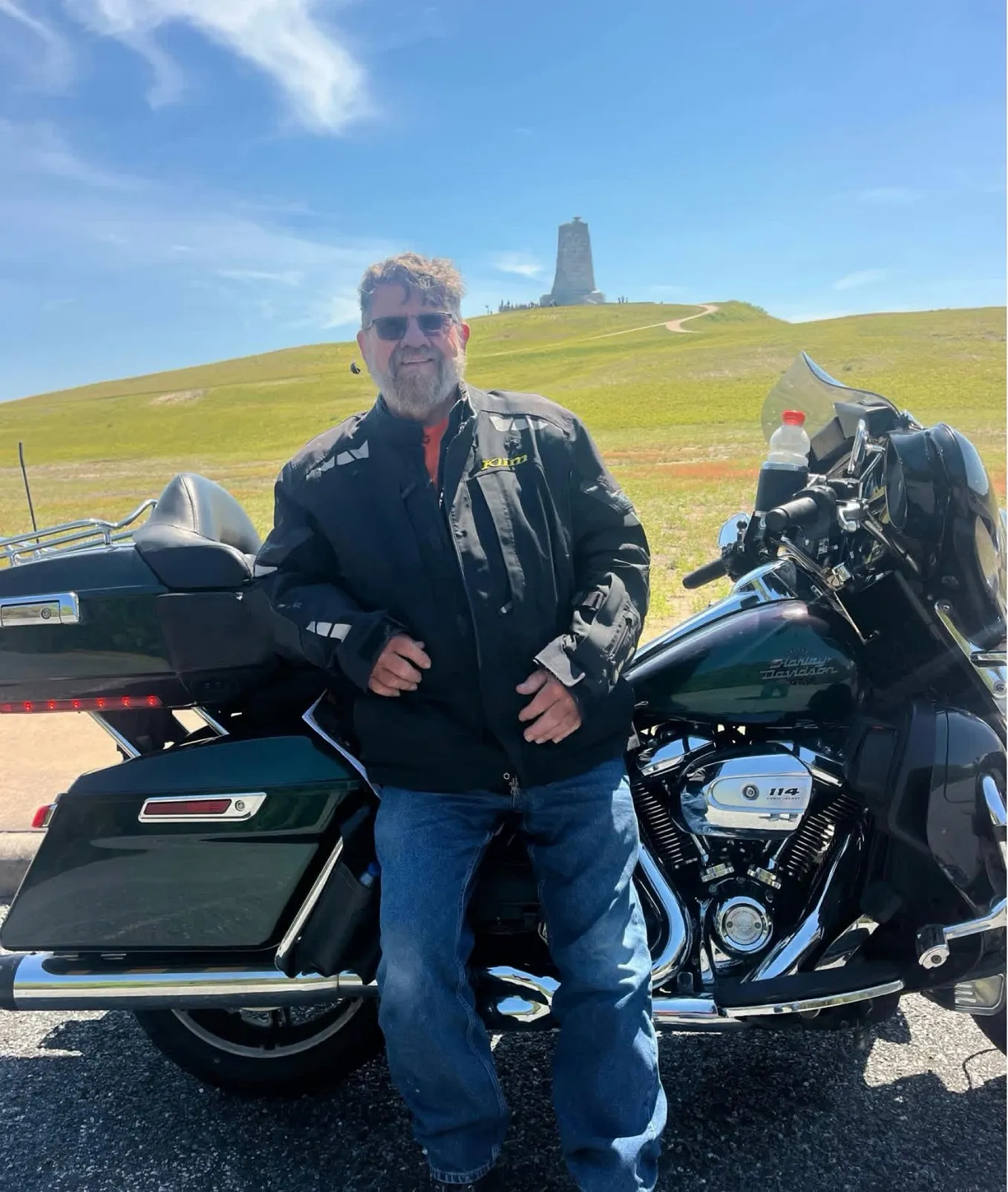
My father came up to Virginia once. Two hours from North Carolina, where he’s remarried, where the part of his life that works is kept. He spent the visit telling me I didn’t know anything about discipline. Discipline, he said, was him riding a thousand miles on his motorcycle on his birthday. Something I wouldn’t understand.
I understand it better than he does. A thousand miles on a motorcycle is an old man choosing a pain he picked and can survive and post about, over the short drive into his son’s actual life that would cost him everything he’s sure of.
He calls the chosen suffering discipline because it lets him feel like a hard man while doing the soft, cowardly thing.
But my mother told me, without meaning to, what discipline actually is. It’s not the pain you select on your birthday and ride home from by dinner. It’s carrying the pain you didn’t choose — the pain built to break someone — every day, for forty years, because the one it was supposed to break handed it to you instead. He did his thousand miles once. I’ve done mine every morning since I was sixteen. He drove four hours round trip to tell the son he’d spent a lifetime diminishing that he knew nothing about endurance.
At dinner, he told me I don’t speak loudly enough, and my mother agreed with him. I didn’t have the guts to tell him the truth — I don’t speak louder because no one wants to hear what I have to say.
My father had made her promise not to give me money
Years earlier she came to see me when I was homeless. She used a cruise as the cover — a few days off the ship, a few days to find her son on a sidewalk. She wanted me to come back with her. She’d have bought the ticket on the spot. But I was on probation and couldn’t leave the state, and wouldn’t have gone with her anyway, and when she left she put fifty dollars in my hand and got back on her ship. Fifty. Because my father had made her promise not to give me money. She crossed an ocean and stopped at fifty dollars because of a promise to a man who tells his friends I died in Iraq.
My family knows all of this. They know about the drugs. They’ve known for years. And I want to say the thing they say, in their words, before they can say it about this essay: He’s an addict. He’s a criminal. He did this to himself, and now he’s angry, and he’s trying to hand us the bill for a life he wrecked on his own.
I still deserved help
When I was in the military, I was stationed in the middle of the desert — 29 Palms, California. I paid ten thousand dollars for a Mazda 323 hatchback because I wanted to get off base on the weekends.
And suddenly I had friends.
James McNally was the first friend I’d had since high school. I’d have him in the passenger seat, three or four guys in the back, another one or two crammed into the hatch, and every weekend we’d race down to Tijuana, get drunk, act stupid, then race back across the desert to make Monday formation with hardly a minute to spare.
I covered the drive. They’d cover the hotel room and put a few bucks in my pocket to blow at the bar. It worked. Everybody got something they wanted.
For the first time, ever really, I belonged somewhere.
Then the Marine Corps sent me to Okinawa for a year, and I was stuck paying for a car I couldn’t drive. I got myself into debt.
My father paid it off.
I didn’t ask him to. I didn’t even know he was going to do it. He paid ten thousand dollars to clear the debt on a car that might have been worth two thousand on a good day. It was an objectively stupid financial situation I had gotten myself into, and he got me out of it. Then he told me to be more responsible. He was right. Years later, after I got out of the military, he told me I only called when I needed help. So he stopped helping.
I’ve thought about that ten thousand dollars a lot. Not because of the money. Because there was a time when my father could look at his son making a bad decision and see both things at once: the decision was mine, and I still deserved help.
Somewhere along the way, one of those things stopped being true to him.
I wonder where I learned that
Near the end of my enlistment, I came out. We had just spent eight months in Iraq, and there couldn’t have been more than a month or two left. I didn’t have much time to figure out what came next.
I remember discovering Hillcrest. I bought a pair of skin-tight Armani Exchange jeans online and would sneak out of the barracks with a pocket full of quarters, drive forty minutes down to Hillcrest, and shoot pool at the bar.
The first guy I went out with told me over the phone after our first date that he had HIV. After we’d already had sex.
I refused to see him again. I told him he was irresponsible and disgusting.
He had used a condom. He had protected me.
I didn’t ask how he got there. I didn’t ask anything. I looked at the evidence I thought mattered and sentenced the whole person.
I wonder where I learned that.
I joined the gay pool league because I wanted friends. I wanted somewhere to belong. Up until then, two nights a week shooting pool was the closest thing I had to a social life.
One of the guys on my team was known to do drugs, so one day I asked him if he knew where I could get some weed.
He took me to his dealers house, where a bunch of guys were hanging out on a bed, smoking.
I had gone there looking for weed.
I don’t remember most of the people in that room anymore. I remember the guy who would end up moving in with me, and someone else in the pool who I still wish had been the one who called instead.
I was handed a crystal meth pipe.
I said no.
Then I looked around the room. I wanted these people to like me. I wanted to be part of whatever this was. I had joined the pool league for the same reason I’d bought that stupid car in the desert.
I wanted friends.
So when the pipe came back around, I took it.
The next day, the same guy who had handed me the pipe called me. He seemed fond of me. He asked if he could come over.
And then he never left. At least not until there was nothing left.
He swept me into the club scene, and suddenly two nights a week shooting pool became an entire world. I knew what it felt like to go somewhere people were happy to see me, to have somewhere to go, to have fun without first having to explain myself. He made me feel comfortable in my own body. Attractive. Confident.
I was still insecure. Still naive. Still ashamed of myself. I still am. He just made me forget for a while. And he knew what that was worth before I did.
He also knew he had given me HIV long before I found out. And he gave me an addiction I had never gone looking for.
I had to find out from a nurse while shackled to a bench, staring at bars I’d seen before. Except this time I was threatening to kill myself, and there was no padded vest, no cold room to leave me in. There was only a telephone on the wall and the lengths I had to go to get someone to bail me out.
A year or so later, my parents came out to visit me in rehab for the first time. I wanted to go see him. I still thought I was in love. Even as I sat on the couch next to my parents socializing with his boyfriend who he had gotten back together with while he hid down the hall in the bedroom smoking weed.
My father said it took everything he had not to get off the couch and strangle him.
My father couldn’t admit that he helped put me there.
Let her smoke on the porch
Years later, I was with another man. My mother told me once she would have moved out to California herself if I’d stayed with him. I’ll leave most of him out of this because he doesn’t deserve the room.
That’s the part worth keeping: handed a version of my life that was quietly destroying me, she preferred it, because it was the version she could read. The one with a man in it she’d approved of. She had no questions for the son in front of her and a whole relocation ready for the idea of him.
A few years ago I flew her out for my birthday. Paid to bring her across the country, four or five days, the most time we’d had together in years. We spent most of it at his house. She sat on the back porch smoking cigarettes while he kept her company, and I was on the couch a few feet away, nodding out. At night we’d go back to my apartment and she’d go to bed and we wouldn’t say much.
You’d think — that little time together, that long apart — she’d have a million things to ask me. And she would have. If I’d started, she’d have sat and listened for hours. That’s the part I can’t make anyone understand. The listening was right there. I just wasn’t going to start a conversation neither one of us would be able to climb back out of. So I stayed quiet on the couch and let her smoke on the porch. Two people who love each other, in the same small rooms, saying nothing — because the talking only ever runs one way, toward me, and I’m the one who has to carry whatever it leaves behind.
There are two ways to look at a man
They’re right that I’m an addict. They have the cause backwards.
They start the story at the drugs because that’s where their responsibility ends.
Everything before that is harder. The boy who couldn’t undress in a locker room. The sixteen-year-old his father had already sentenced. The Marine who discovered that having a car meant having friends. The young man who joined a gay pool league because two nights a week was the closest thing he had to a social life. The one who went looking for weed, said no when someone handed him a meth pipe, then took it when it came back around because he wanted the people in that room to like him.
The drugs came later.
He did it to himself is the last package they handed me to run to the door — the explanation for everything that came after, so no one had to look at what came before.
Because that’s the whole of it, the only thing I’ve figured out worth writing a hundred times.
There are two ways to look at a man. You can look at him and decide what he is. Or you can wonder how he got there.
I’d rather be dead in Iraq than a monster on the other side of the country
She tells people she’s my biggest fan. I believe her.
She sees the addict. The criminal. The son who made choices she doesn’t understand and lived a life she wishes he hadn’t. None of those things are inventions. They’re pieces of me. I’m not asking her to pretend they aren’t.
I’m asking her to wonder how I got there. Because there are things I’ve done and things I’ve become. What I can’t carry is being made into something I’m not.
So I stand in the only place left, the doorway. Close enough that she’s still my mother. Far enough that I don’t have to watch her not see me one more time.
I’d rather be dead in Iraq than a monster on the other side of the country.
I reached out to my sister after my aunt told me she lived not far away last time I was in Virginia. I told her I did not understand why she hated me so much. And I told her I would rather be dead in Iraq than a monster on the other side of the country. She didn’t respond.
The niece at the center of the accusation is my sister’s daughter. The same sister whose door I ran to as a boy, the tape in my hands, carrying whatever my parents couldn’t take the last few feet themselves.
I was the one they sent. I’ve always been the one they send. And when this family was finally handed something about me it didn’t want to question, it did the only thing it knows how to do.
It put the worst thing anyone could believe about me into my hands and left me to carry it.
Except this one was never mine to carry.
For more stories about survivors, family, and the people our culture chooses to blame, follow Fourth Wave. Also check out our Livestreams and sign up for our Newsletter. Let’s grow our community! Have you got a story or poem that focuses on women or other targeted groups? Submit to the Wave!