Featured
ON BEING HUMAN
Within One Millimetre
A memoir on mentorship, the omnicrisis and the rise of Artificial Intelligence

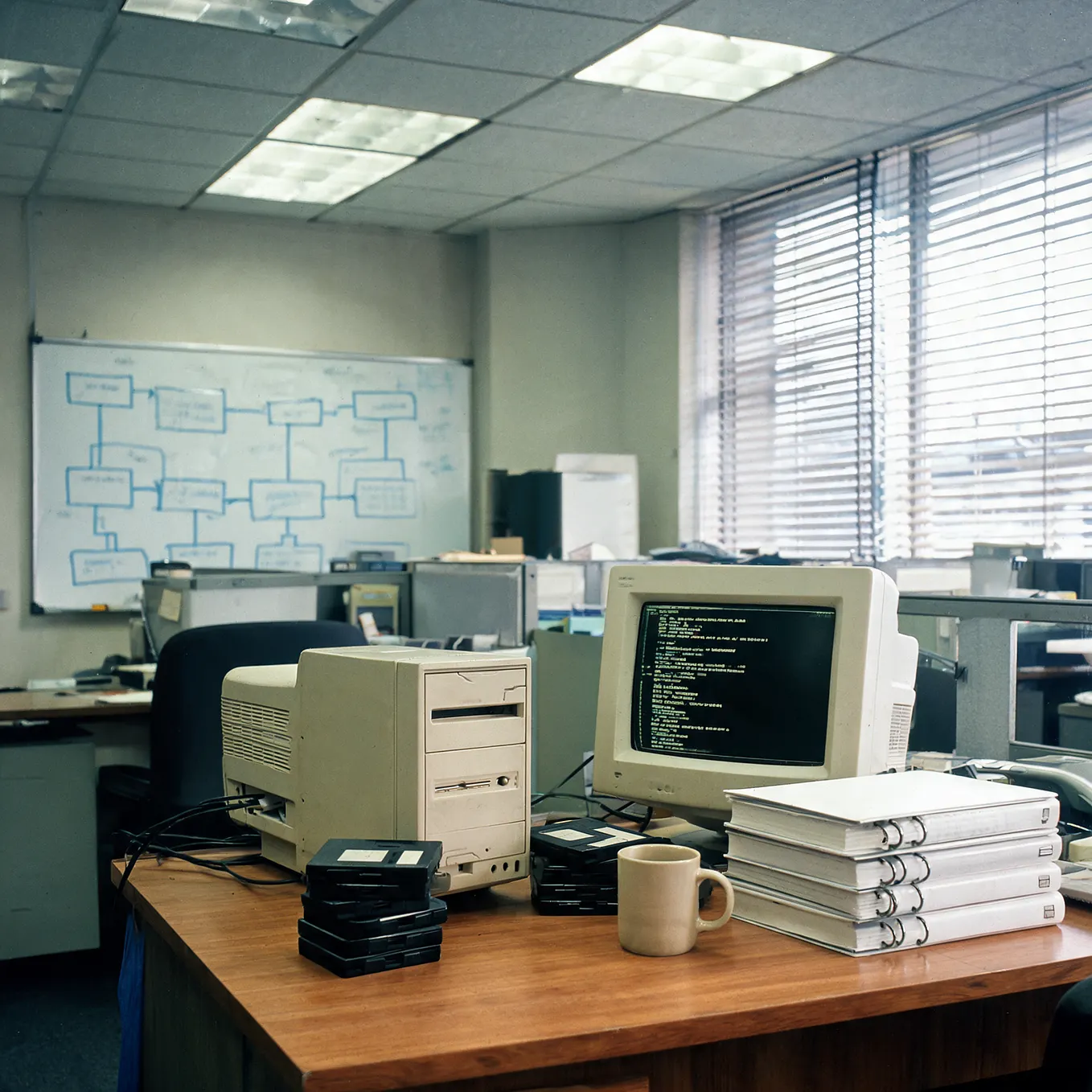
It was a Wednesday afternoon many years ago. I was in my third year of graduate school, finishing my master’s thesis. My supervisor was seated next to me at our laboratory’s only desktop computer. The laser printer precariously balanced on the wide window ledge served as a visual distraction from staring at the white screen.
If the stillness of the stoic printer became too much, I looked further, beyond the dusty, yellow heavy curtains, and through the large windows, to see if ospreys were flying over the nearby pond. Some days, I was able to see these graceful creatures hover and make sudden dives for fish swimming in the water.
Dusk fell early this winter afternoon. Streetlights came on, illuminating the growing lines of vehicles.
“Emily, comma here, then, comma here,” Dr. M said in his soft, Polish-accented voice, pointing at the screen. “You write like North Americans!”
It was a sharp reference to my Southeast Asian upbringing, implying I should have more thoroughly absorbed the Queen’s English education provided in my former colonial country.
I grinned sheepishly. I tapped on the keyboard, making those corrections.
The long workbench next to us was pristine, with bottles and materials neatly arranged and devices and instruments appropriately labelled. I detected the sharp, clinical odour of phenol, a reagent we used for DNA extraction. While we were writing away, one of my fellow graduate students must have started a new experiment, working alone into the quiet evening.
The constant hum of the freezers was interrupted by sharp tinkling sounds as our laboratory manager emptied her ice bucket into the sink, signaling the end of her workday.
It was not the end of my workday.
Wednesdays were sacrosanct.
It was Dr. M’s allocated time to work with me on my master’s thesis. We started every week at two o’clock until his wife called to say dinner was ready. Only then would we finally save what we had and adjourn for the day.
Many years later, at his retirement symposium where many of his former students, faculty, and scientific peers gathered, I recounted this story. When I was in the trenches of graduate school, those afternoons were difficult times.
I ended up with a two-hundred-plus-page thesis. I approached the process with resentment. Dr. M was unyielding, insistent on a high degree of quality in our work. Our hypotheses, our controls, the figures we meticulously put together — we lived by standards. In my speech, I lamented our Wednesday afternoons with humour. It was only years later, I said, when I came across slipshod work in my career, that I fully appreciated the fierce foundation he established in his students.
At dinner that symposium night, he privately apologized for giving me a hard time. I only wished I was more emphatic and protested more in response, that it was tough but necessary love. Dr. M saw us as his children, and he made emotional investments in us.
In my second year working in his lab, Dr. M chatted with me about a book he read. He described the ancient Egyptians and their pyramids. He then said, “Most people see children as their legacy. I want to leave something more than that.”
That “something more” was an enduring impact on his scientific field. That farewell gathering offered a profound testament — filled with speeches and presentations that described a lifetime of extraordinary work.
But more than that, I hope that day made him realize that he had indeed left his students with his true legacy. We carried this across the four corners of this continent, teaching and seeding future minds in whatever we endeavoured.
I believe I am the only graduate without the professional title of “Doctor”. I do not feel inferior about this. When I finished my thesis, I stayed on for a few months to help manage research activities. Dr. M pulled me aside one cold afternoon and said he was jettisoning me from his laboratory. He saw much more potential, he gently announced. He encouraged me to have aspirations beyond the boundaries I arbitrarily drew for myself. That was the loving kick that I needed. I went on to pursue a second master’s degree while working full-time during the day. I also passed many specialist exams and obtained designations. There was one occasion where a recruiter came across my LinkedIn profile and called my career “eclectic.” I disagreed. Rather than confining myself to specific identities, I ventured into different sectors and different occupations in the pursuit of new challenges. It felt very natural to me. With each new role, I emphasized good quality and a strong work ethic.
Recently, I even wrote a satirical corporate story about a team of scientists puzzling over a presentation slide; they tried to figure out how to position a diamond to represent a major milestone along a horizontal project timeline. This story was based on a real-life situation. We were in the midst of preparing a report to the executive leadership team when I raised the question of how to overlay the four-pointed symbol — whether it should be the diamond’s apex or the rightmost tip over the project timeline. We were quite a sight, three coworkers whispering while hunched over a large computer monitor. We even adjourned toward a whiteboard, continuing our discussion over intoxicating marker fumes.
Such intense deliberation over a graphical element felt like a counterproductive exercise. Nevertheless, it was important. Because that one slide was a communication tool for a program that we invested millions in. That slide needed to be accurate.
Get Emily Tho’s stories in your inbox
Join Medium for free to get updates from this writer.
That debate was in 2019. Then, life changed for us.
The often-coined phrase “the future of work” took unexpected turns. COVID arrived. If our occupations allowed it, we worked from home. For others who must work away from home, their activities were suspended if they were deemed non-essential. This massive global disruption triggered many societal and personal conversations about our priorities.
Does the quality of work even matter in the face of these larger emergencies? We were faced with fear, heartbreak, and uncertainty. Some of us lost loved ones. Some of us got sick, and some developed long COVID, a debilitating condition with no cure currently.
We have not fully healed from this collective trauma.
What happened when we cautiously reopened? What about now in 2026? Have we changed how we approached work? The short answer is yes. To put it simply, we have gotten careless. Many scholars, employers, and individuals have complained about this new “endemic”, but I do not believe this new attitude is intentional or malicious. We do not mean to become sloppy. We cannot help ourselves, as the global macro factors have driven us into submission.
Drs. Gerardo Patriotta and Maxim Voronov use the COVID pandemic as an example to describe a phenomenon they term an omnicrisis, where a series of societal crises bombards and disables us into passivity. Even after six years, this omnicrisis has not ended; instead, it has escalated with more crises. It is relentless — wars, supply chain shortages, political tension, social division, and other concerning pathogens such as Ebola and Hantavirus — all playing against the backdrop of a pandemic that never really ended.
Psychologically, we are overwhelmed. When we are in a steady state of distress, we become desensitized; we opt for the easy way — we do what we are told without challenging it. Critical thinking is a luxurious process we can no longer afford.
Just trying to get by.
Like weeds between the cracks of a stone patio, Artificial Intelligence (AI) is an opportunist that thrives when we forgo vigilance. Seeing dollar signs, capitalists have aggressively bankrolled AI’s global proliferation. It is now ubiquitous in our personal and professional lives. Consequently, when our employers order us to use AI to maximize their profit, we have the perfect climate for these weeds to grow unchecked.
I imagine a typical office worker’s day in North America. You wake up at the crack of dawn, starting your weekday routine. Your teenager wakes up and informs you they are not feeling well, with what appears to be a respiratory illness. You send your child back to bed, call the school to report their absence, and hurry out to work. Your foremost thought is worry about your kid, as you made a mental note to pick up a COVID test on your way home. You get into your car and groan. Your gas gauge indicates that your tank is almost empty. You forgot to get gas last night, after working a 12-hour day to make a deadline. There have been more long hours at work lately, after the company’s last round of layoffs. You stop by a gas station. Looking around at the other drivers attending to their vehicles, you wonder if anyone else is not filling up their tanks fully, as commuting is getting expensive due to conflicts in the Middle East.
Inching into the oncoming traffic jam, you stare blankly at the back of a bus, as the morning heat radiates up from the cracked tarmac. Since the innumerable return-to-office mandates from many public and private sector institutions, traffic has become horrendous. The suffocating pollution makes you cough. Turning on the radio, you swear at the constant stream of bad news. When you reach work, your feet feel like they are made of lead. You reluctantly make the steps into the office lobby. Following the aroma of coffee, you make a detour to the break room. You observe some colleagues chatting worriedly about raw material shortages and the factory workarounds they need to implement. There are grumbles about having to work overtime and missing World Cup matches. As you make your way to your desk, you question if you should purchase more necessities like toilet paper. You shudder as you relive those early days of 2020. You also heard in the morning news today that fertilizer is scarce due to disruptions to global shipping routes, and this thought triggers a quick mental risk assessment. Should you stock up on other items than just toilet paper? Amid the typical open-plan workspace noises, you place your laptop on your desk and boot up the operating system. Your employer’s chosen AI app blinks open cheerfully by default. You happily forget all those external worries and sink into AI-generated text. It feels safe — AI is like your childhood security blanket. You metaphorically wrap yourself up in its warm embrace and curl up under your desk.
We have surrendered to the rise of the machines because we have lost the capacity to care. We are in a battle zone without being physically in it. We stopped demanding responsibility from ourselves.
Press “Submit”. Copy and paste. Done. Forget verification. We are numb.
Just two weeks ago, I saw a social media post of someone who initially had a lead to a new job. Unfortunately, the offer was retracted after the employer discovered he used hidden text in his resume to bypass the company’s AI filters. So, why did the humans involved in the hiring process accept the AI output verbatim without manually confirming the candidates’ qualifications? It takes mere minutes to scan a resume and check what AI regurgitated. Instead, they weaponized their internal guilt to vilify others.
This piece is not just a sanctimonious diatribe. I am not immune to the seductive allure of taking shortcuts. For example, I used AI to map out the general concepts outlined here. It felt easy — AI’s deceptive conversational style deluded me into believing I was talking to a friend. However, when the AI model started hallucinating, spurting out egregiously wrong information, it was a chilly wake-up call. I needed to return to my roots.
I often look back fondly at that final year working with Dr. M. He once produced a ruler to measure my diagrams. After a careful examination, he informed me that they were off by one millimetre and I had rework ahead of me. I groaned then. Hindsight and the wisdom of age now tell me that Dr. M had set me up with a baseline work ethic where I should hold myself accountable. Sadly, we do not have a cadre of Dr. M’s to nurture and mentor everyone in this world.
How do we mend ourselves and bring back human accountability for the work we produce? Drs. Patriotta and Voronov describe how repair processes can be hampered in an omnicrisis because boundaries have been broken and society has lost sight of who to trust. Rather than returning to what it used to be, they advocate moving toward “new normals” — in which occupational groups and institutions work to re-establish their credibility and introduce new processes and practices to restore their community’s sense of stability and continuity.
The Project Management Institute (PMI) recently released a new 275-page practice standard on the use of AI in project management. It essentially stated that project leaders needed to be accountable for the work output from AI. Bravo to PMI for taking the first step in resetting confidence in the profession. By officially outlining its expectations, it created awareness — a global call to action to project managers.
The attitude towards work discipline and the quality of work were etched into me during simpler times. We did not have a crisis, let alone an omnicrisis. Graduate school offered security. In that nurturing cocoon, it shaped who I have become.
I wonder about my children. My son knew how to turn on my cell phone even before he learned to walk. These kids are fully digital, and yet, like many in their generation, they are very wary of AI. There is hope.
This reminds me, I shall write to Dr. M. It has been a while.

Support writers. All our nonprofit’s offerings here.
Click here to subscribe to the IT Chronicles newsletter.
Click for Wordsmith, Mystery Writing, Write Like Stephen King, more