How We Wait Reveals Who We Worship
Stewarding Our Anxiety


October 11, 2026
Twentieth Sunday after Pentecost, Year A
Walker Chapel UMC, Arlington, VA
Exodus 32:1–14 (NRSVue)
Stewardship
Last week, we began touching on the theme of stewardship as we continue reading through the Israelites’ journey in Exodus. Usually, when the church does a stewardship campaign, we talk about time, talent, and treasure. And that is because how we choose to invest these three leaves its mark on everything we touch, defining not just the work we produce, but the character of the lives and communities we build. In the end, the way we allocate these resources reveals where our priorities lie (Matt. 6:21).
Stewardship reaches every aspect of life because life itself is a gift God has entrusted to us to nurture and care for. The Israelites in the wilderness were given this new gift of life in freedom. And the wilderness was a learning ground for the Israelites to know how they should steward that gift. That is why we talked about stewarding our community: how people freed from slavery are freed for one another, entrusted with the care of our neighbors. Or to paraphrase the Apostle Paul, whose wordplay I appreciate: we who are freed from slavery to sin and death through Christ are now enslaved to one another in love (Gal. 5:13).
So Jesus’ commandment to love God and love our neighbor is our ultimate priority for where we invest our time, talent, and treasure. Now, knowing and understanding the Greatest Commandment is one thing, but living it out is another. Even though we know our freedom in Christ, we still struggle to be truly free.
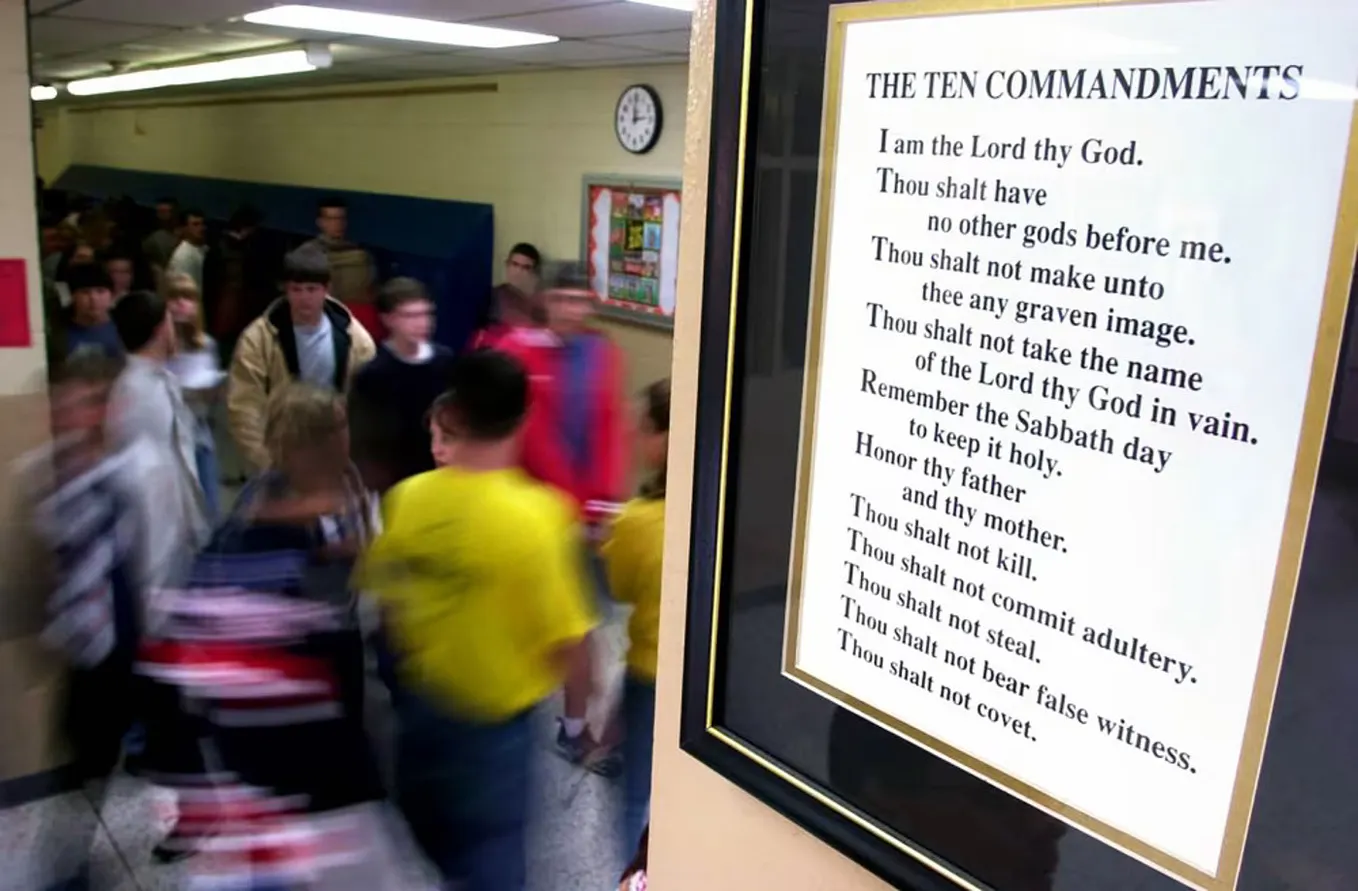
That is what was happening with the Israelites in today’s scripture reading. The people, who had been liberated and sustained by God, had now received the Ten Commandments. Yet because they were terrified of God speaking, Moses continued to serve as the mediator between God on the mountaintop and the people below. And as God continued to provide details of the law and to prepare the two tablets of the covenant, Moses remained up on the mountain, away from the people for forty days and forty nights.
Waiting is Boring!
When I was in high school, I didn’t have a phone or a car. So after my soccer practice at Lewinsville Park in McLean, I often waited for my ride to pick me up. And when the ride was not on time, I didn’t have many options but to wait. Especially with the heavy traffic on Chain Bridge Road during the evening commute, I would sometimes wait until it got dark. At first, I tried to kill time with friends. But when they all started to get picked up or head back home, I became restless and anxious, staring at the night sky and wondering: What happened to my ride? Are my parents okay? Did they get into an accident? Did they forget about me?
I think all the technological advancements we have enjoyed since then have had a specific mission to eliminate such experiences: cell phones, smartphones, smartwatches, digital tracking apps that watch where our families are at all times, ridesharing apps that hail the ride for us, and more. All these tools have given us a way to keep ourselves from waiting in the dark.
And yet, at the same time, we have gotten terrible at waiting. We used to be able to sit for hours in the DMV, just people-watching and daydreaming. But now, every minute in the waiting room without Wi-Fi or data feels like torture. Before long, we are scanning the room for whoever is in charge, ready to ask how much longer.
Waiting is hard and becoming harder for all of us. Waiting for the delivery. Waiting for the application you submitted. Waiting for the test results. Waiting for your name to be called. Waiting for the seeds you planted to grow and bear fruit. Waiting for a prayer to be answered.
And when the waiting will not end on our timeline, we look for ways to feel like we are doing something about it. We refresh the page. We enter the tracking number again. We run through every “what if” at two in the morning. It is a kind of false control, or, as psychologists call it, the illusion of control: the sense that if we stay alert enough, busy enough, worried enough, we can somehow expedite an outcome that is entirely out of our hands. This false control feels active. It feels responsible. But the package comes when it comes, the results say what they say, the seeds you planted bear fruit in their own time, and all our false control does is add to how weary we become while we wait.
The Golden Calf
The Israelites waited for forty days and forty nights without knowing what had become of Moses. They had been given plenty of time to practice patience, I think, and plenty of time to tinker with their illusion of control. So they finally turned to the next person in command, demanding that Aaron make gods for them since Moses was gone. Maybe rather than waiting, building something felt more active, more responsible, and more in control. At least they were doing something.
And Aaron, for some reason, did not push back. He seemed to have anticipated this pressure, responding with a ready plan. He instructed the people to collect the gold rings they had carried out of Egypt. From this collected gold, Aaron built a calf, and the people quickly proclaimed it as their god, attributing their entire liberation to a molten idol.
Get Minoo W. Kim’s stories in your inbox
Join Medium for free to get updates from this writer.
Because they could no longer wait and deal with the anxiety that comes with waiting, they projected their illusion of control by inventing a false idol. And it was entirely the opposite of who God had been for them: a god they did not have to fear, a god within their reach, within their control, within their comprehension, and within their imagination.
And the gold in today’s reading is not just gold. Those gold rings were the wealth of Pharaoh, tokens of an economy of slavery, which the people still wore on their own bodies and put on their own children. They celebrated leaving Egypt, yet its residue remained on their bodies as accessories.
With Moses nowhere to be found, the Israelites chose to move backward by denying the gift of freedom. They forgot the very commandments they had just received, taking the residue of their past and shaping it into another, lesser god to create and worship.
Our Idols
When anxiety feels overwhelming, we try to tame it by building our own gods out of the residue of what Christ has already freed us from: the old fear that we are not enough, and the old drive to prove that we are worthy of love. So we keep going back. And like the Israelites’ calf, our idols are within our reach, within our control, within our comprehension.
Our continued attempt to create for ourselves our own idols has to do with our inability to wait. Waiting for God’s timing becomes too much for us to handle. We must stay active. We must stay productive. We must stay responsible. And so, we pour our time, talent, and treasure into satisfying our illusion of control. I have to admit that there is a sense of accomplishment in building an idol with our own resources. And people celebrate such a spirit of creativity, ambition, and entrepreneurship. Just think about the golden calf. A simple statue lifted the spirits of the weary people and brought so much joy that they started to have a party. I imagine Aaron was proud of himself at the sight of the great party.
We do not have to be religious to have a calf. Everyone has something they believe will save them, something that gives them hope, joy, and a promise for the future. If I just get the promotion. If I just get into the right school. If I just reach the right number in the retirement account. If I just fix my body, my marriage, my children’s futures. If we just have the right leader. If we just elect the right political party. And so, we invest our resources in these idols, many times at the expense of our freedom to love God and our neighbors.
Whatever idols we gravitate toward, an idol only holds a specific desire, for a specific time, place, and people. The calf was for that day, that camp, those people. But God’s desire for us is beyond our time, place, and generations. It is for all of God’s creation, past, present, and future. That is the promise of eternal life. It means that what God is doing is larger than our vision, wider than our circle, and bigger than our lifetime. That comprehensive view of salvation is why we wait. We wait for the day when God will wipe every tear from every eye, and death, grief, crying, and pain will have no place left in creation (Rev. 21:4). We do not know what that will look like, yet we wait trusting that God is at work. We wait knowing that we are not owners of our lives, but stewards, entrusted with the gift. The timing, the outcome, and the fruit belong to God.
What Are You Waiting For?
Perhaps, before we are known as Christians by our love, we are known as Christians by how we wait. For how we wait reveals whom we worship.
A hand that is not gripping an idol is free to love the people God has given us. So, too, are our time, talent, and treasure. Loving others with generosity is how we wait as people who worship God.
But again, waiting is hard, and it is getting harder for all of us.
Yet the good news is that even after the calf, God did not give up on the people. Moses pleaded for them, and God relented. In an even greater way, we now have Jesus Christ, who continuously reconciles us to God (2 Cor. 5:18–19). It is through the grace of Christ that we rest in the assurance that God’s mercy triumphs over wrath and judgment.
Thus, I lift the prayer of David as we hold fast to that good news (Ps. 25:3–5):
Do not let those who wait for you be put to shame.
Make us to know your ways, O Lord;
teach us your paths.
Lead us in your truth and teach us,
for you are the God of our salvation;
for you we wait all day long.
In the name of the Father, of the Son, and of the Holy Spirit. Amen.

Rev. Minoo Kim is an ordained elder in the United Methodist Church, currently serving in the Virginia Annual Conference. Follow his Medium publication to receive his latest sermons or check out his website minoowkim.com for his latest content. Peace!