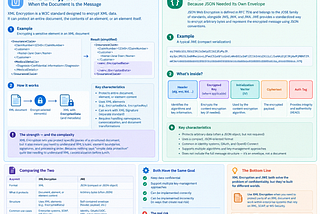
Robert Broeckelmann·Oct 21Encryption: XML Encryption vs. JWE: Encrypting the Message Was the Easy PartSometime around 2017, I did a number of blog posts on XML Digital Signature, JSON Web Encryption (JWE), and digital signature concepts in…
Symlex VPN·Oct 10What is AES-256 encryptionWhat is AES-256 encryption in a VPN and how does it protect data?You may often see VPN providers describe AES-256 encryption as “military-grade encryption.” That phrase sounds impressive, but it can also…
Android Expert·Aug 30Part 4 — Failures, Scale & Enterprise RealityLazy key rotation, crypto-shredding, KMS leases, and the production pitfalls experienced Android engineers actually hit at scale.
Android Expert·Aug 29Part 3 — Production Architecture: How Encryption Is Actually BuiltEnvelope encryption, streaming AEAD, database layers, metadata leaks, and real E2EE — the patterns that survive contact with production.
Android Expert·Aug 28Part 2 — System Constraints: What Android Actually Lets You DoWhy Doze mode, key invalidation, and IPC boundaries wreck production crypto — and how senior Android engineers design around them.
The Data Trait·Aug 25Data Security Architecture — Encryption, Access LayersMost data breaches don’t happen because systems are poorly built.
Khizar Khan·Aug 18EncryptedSharedPreferences vs SQLCipher vs Room + Tink: What Should You Actually Use?Part 6 of our Android security series, kicking off Phase 2: Data & Auth. Part 5 covered Android Keystore — this post is about the layer…
Alim Reshitov·Aug 16EncryptedSharedPreferences Is Dead: What to Use for Secure Storage in 2026Google deprecated the library most Android security tutorials still teach. Here’s the replacement pattern, a migration path, and where…
InitversitybySarath Sagi·Jul 7Data Encryption Explained: At Rest, In Transit, and Everything BetweenA practical guide to tokenization, field-level encryption, key rotation, and confidential computing — for engineers who need to protect…
InAWS TipbyUmashankara Kalaiah·Jul 6Encrypt Data in Transit: A 2-Minute Guide to HTTPS on AWSYour API calls, login credentials, database passwords — all traveling across networks in plain text. That’s the vulnerability.