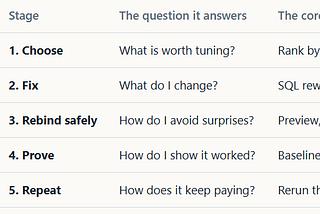
MANOJ PRADHAN·19h agoHow I Cut 10,000+ Db2 CPU Hours a Year: The FrameworkWhat 23+ years as a z/OS DBA taught me about turning tuning into a repeatable practice. Db2 13 for z/OS.
Mydbops·22h agoWhy MySQL Doesn’t Always Use an IndexYou add an index, run EXPLAIN, and see key: NULL. That can mean MySQL estimated that another access method would cost less, or that the…
The Turtle Code·1d agoYour Migration Passed Every Test. Then the Database Started Taking 100× Longer.How a seemingly harmless identifier change can expose hidden database bottlenecks in production.
Sribalajivelan·5d agoThe One-Line Index That Fixed Seven Weeks of Missed NotificationsHow a “temporary” list quietly stopped thousands of users from getting their messages, and the questions the team now asks before calling…
Md. Zahid Fesabelilla·Oct 26How do you add a new column to a table with 300 MILLION rows without taking your system offline?Imagine this scenario: Your database is being read and written to 24/7. You can’t afford any downtime, and taking the database offline…
InSkill StuffbyTechByRahmat·Oct 237 Hidden Database Bottlenecks That Waste CPU, Memory, and TimeYour database can look healthy while inefficient queries, unnecessary data movement, and poor execution plans quietly drain production…
Mydbops·Oct 22Storing MySQL JSON Execution Plans in VariablesQuery performance can change as an application evolves. A query that previously performed well may need attention again, making execution…
InAWS FullstackbyTharaka Chathuranga·Oct 22Why DynamoDB Throttles Even When Capacity Is AvailableUnderstand how DynamoDB partition keys, physical partitions, capacity limits, and write sharding affect application performance.A response icon1A response icon1
Mydbops·Oct 21Connection Load Balancing in PostgreSQL 16 with libpqApplications that use multiple PostgreSQL servers need a way to distribute connections across them. For read workloads, this often means…
InTowards DevbyDaniel Valev·Oct 195 Postgres Slowdowns Your Cache Hit Ratio Will Never Catchshared_buffers is one of two caches, and the hit ratio only watches one. What to measure instead, with a lab you can run on PostgreSQL 18.A response icon1A response icon1