The Election of 1824 and the Corrupt Bargain
How a disputed presidential election shattered a political party, transformed campaigning, and changed American politics forever

America’s political divisions did not begin in the twenty-first century.
Except when George Washington stood unopposed for President in 1788, our elections have always been rough and tumble affairs marked by fierce rhetoric, accusations of corruption, claims of voter fraud, and charges that elections were stolen. Political campaigns have rarely been gentle debates of ideas. More often, they have been bruising battles for power and public opinion.
Today, television, radio, direct mail and social media are saturated with political advertisements warning the opposing candidate represents a threat to the nation’s future. Candidates from both major parties routinely portray their opponents as dangers to the country, democracy or cherished American values.
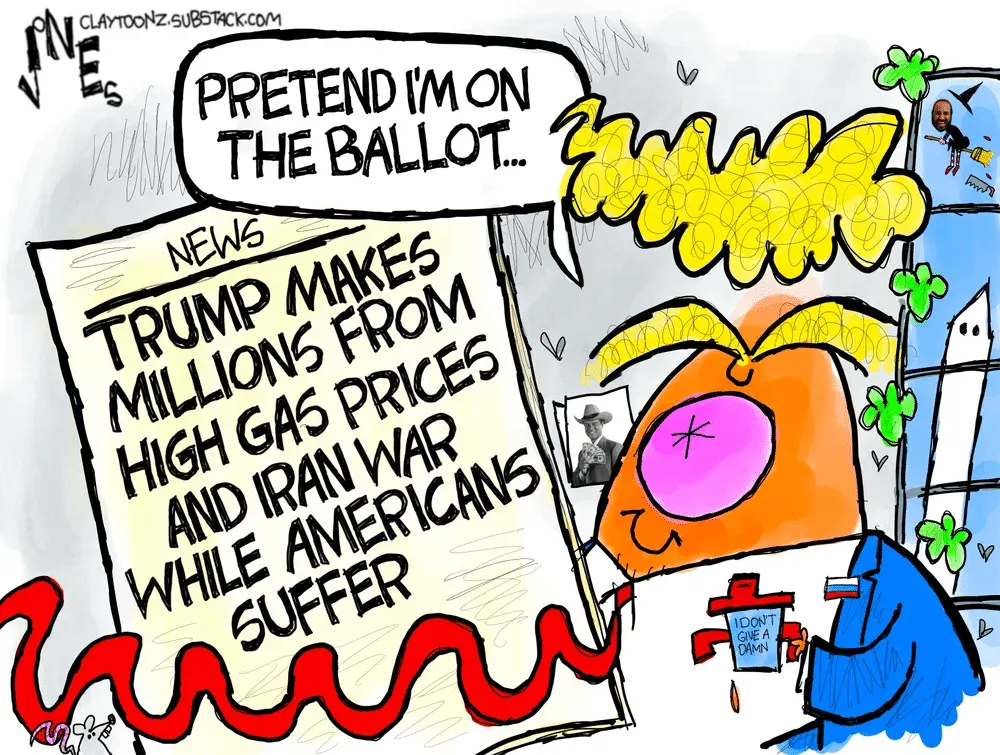
President Trump has made accusation against Democrats a recurring theme at his political rallies. He has repeatedly asserted, without any evidence, that the 2020 election was stolen and the Democrats are trying to steal the mid-term elections.
Yet, Trump is not the first losing presidential candidate or political movement to claim the election was wrongly decided.
Long before social media, cable news, and modern polling, the United States experienced one of the most controversial elections in its history. The election of 1824 left many Americans questioning whether the will of the people had been subverted. The accusations that followed became known as the “Corrupt Bargain,” a phrase that still echoes throughout American political history today.
While the election of 2020, unfolded under very different circumstances, both contests reveal how questions of legitimacy can profoundly influence public trust, deepen political divisions, and reshape the political landscape for years to come.
To understand why the “Corrupt Bargain” became one of the most enduring accusations in American political history, we must return to a time when there was only one political party and no clear successor to President James Monroe.
The End of the Era of Good Feelings
Beginning in 1814 with the signing of the Treaty of Ghent that brought the War of 1812 to an end, the United States entered a period of rising nationalism and relative unity that became known as the “Era of Good Feelings.” The Federalist Party had largely ceased to be a significant force in national politics, leaving the Democratic-Republican Party of Thomas Jefferson and James Madison as the nation’s dominant political organization.
President Monroe embodied this spirit of unity. In 1820, he won reelection with only token opposition, receiving all but one electoral vote. To many Americans, it appeared that the bitter partisan battles of the nation’s early years had faded into history.
Yet beneath this surface of harmony, powerful forces were pulling the country in different directions.
Regional rivalries were growing. Economic interests increasingly divided the commercial Northeast, the agricultural South, and the rapidly expanding West. Personal ambitions among a new generation of political leaders simmered just below the surface. By 1824, those tensions would erupt into one of the most contentious elections in American history.
At the same time, a revolution was underway in American politics. For the first time, the popular vote mattered on a truly national scale.
More states were allowing voters rather than state legislatures to choose presidential electors. By 1824, eighteen of the nation’s twenty-four states selected at least some electors through popular vote. Most had adopted a winner take all system in which the candidate receiving the most votes captured all of the state’s electoral votes.
The electorate itself was also changing. During this period, most states eliminated property requirements for white male voters, dramatically expanding political participation. For the first time, ordinary citizens witout wealth or property were entering the political process. These new voters often cared less about national political figures than about issues affecting their states, regions, and communities. The expansion of voting rights, however, did not extend to women, free African-Americans, or the millions of enslaved people living in the United States.
Meanwhile, the traditional system for selecting presidential nominees was beginning to unravel. For years, party leaders in Congress had effectively chosen presidential candidates through congressional caucuses. But as the electorate expanded and regional identities strengthened, that system lost most of its authority. State political organizations increasingly promoted favorite-son candidates with strong regional followings rather than rallying behind a single national choice for president.
The Democratic-Republican Party soon fractured into competing factions; each centered on a prominent political leader. Without a strong opposition party to unite against, ambitious men within the same party began competing for the presidency.
The political system that had carried the nation through the administrations of Thomas Jefferson, James Madison, and James Monroe was beginning to unravel. As voting expanded, regional loyalties strengthened, and party discipline weakened. Four ambitious men emerged to claim the presidency. What appeared to be an era of national harmony was, in reality, a nation on the verge of political transformation.
Four Candidates, One Party
For the first time in the nation’s short history, the Federalist Party did not field a presidential candidate. Every major contender belonged to the Democratic-Republican party. Secretary of War, John C. Calhoun of South Carolina initially sought the presidency but withdrew early to run virtually unopposed for Vice President.
The crowded field included four powerful and ambitious men. There was John Quincy Adams, the son of former President John Adams and serving as secretary of state. William H. Crawford, secretary of the treasury under both James Madison and James Monroe was the choice of many political insiders. Representing the growing West were Speaker of the House Henry Clay of Kentucky and Tennessee Senator and war hero Andrew Jackson.
Rather than choosing between competing political parties, voters found themselves choosing among four rival factions of the party, each representing different regional priorities and visions for the country’s future.
In many ways, the election resembled a family feud. The question was not which party would govern but which vision of America’s future would prevail.
The Statesman
John Quncy Adams was widely considered Monroe’s heir apparent as his secretary of state. As secretary of state, he occupied a position that many Americans viewed as the stepping stone to the presidency. The three previous presidents had all served in that office before being elected.
Far more than simply being the son of former President John Adams, Quincy Adams had built a distinguished career of his own. He served on various diplomatic missions, helped negotiate the Treaty of Ghent that ended the War of 1812, and earned a reputation as one of the nation’s most accomplished statesmen.
His deep foreign policy experience combined with his support for protective tariffs and federal investment in roads and canals made Quincy Adams the natural choice for many voters in New England and those who favored national economic development.
Quincy Adams campaigned on competence, experience and effective government. Yet he struggled to connect with ordinary voters. To many Americans in an increasingly democratic age, he appeared aloof, intelluctual and aristocratic.
The People’s Champion
General Andrew Jackson was a larger-than-life figure. The hero of the Battle of New Orleans he had won national fame through his military victories during the War of 1812 and subsequent campaigns against the Creek, Seminole, and Cherokee tribes.
Jackson entered the race as a political outsider. Unlike his rivals, he was not closely associated with the Washington establishment. Many supporters saw him as a self-made man who had risen from humble beginnings through courage and determination.
To western settles and ordinary voters, Jackson represented something new in American politics. He appeared willing to challenge entrenched political elites and defend the interests of common citizens. Some admirers even compared him to a second George Washington; a military hero called to national service.
His critics, however, questioned whether military fame alone qualified a man for the presidency.
The Visionary
Speaker of the House Henry Clay, known as the “Great Compromiser,” was one of Washington’s most influential politicians. He first gained national prominence as the leader of the “War Hawks” who pressed for war with Great Britain in 1812.
Clay’s political support lay in Kentucky and the growing western states. Charismatic and persuasive, he cultivated friendships throughout Congress and became one of the most skilled legislators of his generation.
Get Don Hughes BA, MPA’s stories in your inbox
Join Medium for free to get updates from this writer.
Clay campaigned on a bold economic vision known as the American System. It called for a National Bank, protective tariffs to encourage American industry and federal investment in roads and canals and other internal improvements. He believed these policies would bind the nation together and promote long-term economic growth.
Despite his influence, Clay struggled to build a truly national coalition, limiting his appeal outside the West.
The Insider
Secretary of the Treasury, William H. Crawford represented the traditional wing of the Democratic-Republican party. A longtime government official and slaveholder from Georgia, he drew support from Southern planters and established party leaders.
Crawford appeared to be the natural choice of the Democratic-Republican party organization. A poorly attended congressional caucus formally nominated him for president. In an era of expanding democracy and growing distrust of political insiders, establishment backing proved less valuable than it had in the past.
His greatest challenge was his health. In 1823, Crawford suffered a serious stroke that left him partially incapacitated. Despite concerns about his ability to serve, he remained in the race with the support of Martin Van Buren and New York’s political machine.
Each candidate drew strength from a different region and a different vision of America’s future. The election produced no clear winner and no national consensus. When the votes were counted no candidate had secured an Electoral College majority, throwing the election into the House of Representatives and setting the stage for one of the greatest political controversies in American history.
After a brutal campaign filled with mudslinging by supporters of each candidate, Americans went to the polls in 1824 with no clear favorite. When the votes were counted, however, Andrew Jackson appeared to have emerged as the nation’s leading candidate. Yet, months later, someone else would take the oath of office.
No Majority, No President
Jackson won 99 electoral votes and more than forty percent of the popular vote in those states that directly elected presidential electors. John Quincy Adams followed with 84 electoral votes, while William H. Crawford received 41 and Henry Clay finished with 37.
In 1824, there were 24 states and a total of 261 electoral votes. To become president, a candidate needed a majority, or 131 electoral votes. Jackson’s 99 electoral votes fell well short of that mark. With such a crowded field of regional candidates, few were surprised that Election Day ended without a clear winner.
Following the controversies surrounding the 1796 and 1800 elections, the Twelfth Amendment had been added to the Constitution to address precisely this situation.
Under the Twelfth Amendment, the election moved to the House of Representatives. Each state delegation received a single vote. A majority of states was required to win, meaning a candidate needed the support of 13 states to become the next president.
As the fourth-place finisher, Henry Clay was eliminated from contention. But as Speaker of the House, he remained one of the most influential politicians in America. His failure at the ballot box did not diminish his importance.
Although Clay could no longer become president in 1824, he still possessed the power to help determine who would.
As Speaker of the House, members of Congress looked to Clay for leadership and guidance. Following the election, Clay carefully considered which candidate to support. Although he personal disliked John Quincy Adams, Adams supported Clay’s “American System” of protective tariffs and federal funding for internal improvements designed to promote economic growth.
Clay also viewed fellow Westerner, Andrew Jackson, as a political rival whose popularity threatened his own future presidential ambitions.
After meeting with Adams and weighing his options, Clay announced his endorsement for the Massachusetts statesman. He dismissed Jackson as little more than a “military chieftain,” arguing that he lacked the training and temperament necessary for the nation’s highest office.
Over the next few weeks, Clay lobbied House members, called in favors and twisted arms to build support for Adams. At the same time, there were rumors that congressmen were asking for ambassadorships or appointments to cabinet positions in the future administration in exchange for their votes.
Adams needed Clay’s endorsement. It helped shore up support among influential members of Congress and made the aristocratic New Englander more acceptable to western lawmakers loyal to Clay. Many members of the House regarded Adams as the most experienced and qualified candidate in the race.
Just weeks after Clay endorsed Adams, the Philadelphia newspaper, Columbian Observer published an anonymous letter containing a bombshell allegation. The author accused Clay of using his influence as Speaker to deliver the presidency to Adams. In exchange, Adams would nominate Clay as his Secretary of State.
The letter went even further. It alleged that Clay offered the same arrangement to Jackson who supposedly rejected it. The charge portrayed Jackson as the victim of a backroom deal, and as a man of principle who had refused to participate in political corruption. The anonymous writer descried the alleged “corrupt bargain” as, “one of the most disgraceful transactions that ever covered with infamy the republican ranks.”
Clay vehemently denied the allegations. He demanded an investigation, and challenged the anonymous author to come forward publicly in a letter to the Daily National Intelligencer. Pennsylvania Congressman Geroge Kremer took responsibility for the letter and claimed he could back up its charges. However, when called before the House Investigatory Committee, Kremer refused to testify.
On February 9, 1825, the House of Representatives elected John Quincy Adams president on the first ballot. Adams carried the votes of 13 state delegations. while Jackson won 7 states and Crawford received 4.
Jackson and his supporters were stunned. Jackson had won more electoral votes than any other candidate and attracted the largest share of the popular vote. Yet the presidency had slipped from his grasp. According to contemporary accounts, when Clay announced the results, spectators in the House galleries erupted in a chorus of boos and hisses so loud that Clay ordered the galleries cleared.
Legally the constitutional process had worked as the Twelfth Amendment prescribed. John Quincy Adams became the nation’s sixth president. For Andrew Jackson and his supporters, legality and legitimacy were not the same thing.
The Election That Changed American Politics
Adams entered the White House victorious, but his presidency began under a cloud of suspicion that would follow him for the next four years and reshape American politics for generations.
Just three days after taking office, Adams named Henry Clay as his secretary of state. The appointment reignited rumors of a “Corrupt Bargain” in Washington and in newspapers across the country. Although Jackson had initially been gracious in defeat, Clay’s nomination confirmed, in his mind and in the minds of many supporters, that a backroom deal had denied the people of their preferred choice for president.
Whether a bargain actually existed remains a matter of historical debate, and most historians doubt that it did. The truth of the accusation mattered less than how it appeared to the public. To many Americans, the sequence of events seemed impossible to ignore. Clay had helped Adams win the presidency, and Adams had rewarded Clay with the cabinet position most closely associated with future presidential ambitions.
Jackson did not quietly return to Tennessee. Almost immediately, he began laying the groundwork for another run at the White House in 1828. Pro-Jackson newspapers throughout the country spent the next four years attacking both Adams and Clay portraying them as symbols of a political establishment willing to ignore the will of the voters.
The phrase “Corrupt Bargain” became the rallying cry that united Jackson’s supporters and energized a growing political movement dedicated to rooting out corruption and privilege in government. Long before the next election arrived, Jackson and his allies had transformed a disputed election result into a powerful political cause.
The aftermath of the election of 1824 and the accusations of a “Corrupt Bargain” permanently fractured the Democratic-Republican Party and brought the “Era of Good Feelings” to an end. Adams and Clay began the National Republican Party, while Jackson and his backers used the Democratic-Republican label before shortening it to Democrats.
The election of 1828 ushered in a new era of mass political campaigning. Presidential candidates were no longer selected by congressional caucuses, they were replaced by state conventions and party organizations. Voters were gaining a greater role in choosing the president, directly voting for presidential electors in all but two states. Public opinion mattered more than ever before.
A nationwide press campaign emerged in support of Jackson, with newspapers praising his candidacy while targetingAdams and Clay. Both campaigns organized rallies, parades, public celebrations, and other events to energize supporters and attract new voters. Food, drink, music and spectacle became increasingly important tools of political persuasion.
Mudslinging also played a major role for both candidates. Hand bills and pamphlets circulated widely, often spreading rumors and personal attacks that bore little resemblance to the truth. Jackson was accused of bigamy because his wife Rachel’s divorce had not fully been finalized when they married. He was also portrayed as a violent duelist and reckless gambler. Adams, meanwhile, was depicted as an out-of-touch aristocrat who lived lavishly at the public’s expense. Critics attacked him for purchasing a billiard table for the White House with tax dollars and painted him as a symbol of elite privilege.
When voters finally rendered their verdict in 1828, Jackson won decisively, defeating Adams with 178 electoral votes to Adams 83. Four years after believing the presidency had been stolen from him, Andrew Jackson completed one of the most remarkable political comebacks in history.
Whether a corrupt bargain actually occurred remains a matter of debate among historians. No evidence exists that it did. What is beyond dispute is that millions of Americans came to believe that one had occurred.
The election of 1824 did far more than determine a president. It shattered the nation’s only political party, gave rise to a new political movement, expanded the role of voters and ushered in a new era of mass political campaigning. In the process, it transformed American politics from a system dominated by political elites into one increasingly driven by personality and public opinion.
More than two centuries later, the election’s enduring legacy is not found in who won or lost, but in the power of public perception. As 1824 demonstrated, when large numbers of citizens question the legitimacy of an election, the political consequences can last for generations.