Press enter or click to view image in full size![]()

Member-only story
Kubernetes Architecture — How Does Everything Work Together?
Understanding How Kubernetes Components Communicate, Coordinate, and Manage Containerized Applications

3 min read3 days ago
▶️ YouTube , 📸 Instagram , 💼 LinkedIn , ✍️ Medium
No Medium membership?
No problem. If this article is behind the Medium member wall, use the friend link to read the full article for free.
What actually happens when you deploy an application?
Imagine you’ve developed an application, packaged it into a container, and now want to run it on Kubernetes.
You don’t need to manually select a server and start the container yourself. You simply tell Kubernetes what you want.
For example:
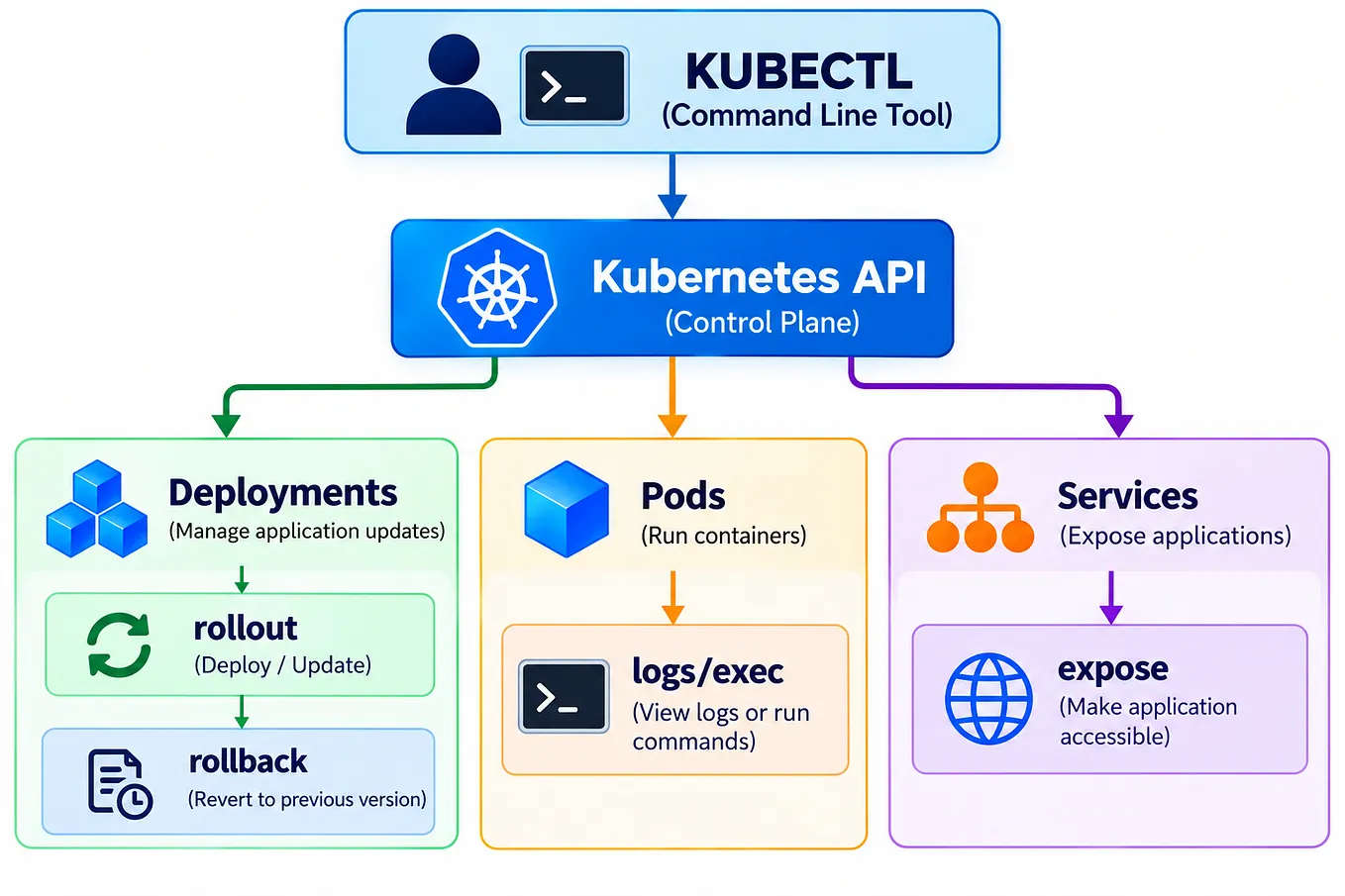
kubectl apply -f deployment.yaml
But what happens after you run this command?
Let’s understand the main components.
1. API Server—The entry point
The API Server is the main entry point to Kubernetes.
Whenever you create, update, or delete a resource, your request goes through the API Server.