I heard this in classes all the time, but it hits differently when you experience it firsthand.

When I first arrived in Shenzhen, I was honestly overwhelmed. Everything moved so quickly. We sat in driverless cars, tried exoskeletons, and even created pictures with our minds.
Being surrounded by so much innovation made me realise why Shenzhen is often called China’s Silicon Valley. The culture there doesn’t just encourage ideas , it encourages turning ideas into reality as quickly as possible.
What surprised me most wasn’t just the technology. It was the people. Whether it was entrepreneurs, manufacturers, or engineers, everyone was incredibly open about sharing their experiences and processes.
One moment that stood out was our visit to Tencent. Even though our guide struggled to understand our English questions, she still did her best to answer every single one. It reminded me that innovation isn’t just about technology. It’s about people, relationships, and the willingness to help others learn.
That lesson became even more important when we started working with seniors at Buxin. Speaking directly with the seniors there gave me a deeper understanding of their perspectives, values, and everyday experiences.
Initially, our prototype used music as a reward system. The harder someone exercised, the louder the music became. We thought it was a great idea because many seniors told us they enjoyed listening to music.
But when we actually tested it and consulted our mentors, we realised they weren’t excited by the music itself. What motivated them was seeing progress, competing with their friends, and earning simple rewards.
That feedback pushed us to redesign our prototype around visual and haptic feedback instead. It was the first time I truly experienced that good design isn’t about what I think users want , it’s about what users actually want. I heard this in classes all the time, but it hits differently when you experience it firsthand.
Get Emily Kam’s stories in your inbox
Join Medium for free to get updates from this writer.
Feedback became the driving force behind our iterative design process. I redesigned the electronics casing four times: from a laser-cut box, to a cylinder, to a treasure chest shape, and finally a rounded rectangle. Every iteration taught me something new. Sharp corners were unsafe but circular shapes encouraged pinch grips that made the prototype fall apart.
At Chaihuo Makerspace, Sweeseng and Danny kept reminding us that prototypes aren’t supposed to be perfect. They’re supposed to help you learn.
Then came the gallery walk at Buxin. Or, as my close personal friend Murphy and his law would call it, the perfect timing. The strap broke. The housing cracked. The weights spilled out. The electronics detached.
I was sitting in a corner doing emergency stitching, convinced everything we’d worked towards was falling apart. That’s when Danny came over and gave me a pep talk. He reminded me that failures like this happen all the time. A prototype is simply an early model built to test ideas, uncover flaws, and gather feedback. Perfection isn’t mentioned anywhere in that definition. For the first time, I truly understood what he meant.
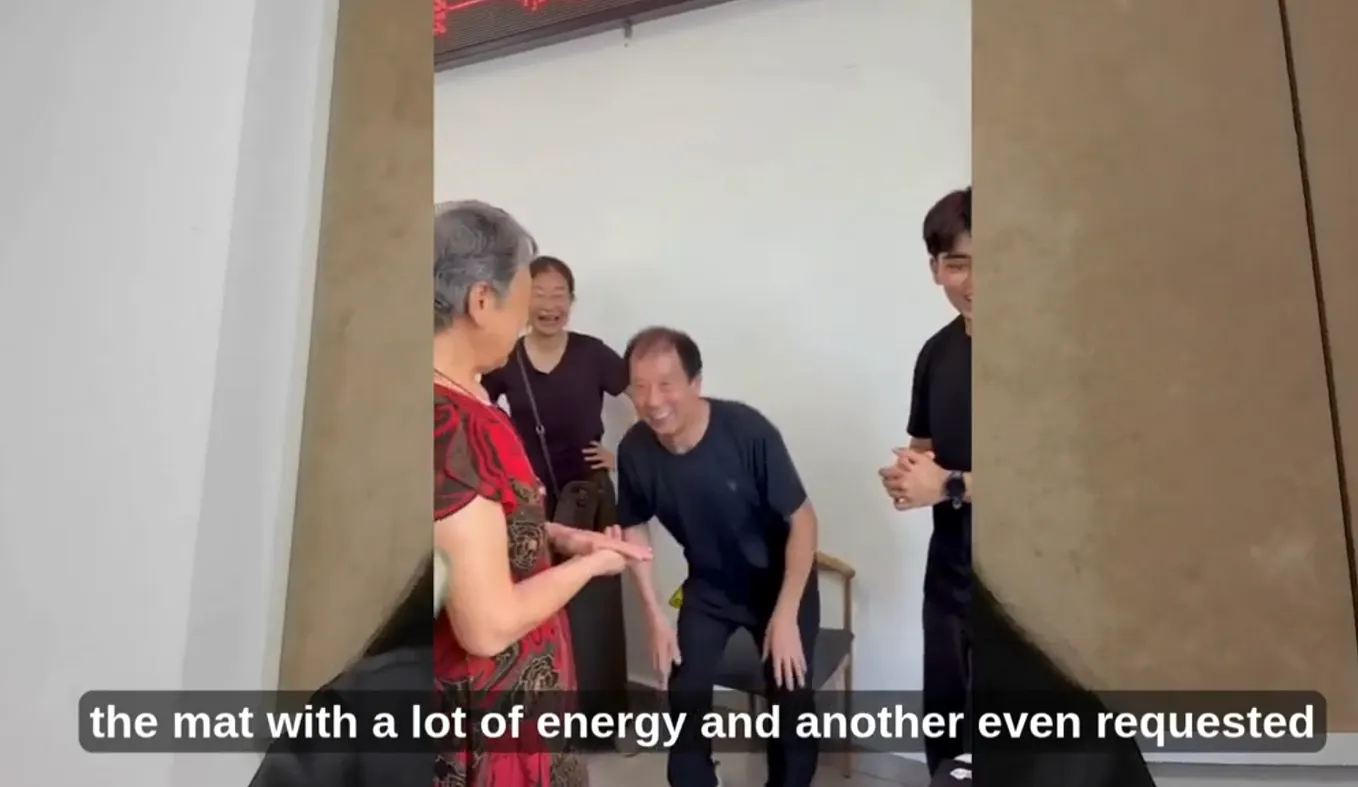
Because while I was panicking about the prototype breaking, the seniors didn’t care. They were competing with each other, coming back to beat their friends’ scores, and genuinely having fun. Our goal had always been to encourage seniors to build muscle through play rather than exercise for exercise’s sake. Watching them laugh, break a sweat, and willingly return for another turn showed me that, somehow, we had achieved exactly that. In that moment, I realised that despite all the technical failures, we had succeeded in solving the problem we set out to address.
Looking back, the biggest thing Shenzhen taught me wasn’t how to build faster. It was how to fail better. I arrived believing everything I made had to be perfect the first time. I left understanding that innovation comes from iteration, feedback, and learning from mistakes. And none of that would have been possible without my teammates, mentors, and the seniors who were willing to learn alongside us.
highlight reel (exclusive Medium post only content):


YouTube link — https://youtu.be/9LiMRzctgf0