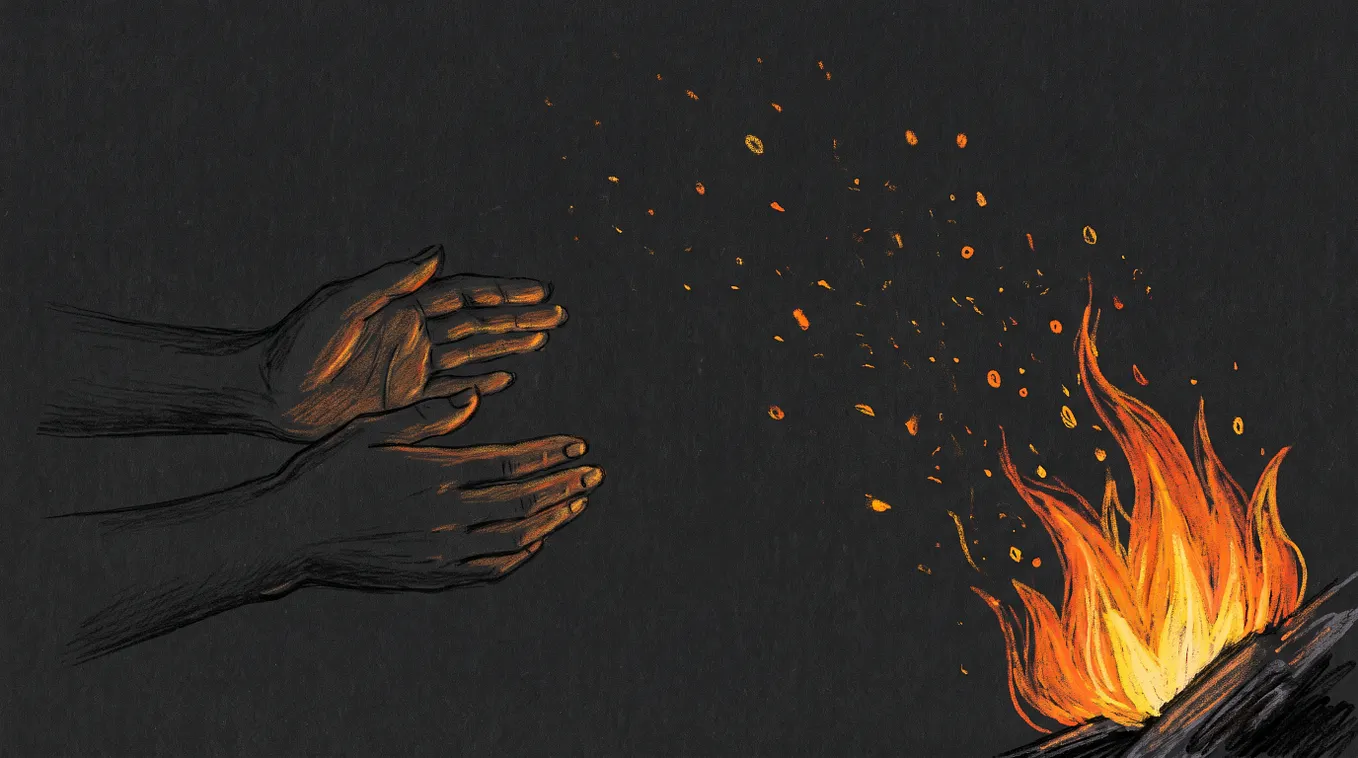
Entropy — The Silent Teacher of Life

From viral mutations to human resilience, a scientist’s reflection on order, chaos, and meaning.

I still remember the first time I watched ice melt in a glass of water. It was a simple moment, but it carried a profound lesson. The solid structure dissolved into liquid, order gave way to disorder, and yet nothing was lost… only transformed. That was entropy at work.
At the time, I thought of it as a scientific curiosity. Today, after years of studying viruses, mutations, and the relentless adaptability of life, I see entropy as something far greater. It is not just a law of physics. It is a philosophy of existence, a reminder of impermanence, and a silent teacher urging us to act with urgency and resilience.
Entropy in Equations
Entropy is often defined as a measure of disorder, but that definition is misleading. It is not chaos in the everyday sense. It is the dispersal of energy, the tendency of systems to move towards equilibrium. In thermodynamics, we write it as:
ΔS = Q / T
where Delta S is the change in entropy, Q is the heat transferred, and T is the absolute temperature.
In the Gibbs free energy equation,
ΔG = ΔH — TΔS
where ΔG is change in Gibbs free energy, ΔH is change in enthalpy (heat exchange at constant pressure), T is absolute temperature, ΔS is change in entropy
Entropy appears alongside enthalpy, determining whether a process is spontaneous.
These equations are precise, but they also convey a deeper truth: entropy serves as the universe’s reminder that change is inevitable. Nothing remains perfectly ordered forever; systems evolve, structures dissolve, and equilibrium eventually prevails.
Viruses as Masters of Entropy
In virology, entropy is a tangible concept not just an abstraction. It is visible in every replication cycle of HIV, in every recombination event of SARS-CoV-2, in every mutation that reshapes the evolutionary landscape of viruses.
HIV is notorious for its high mutation rate because each replication introduces small changes, creating a swarm of variants known as a quasispecies.
Most of these mutations are harmful, leading to defective proteins or non-functional viruses. However, some mutations can provide advantages, such as drug resistance, immune evasion, or enhanced replication. Entropy ensures that the viral population is constantly changing, spreading various possibilities across the sequence space and allowing for survival even under intense selective pressure.
SARS-CoV-2, the virus behind COVID-19, offers another vivid example. Its evolution has been marked by mutations in the spike protein, particularly in the receptor-binding domain, and by recombination events that reshuffle its genome.
The emergence of variants such as Delta and Omicron was not random chaos but entropy-driven exploration filtered by natural selection. Entropy provided the raw material that included mutations and recombinations. Selection favoured those that improved transmissibility or immune escape.
Get Milton Simba Kambarami’s stories in your inbox
Join Medium for free to get updates from this writer.
The result was a dynamic evolutionary landscape, a reminder that entropy and order are not enemies but partners in shaping life.
Philosophy — Fragility of Order
Philosophically, entropy challenges our desire for permanence. We build structures, institutions, and even identities as if they could resist the tide of time. Yet entropy whispers that all things dissolve. Ice melts, stars burn out, civilisations rise and fall.
In science, this inevitability is expressed through Gibbs free energy: progress happens when energy and openness to change align.
Philosophically, it tells us that transformation requires both the fuel of enthalpy and the willingness to embrace entropy. It is not enough to have energy; there must also be acceptance of disorder. Only then does change become possible.
Entropy has become a metaphor for resilience in my understanding. Studying viruses has shown me that entropy is not the enemy of order; rather, it is a necessary condition for adaptation. Without entropy, there would be no mutations, no recombination, and no evolution. Life itself would become stagnant.
Entropy ensures diversity, and diversity is the raw material of survival. HIV survives because its entropy-driven mutations allow it to escape drugs and immune responses. SARS-CoV-2 continues to circulate because entropy provides new variants that challenge our defences. Entropy is the silent force that keeps life dynamic, unpredictable, and creative.
But entropy is not confined to biology. It is present in human existence. In learning, entropy manifests as forgetting. Knowledge resists entropy only if we continually invest energy in study and practice.
In relationships, entropy manifests as distance. Bonds dissolve unless we nurture them with attention and care. In creativity, entropy manifests as silence. Ideas fade unless we express them, share them, and give them form.
Entropy as a Teacher
Entropy teaches us that maintenance is as important as creation. To keep order, we must continually invest energy, just as living systems must continually fight against equilibrium.
Entropy also teaches humility. The universe does not care about human values. Stars will burn out, galaxies will disperse, and eventually, if the heat death scenario holds true, all structures will dissolve into maximum entropy. For some, this is terrifying nihilism. For others, it is liberating.
If the universe is indifferent, meaning is not given; it must be created. Entropy reminds us that permanence is an illusion, but purpose is a conscious choice. We cannot stop the tide of disorder, but we can shape our response to it.
We can choose to build, to love, to create, knowing that entropy will one day reclaim it all. That knowledge does not diminish our efforts; it makes them more urgent, more precious.
In virology, entropy is both a challenge and an opportunity. Drug resistance in HIV is a direct consequence of entropy. Mutations accumulate, and some confer resistance to antiretroviral therapy. This forces us to innovate, to develop new drugs, to design combination therapies that make it harder for entropy to win.
In COVID-19, entropy-driven mutations challenge vaccines, requiring updates and boosters. Yet entropy also provides opportunities for science. By studying the patterns of mutation and recombination, we learn how viruses evolve, how they adapt, and how we can anticipate their moves. Entropy becomes a teacher, guiding us towards deeper understanding and more effective interventions.
Reflecting on entropy has also shaped how I see my own life. As a scientist, I know that entropy will eventually dissolve my work, my words, my existence. But that does not make the effort meaningless. On the contrary, it makes it more meaningful. Every paper written, every visualisation created, every student taught is an act of defiance against entropy. It is a way of investing energy to create order, however temporary.
Entropy reminds me that time is precious, that procrastination is costly, that the opportunity to act is fleeting. It pushes me to write now, to teach now, to create now, because tomorrow entropy will have advanced, and the chance may be gone.
Entropy connects science and philosophy in a way few concepts do. It is a physical law, a measurable property, a mathematical quantity. But it is also a metaphor for impermanence, a symbol of mortality, a reminder of humility. It bridges the laboratory and the human heart.
It tells us that the same law that governs the melting of ice also governs the fading of memories, the dissolution of relationships, and the evolution of viruses. Entropy is universal, impartial, and inevitable. Yet within its inevitability lies the possibility of meaning. We cannot stop entropy, but we can choose how to live within its flow.
In conclusion..
Entropy is not just a scientific concept. It is a philosophy of life. It tells us that change is inevitable, that permanence is an illusion, and that resilience is essential. In virology, entropy drives mutation, recombination, and evolution, shaping the survival of viruses like HIV and SARS-CoV-2. In human life, entropy challenges us to maintain knowledge, nurture relationships, and express creativity. In philosophy, entropy reminds us that meaning must be created, not found. The universe may not care, but we can. Entropy is the silent teacher urging us to grow, to adapt, and to live fully before equilibrium reclaims us.