
Q&A with FUGU: Weaving Machine Learning Technologies To Help Merchants Maximize Return On Their Online Assets
We met with Amir Sadras, CEO and Co-Founder FUGU Risk for a Q&A session. FUGU is an Israeli startup, part of Mastercard and enel x’ FinSec Innovation Lab, working over the past 2 years on a unique solution that optimally addresses the evolution of eCommerce. It evaluates and secures payment methods and the associated risks, disrupting the well established fraud prevention market currently dominated by players such as: Riskified and Forter.
Amir was happy to share with us his unique view of the payment-scape and how FUGU combines the best practices of offline commerce with the ever evolving characteristics of online commerce, digital payments and their respective fraud threats.
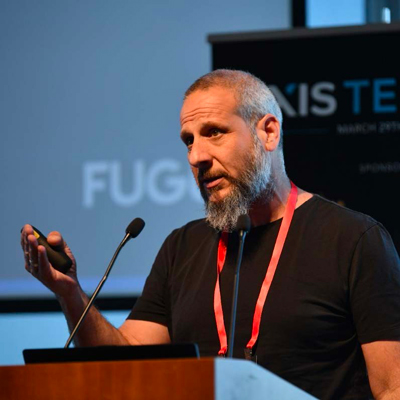
CEO and Co-Founder at FUGU Risk
Tell us about FUGU and how it was founded?
FUGU Risk was founded on the realization that online merchants do not have sufficient tools to fight the uncertainty associated with online transactions. Much like ‘driving in the fog’ the merchant does not have enough visibility as to who are the clients, while forced to assume liability for payments that were mistakenly accepted from stolen identities; furthermore, the merchant is exposed to false accusations and denials and as a result may be subject to fines or may be blocked all together from accepting payments online.
Consequently, merchants have to protect themselves, ending up using tools and practices that represent an over-protective approach, resulting in legitimate business, won with great efforts, being mistakenly rejected and lost (also known as DBM – Decline By Merchant).
FUGU was designed to change this, so that online retailers can safely accept more payments; avoid mistaken rejection of legit transactions and effectively fight invalid disputes.
What stands behind FUGUs slogan: ‘Every Payment Counts’?
This is the approach my grandfather taught me many years ago. He used to run a brick-and-mortar business and would tell me that he always does his best to never say no to a client, “first say yes and then work with the client to try and make the transaction happen”. Instead of rejecting a customer, find ways that would be more comfortable for the client to pay and make any further necessary verifications after the client was engaged. We take the same approach in our product design, we do not reject the clients’ payment attempt even if it appears to be risky. We believe the order should be allowed in and then we may continue performing any further required checks to mitigate the risk, collecting more data and making sure we have the broadest perspective to make the final decision, before shipment, when the actual risk begins.
What is special about FUGU’s Fraud Prevention Solution, what sets it apart from other services in the market?
FUGU offers a new breed of payment anti-fraud solutions, auditing payments post-checkout, helping merchants safely accept transactions they currently lose to fraud, false declines, payment churn, as well as, effectively fighting the expanding friendly fraud phenomena.
Our award-winning multi-tier self-learning fraud prevention solution, fights payment fraud at various points along the transaction lifecycle, achieving 50 – 60% reduction in both false declines and chargebacks.
FUGU uniquely monitors the transactions in the post- checkout phase, collecting additional data points from the various interactions with the client as part of the standard flow or as a result of a proactive request made to clarify a potential suspicion (e.g. a KYC- Know Your Customer- check at the transaction level). These actions result in a broader perspective for the risk assessment process rather than relying on the limited data that was available at the checkout page.
How do you see the Evolution of eCommerce and online payments?
With constant pressure for frictionless checkout, new payment models stretching the payment phase far beyond a handshake at the checkout phase have emerged. These include BNPL (By Now Pay Later) and recurring payments. As a result, merchants are vulnerable to new types of fraud that may arise along the continuous payment lifetime.
Merchants can therefore no longer rely on outdated risk snapshots based on the information available at the checkout page. In order to optimize their monetization, merchants need to deploy a continuous risk analysis solution covering the entire transaction lifetime, something only FUGU provides.
FUGU’s solution empowers the merchant with a wide perspective on payment risk that goes far beyond data analysis, adhering to business process excellence and factoring human behavioral indicators gathered over time, allowing for an optimized balance of Transactions Approvals vs Risk Exposure.
Are there also changes in the fraud patterns with new forms of fraud that become more prominent?
Yes definitely, as fraudsters realize that performing fraudulent transactions at the checkout phase is becoming harder to do, we see an increase in friendly fraud attempts, where the card owner decides to dispute a transaction they (or one of their family members) have made. Friendly Fraud is harder to detect and requires careful audits of multiple data points including various indications of sentiment and other transaction/account attributes. We also see an increase in misuse of card details for the creation of fraudulent BNPL (By Now Pay Later) accounts, allowing fraudsters to abuse stolen credentials in ways that take longer for the card owner to detect.
What type of client are FUGU’s services designed for? How can they know if the service will help them?
FUGU’s services are designed to support any business that performs online commerce whether selling goods (physical/digital) or services (games sites/ exchange platforms). We help merchants delay the time/stage at which the approval/decline decision is taken. Moving risky decisions to the post-order/deposit phase, as late as, e-shipment/cash-out/withdrawal phase, gains time to perform multiple additional checks, mitigating risk without inducing churn.
FUGU’s way allows in more transactions that would have been rejected as ‘too risky’ by other services, while continuing to audit the transactions to collect more indicators for a decision to be taken based on the most comprehensive risk assessment just before risk really arises (e.g.: at shipment/cash-out/withdrawal). Consequently, the merchant is in a better position to detect real fraud attempts while preventing mistaken DBMs (Decline By Merchant)/rejection of legitimate payment attempts.
While we support any eCommerce platform, we created a unique ‘Efficiency Test’ for Shopify based eCommerce sites; it is a Free analysis performed automatically. Any store owner can easily perform the test and see first-hand the potential improvement in quantitative numbers they could have achieved based on the last 90-day data.
Including:
- Missed payments (carts abandoned after payment details were provided)
- Refused payments (cancellation of suspected orders)
- Lost payments (chargebacks lost or left unresponded)
What does it take for a client to implement FUGU? What is the business model?
FUGU offers simple implementation that includes some standard pixel and script to be included in the merchant site and email communications. While we support any eCommerce platform, we have created for Shopify based stores an add-on with one-click installation.
The service is offered on a transaction volume based pricing and price per transaction is lower as more transactions are covered, with an entry price point as low as $99/mo. We also offer optional chargeback management and guarantee service, priced as a percentage of the covered transactions based on the merchant’s chargeback history.
Furthermore, we offer a unique hybrid model where the merchant may use our fraud prevention service as a decision support tool to determine which transactions to block/allow and for which to use the complementary chargeback guarantee service, based on any characteristics (e.g.: price, product, region) they find relevant.
Most importantly, we do not require any long term commitment and the merchant may terminate the engagement at any point of time, effective at the end of the month during which the termination was requested.
Related Categories