A3: Laser Cut Prototype: Tablet Stand Process Log

Design
For this assignment, my goal was to design and fabricate a laser-cut tablet stand to use in my prototyping and design workflow. I selected the tablet stand option because I frequently use my tablet to review prototypes, display interfaces, and test layouts. I wanted a stand that would be lightweight, portable, flat packable, and stable enough to hold a tablet at a comfortable viewing angle.
Before sketching, I defined what I wanted to evaluate with my prototype:
- Feasibility: The stand should hold my tablet securely without glue, tape, or fasteners and remain stable at a viewing angle between about 60 and 75 degrees.
- Usability: The tablet should be easy to place and remove with one hand.
- Portability: The stand should disassemble or fold to fit into a backpack.
- Simplicity: The structure should use very few parts and be easy to assemble quickly.
I also considered the material constraints. The design had to be cut from sheet material and assembled without adhesives. That led me to focus on interlocking or folded geometries instead of multi-part assemblies with connectors. I aimed for a mostly single body structure with a front lip and a rear support surface.
My final design direction used a triangular side profile for structural stability and a curved front support edge to better distribute the tablet’s weight and prevent slipping. I intentionally kept the geometry simple so it could be reliably cut and reproduced.
Sketches
I produced more than ten concept sketches exploring different stand structures and support strategies.
My early sketches explored several directions:
- A slot-based vertical holder where the device slides into a pocket
- A hinged-style angled stand
- Tripod-inspired supports
- Fold out leg structures
- Triangular wedge stands
- Multi-piece interlocking frames
Through sketching, I compared tradeoffs between stability, part count, and portability. Designs with many legs or moving parts looked adjustable but violated the simplicity and flat pack goals. Some concepts would also have required glue or flexible joints, which are not allowed.
I narrowed my direction to triangular and wedge-based forms because they naturally resist tipping and can be made from a single folded or slotted sheet. My later sketches focused on a triangular profile with a front retention lip and a back angled support surface sized for a tablet rather than a phone.
Each sketch iteration refined the angle, base width, and height of the front stop that prevents sliding.

Prototype
Iteration 1: Handmade Cardboard Version
My first physical prototype was made by hand-cutting cardboard using a utility knife. The goal of this version was to quickly test proportions and angles before committing to a digital model.
This prototype revealed several problems:
- It was too small for a tablet footprint
- The base depth was insufficient, causing tipping risk
- The viewing angle was too steep
- The tablet could not stand without being supported by hand
Even though it failed functionally, it helped me understand the required base length and support angle much better. I measured how far the tablet’s center of mass projected onto the table and used that to guide the next iteration.


Digital Iteration through Rhino and Illustrator
After the prototype failed, I built a scaled 3D model in Rhino. This helped me visualize the angle, height, and contact points more precisely. Modeling digitally made it easier to adjust the support angle and test proportions relative to the tablet dimensions.
Get Batuhan Çelebioğlu’s stories in your inbox
Join Medium for free to get updates from this writer.
Once satisfied with the form, I created a precise 2D vector version in Adobe Illustrator for laser cutting. I optimized the outline for clean cutting and minimal material use. The design used a single main piece with integrated support geometry to reduce assembly complexity.


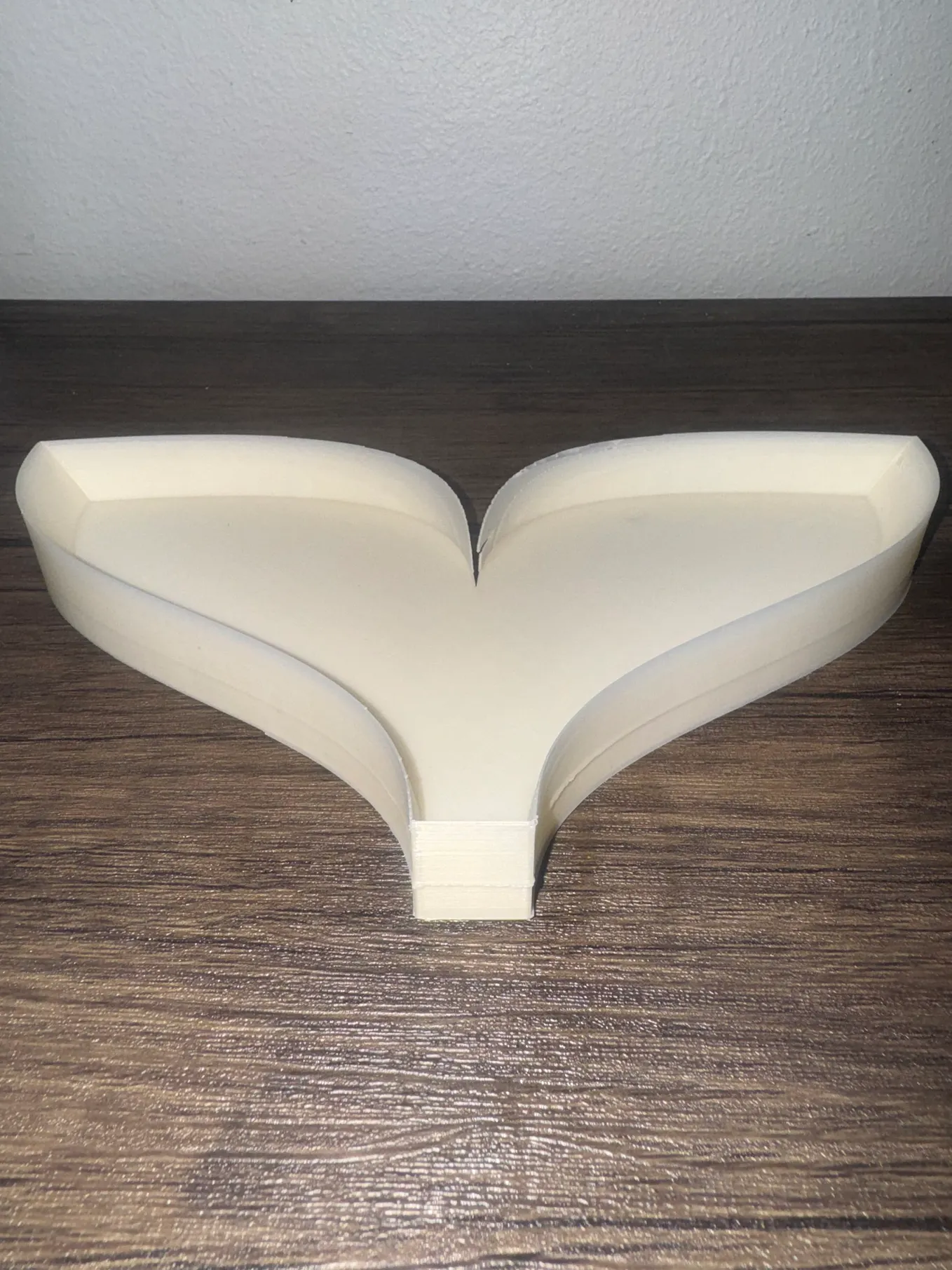
Final Laser Cut Prototype
I laser cut the design from chipboard. The laser-cut version was much more accurate than the handmade one and immediately showed better edge quality and symmetry.
After cutting, I added a controlled vertical cut along the center line using a utility knife. This allowed the piece to flex slightly and form a gentle curve. That curve improves load distribution and lets the angle be adjusted slightly while still allowing the piece to flatten for storage.
Testing with my tablet showed:
- The tablet remained stable without hand support
- The front lip prevented sliding
- The base footprint was wide enough for balance
- The stand could flatten for transport


Analysis
This assignment taught me the importance of fast physical iteration before committing to a final fabrication method. My first handmade prototype failed, but it gave me critical dimensional insight that directly improved the second iteration. Without that step, my laser-cut version would likely also have been undersized.
What worked well:
- The triangular support geometry provided strong inherent stability
- Using a single main piece made assembly simple and reduced part loss risk
- Laser cutting produced precise edges and repeatable geometry
- The curved center cut allowed limited angle flexibility while preserving flat pack capability
- The design is easy to store in a backpack and quick to deploy
What did not work well:
- My first prototype was not scaled correctly for a tablet
- Material flexibility creates some long-term durability concerns
- The stand is not angle-adjustable beyond slight flexing
- Single-sided support means lateral stability could be improved
Critique feedback from classmates highlighted several strengths and weaknesses:
- They noted that it is easy to carry and backpack-friendly
- They described the design as straightforward
- They liked that it is essentially one main piece and hard to forget parts
- They pointed out that it is one-sided and not truly adjustable
- They suggested that material choice matters for durability and flexibility
- They raised possible stability concerns depending on the surface and device weight
From this, I learned that simplicity and portability are strong advantages, but adjustability and material performance are also important design dimensions. In a future iteration, I would explore a two-piece interlocking version with multiple angle slots and a stiffer sheet material to improve durability and lateral stability while still meeting the no fastener constraint.
Overall, this process improved my skills in sketch-driven ideation, rapid prototyping, CAD to fabrication workflow, and critique based iteration.
AI Usage Note
ChatGPT was used to help correct grammar and formatting mistakes.