There Really Is No Emotion Called Boredom

It is a name we give for the process of fearing those parts of ourselves that we attempt to disown (deep feelings/emotion), as they try to make themselves felt…
Photo by Jayalekshman SJ on Unsplash
Yes, we could believe there is an emotion called boredom, and we could hold that that is true, but what if we explore it and discover that it is just a convenient way of labeling and thereby dismissing a more complex and interesting phenomena? And what if we discover that by avoiding what is really going on in that experience we call ‘boredom’, we are cutting ourselves off from a deeper understanding of ourselves?
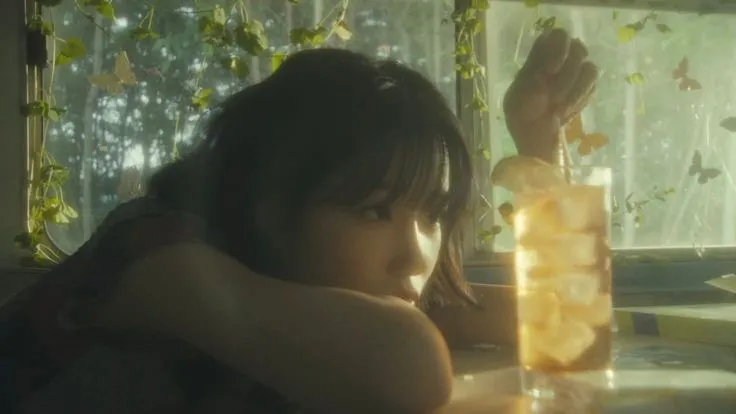
The next time you feel bored, stop and notice what you feel physically in your body. Also notice what is happening in your head with your mind and with your thoughts. Here is a guess: You are probably spinning quite a bit in thought. You probably will find yourself with little awareness in your body, and most of your consciousness up in your head with mind/thought. Or you may find yourself numbly “spacing out” and fairly dissociated from yourself; neither very much in thought or feeling, and barely present. If you look closely, you may find that if you direct your attention down to your chest and/or belly that some emotions are at that moment trying to rise up and be felt.
Feelings that we have been taught to suppress start rising up, and to move away from them we look for “activities” to distract ourselves…
…but after a while these activities stop distracting us sufficiently to avoid our emotions, and so then we start looking for something else new and shiny to undertake so that we don’t have to come home to our bodies and feelings — which we have been taught to fear.
We can settle into a numb dissociation in ourselves — away from our emotions and bodily experiences of our life — because we can’t ‘think’ of any new activity to distract ourselves. We then call this ‘boredom’.
We can sit in a slightly dissociated state: neither with our emotions or sensory experience, and often with little thought because we have tired of the thinking as well. We are kind of ‘zombie-like’ at these moments. Sadly, we have been trained and conditioned out of remembering that if we were to just drop into our bodies and be with all we are — outside of thought — we would open up to the wonderful deep experience of just being alive in the moment with acceptance of all the mystery and wonder that can be.
We came to this place by believing ‘I am my thoughts’, through a cultural conditioning that teaches that emotions are something to mostly ignore and suppress.
We live in a culture that has for centuries been increasingly prioritizing rational thought and mind over other types of intelligence: emotional and sensory and intuitive intelligences that arise mostly in our bodies. We are taught to locate most of our consciousness in our heads where rational thought mostly resides (This is a crude schema, but useful for our purposes). We act as if our bodies were merely a taxi to carry our heads around. We have become stuck in our heads mostly thinking about our lives, instead of directly experiencing our lives through our senses and emotions. We have come to prefer and defer to our narratives and stories about our lives, over the actual experience of our lives as they happen. Then, while in our heads, we mostly live in the past and future with abstract conceptual memories and conjectures and narratives about our life, instead of being with the actual reality of our life in the present NOW moment. To invoke a very timely analogy: our Facebook, Twitter and on-line pictures and profiles as documents of our lives have become more important than the actual experience of our lives as they are lived and felt in the present.
We become alienated from our emotions (as they are bodily felt) and learn to fear those experiences.
Think of your rational thought as originating and living mostly in your head, and your emotions and intuitive intelligences originating and living mostly in your body. Due to our conditioned fear of our emotions, we learn to park most of our consciousness up in our heads where we spin around in thought most of the day. As we have done this through the years, we become less and less familiar with our emotions as they arise, and eventually we become alienated to the physical phenomenological (i.e., felt) experience of having emotions. Add to this the strong cultural injunction against expressing strong emotions outwardly, visibly, in our culture, and you get a recipe for a developing fear of being embodied and sitting with normal human emotions as they arise throughout the day.
Get Dr. Scott Andrew Johnson’s stories in your inbox
Join Medium for free to get updates from this writer.
What do we think to do when feelings arise? “Stay in Your Head! Stay Out of Your Body! Think! Don’t Feel!” Stop and note an innate wisdom asking for something else…
We end up busying ourselves with thought and diversions and projects that involve our minds so that we don’t have to become quiet and have those ‘scary’ emotions surface. And yet, an innate wisdom will at times steer you towards activities that force you to become at least somewhat embodied. Physical sports activities or workouts, long walks, or hobbies that involve using your body and hands and senses are an attempt by your larger wisdom to pull you out of so much thought and into your body again. Notice this wisdom at work. The challenge here is to not think in simple black and white terms, but know that sometimes as I believe I am simply ‘bored’ and try to escape into distraction with activities, I may indeed wisely pick (with innate unconscious bodily wisdom) activities that require some, or lots, of embodiment. The trick to is to bring some conscious, intentional awareness to what I am attempting to bring to myself: more thought, or more embodiment?
“All of humanity’s problems stem from man’s inability to sit quietly in a room alone.” — Blaise Pascal
The ultimate challenge can be: can I just sit and breath and notice what it feels like to be alive? What will I find if I endeavor to do nothing and just observe myself and my feelings? I can gently attempt not to analyze myself or my feelings (head), but to just see what my emotions feel like physically in my body.
Your Inner Wise Self Will Try to Find Health by Bringing Emotions Up
When your work is done, and your hobbies are satisfied, and you’ve had enough tv, or reading, or phone scrolling, you begin to become quiet, and an inner wisdom that knows what is best attempts to have you feel what emotions you have been unconsciously stuffing. Be aware that this ‘stuffing’ is an active process of pushing down and running from our feelings — it requires lots of energy. This is an unnatural learned process that an inner wisdom in you wants to drop. It is hard to keep carrying around emotions that we refuse to feel — it is an energy sapping piece of work.
Let us be clear about this: emotions that are not felt as they arise in the present moment, will stay trapped in your body until you finally feel them. They build up over time until we find ourselves carrying great heavy burdens of unfelt emotion. As many in psychology and consciousness studies have noted: “The Body Remembers”.
The Solution when you feel boredom?
Stop for a moment and try taking a breath, and see if you can notice physically what you feel in your chest or belly. Gently resist the urge to go to your head to name emotions or imagine what outside person or circumstance caused them — that isn’t really feeling them, but a clever mind-based analysis of them. Just observe and notice what you feel physically. Is my chest tight or lose? Is there a temperature inside? Does it feel thick and heavy inside, or light and wispy? Can I sense movement inside? (These are just examples; notice whatever physical dimensions that appear to you). Bring your own awareness to all the physical properties that you can notice. Try not to judge what you find. None of it is “good” or “bad”. It is all just you. This focus on the physicality of your bodily experience will allow you to feel the emotions as they manifest physically in your body; and that is all your emotions want. This allows you to feel and release the emotion, moving it out of you.
The above practice in turn will slow your mind down as you focus below the neck. After all, you have a limited amount of consciousness, and if you move lots of it down to your body, much is drained out your head and thinking mind. This in itself brings a calming shift, as you are subsequently then spinning less in future thought, and creating less high anxiety with your dark fantasies of the future (all high anxiety involves obsessive future thought).
Try to get embodied through physical activities, or meditation, or belly-breathing — anything but more thought and distraction.
Try ‘belly-breathing’. Push your belly out in an exaggerated fashion as you inhale. Pull your belly in as you exhale. Watch this experience from the inside as you do it. This is the way you came into the world breathing (look at any small baby and you will see this is true). Belly-breathing will take much of your consciousness down into your belly. It will also relax your chest as you forget to keep it tight against any rising emotions (As emotions arise they move up your body from belly and chest, and we have learned to tighten our chests to attempt to resist this process). You will then have the opportunity to really feel your emotions, moving them along and no longer painfully storing them in your body.
Try these experiments and see if ‘Boredom’ doesn’t relent to another set of experiences.
You may find that the world opens up to you a little more, in ways you didn’t know were possible, with more calm and peace, and that you really don’t need another activity or project to get yourself busy.