American Workers Won the Election
The Pitch: Economic Update for Thursday, November 5th, 2026

Friends,
What we witnessed on Tuesday night has not truly happened before in many of our lifetimes. From coast to coast, Democratic candidates for Congress and state offices overcame gerrymandering, massive dark money campaigns, and generational obstacles to mark one of the biggest midterm victories in American politics.

And they won office despite the biggest influx of corporate dark money in American political history — much of it from cryptocurrency, Big Tech and AI firms, and online gambling companies — and half a billion dollars spent by the world’s first trillionaire to defend the Texas politicians who did his bidding.

As someone who has paid attention to political campaigns my whole life, I have to acknowledge that the winners in Tuesday’s election represent some of the most talented and focused campaigners I’ve ever seen. They pushed relentlessly on economic issues, calling out the rigged economy, the affordability crisis, and runaway government corruption at every opportunity. I could fill this newsletter with ads that successfully explained the importance of growing the paychecks of working Americans. These candidates got the memo, and they stuck to the message despite every attempt from their opponents and the mainstream media to distract them.
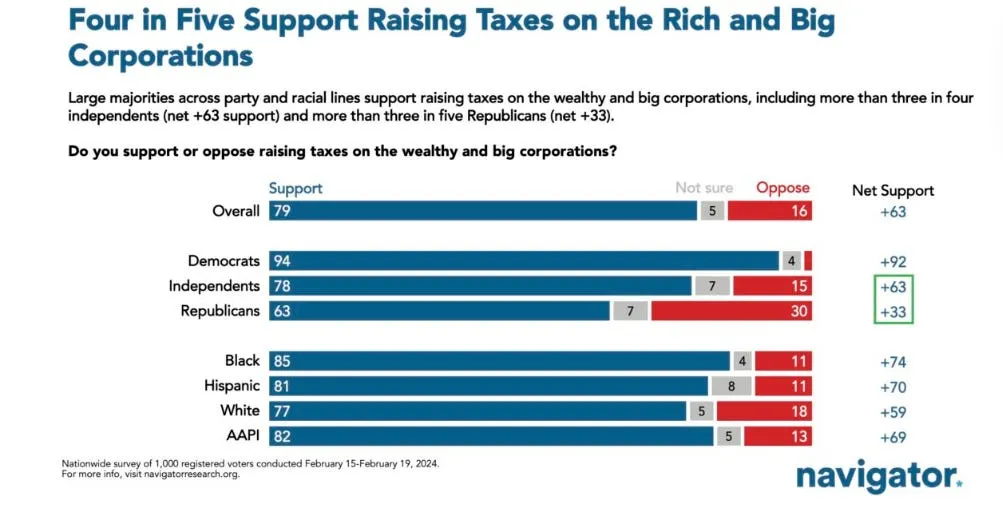
That messaging worked. Regardless of party lines — in fact, ignoring regional partisan divides that stretched back three decades (in the case of Texas) and even further (in the case of South Carolina and possibly Mississippi), the American people voted for their material self-interest.
You don’t need to dig deeply into exit polling to understand the heavy questions that Americans brought into the ballot box with them. “Which of these candidates is going to raise my wages, lower my costs, and make my life easier?”
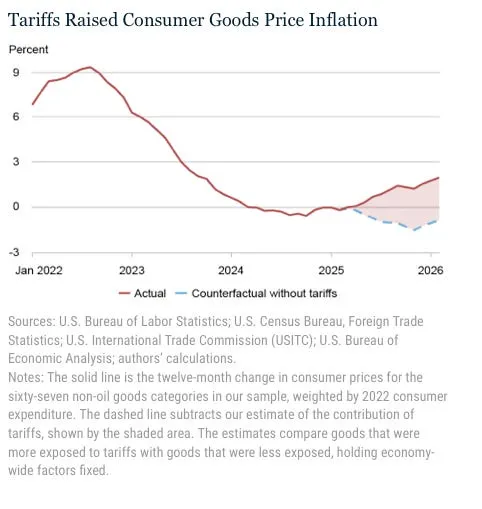
In many cases, people who voted for Republican Party candidates in 2024 because they talked a good game on affordability and wages returned to vote those candidates out because they failed to deliver on those promises. Instead, the Republicans rewarded their rich friends and corporate America with another huge tax cut; they promoted Donald Trump’s campaigns of excessive tariffs, forced deportations, and war on Iran; and they oversaw an unbroken six-month streak of paychecks being swallowed up by higher costs.
The Washington Post reports that by tirelessly focusing on affordability and paychecks, Democrats tapped into a demographic that their predecessors had seemingly given up on: working Americans, especially those who earn less than $60,000 per year. They improved over the Democratic Party’s 2024 performance with working Americans at the bottom of the wage scale by nearly 21%.

By talking about tariffs and the impacts of the war on Iran on the global fertilizer trade, they improved the party’s performance in rural and farming communities by more than 15%.
We’re already hearing mainstream pundits try to make arguments that Democrats won in many parts of the nation by adhering to “centrism,” by finding some middle ground between conservatives and liberals. That’s not the case. What candidates from Kansas to Texas to Montana talked about was what Civic Ventures founder Nick Hanauer characterizes as the true centrism — promoting economic policies that are popular with the broad majority of voters. Those policies invariably favor working Americans over the wealthy few.
My rule of thumb for politics has always been simple: Show me who voters trust most on the economy, and I’ll show you who will win the election. This year’s crop of Democrats worked hard to gain that trust by explaining how the economy really works, and why it wasn’t working under its current leadership.
The next few weeks will be devoted to a conversation about what Democrats should do with this political power that they’ve won. As my colleague on Pitchfork Politics, Richard Trent, said, the coalition that Democrats won with in this election are rented, not owned. It’s going to demand results. That’s a tricky proposition for Congressional Democrats, who face both a confrontational Supreme Court and a president who will be eager to veto anything that doesn’t directly help the wealthy few. The new governors and state lawmakers who won office this week will face their own challenges.
As they assess their options, one of the first places I’d suggest they look is the minimum wage. In Pennsylvania, for instance, the Democrats hold the first state trifecta since 1978, and raising the state wage from the federal minimum of $7.25 is an obvious first move, and one that Governor Josh Shapiro has already cited as a top priority. Putting more money in the pockets of workers isn’t just politically popular — it also grows the economy for everyone by boosting consumer spending. I suspect that Congress could start an important national conversation about growing paychecks by sending a higher federal minimum wage to President Trump’s desk.
After that, the options are limitless: Fighting corporate consolidation, reining in junk fees, improving consumer protections, and calling price-gougers before Congress are all good possibilities that I’m sure some newly elected officials are already considering. As candidates, they explained why the economy was broken and how to fix it. Now it’s time to turn talk into action.
If you’d like an even deeper dive into the political economy of this week’s election, I’d encourage you to check out this week’s edition of the Pitchfork Politics podcast, in which Richard Trent and I had a long and deep discussion about Election Night and what’s next.
The Latest Economic News and Updates
Health Insurance Costs Are Hurting Worker Paychecks
On Friday, the Bureau of Labor Statistics released this year’s Employment Cost Index report for September, which charts how much employers are spending on wages and other employment costs. As you can see in the chart below, one figure in particular jumped out:

Health insurance costs are skyrocketing, and employers are making workers pay a larger share of their plans.
“This year, the average cost of an employer-based family healthcare plan was $28,303. That amounted to a 5% increase from 2025,” Hannah Grabenstein reports at PBS. “And workers contributed on average 9% more than last year, or around $7,470 annually,” she writes.
These rising costs are driving people off health insurance rolls in growing numbers, Brandon Novick at the Center for Economic and Policy Research reports. “In 2024, around 8.9 percent of Americans of working age — ages 19 through 64 years — reported being uninsured,” Novick writes. “This increased to 11.2 percent by 2026. This difference roughly translates to over 4.6 million more working-age Americans being uninsured in 2026 than in 2024.”
What’s driving those prices up? America’s private health insurance industry is a major reason. Last year, private health insurers reported more than $54 billion in profits, despite covering 10 million fewer Americans than in the year before. And those profits are just funneled away to an elite class of shareholders and corporate executives in the form of stock buybacks.
For his Health Care Un-Covered newsletter, Wendell Potter reports that the seven biggest health insurance companies devoted more than $137 billion to stock buybacks between 2015 and 2025. That’s money that was funneled away from insured Americans and handed off to a handful of wealthy investors with no strings attached.

And also, hospitals are charging more than they used to. “Providers, like hospitals and pharmaceutical companies, also set their own prices without much regulation,” Grabenstein writes at PBS.
In nations with government-run health insurance, hospitals have to negotiate their prices with one big insurer who is looking to lower costs for everyone. And we can see that differential in action in the United States on a more limited basis: “Because Medicare is able to negotiate some costs, the price of an MRI in the private market is about double what Medicare pays,” Grabenstein explains.
And while America’s health insurance is divided between Medicare, Medicaid, and a number of private insurers, at the same time hospitals keep merging and buying each other up, killing the competition that would otherwise bring prices down for patients.
“More than 1,000 hospitals merged between 2002 and 2020,” Grabenstein reports, and an expert explains to her that “those mergers generally benefit the parties merging, but don’t really bring much benefit to the public.”
So while the people don’t have one advocate pushing for lower prices, hospitals are consolidating their power to push for higher profits for shareholders and CEOs, and the seesaw gets more imbalanced with each passing year.
On Bluesky, Roosevelt Institute economist Mike Madowitz framed the ECI chart in an interesting way. Madowitz writes, “This chart is why year end raises are going to be harder to find across the economy this Jan — we’re back to healthcare costs eating up all the gains.”
I don’t mean to pick on Madowitz, who does excellent work, but his comments reflected a not-uncommon sentiment from economists on social media: the idea that those rising health care costs are why worker wages are suppressed this year. It’s absolutely true that higher health insurance rates do eat into employee raises. In March, the Federal Reserve issued a report that figured out exactly how much of your raises have been eaten by the rising cost of health insurance.
“Among those businesses experiencing an increase in employee health insurance costs, the average wage increase over the past year was 3.8 percent for both service firms and manufacturers, slightly higher than the 3.4 percent reported among all firms in the surveys,” the Fed reports.
“However, these firms reported that the average wage increase they would have given to their workers if health insurance costs had not gone up was about 4.7 percent,” they continue. “Thus, wage growth for workers at these service and manufacturing firms would have been about one percentage point higher, on average, if health insurance costs had held steady — the equivalent of a 20 percent drag on wage growth.”
The Fed concludes, “there does appear to be a connection between rising health insurance costs and wage growth among many firms.” But while it’s true that employers and workers are paying more for health insurance, it’s important to point out that health insurance isn’t the sole reason why worker paychecks have been shrinking, or why labor’s share of output is now lower than at any point in our lifetimes. We can’t let five decades of trickle-down wage suppression off the hook by blaming profit-seeking insurance companies for the entirety of those shrinking paychecks.
I’d like to close with a video that my team at Civic Ventures put together earlier this year explaining why employer-paid health insurance is such a drag on the economy. In the video, my colleague Paul Constant explains that employer-provided health insurance raises costs for everyone and keeps workers locked into unsatisfactory employers for fear of losing their health insurance. It also suppresses small business growth by pushing up prices for small employers, some 70% of whom are now unable to provide health insurance for their workers.
American Workers Are Unhappy
This month’s Job Openings and Labor Turnover survey continued to show a labor market in stasis. “More Americans voluntarily left their jobs in September, while US job openings held near 7.5 million and hiring showed little change,” writes Daniel Brooks at Aktualita.
“The mixed picture matters for households weighing a job search or a move to higher pay. Employers still reported millions of unfilled positions,” Brooks writes, but the report “does not establish that finding a new job became broadly easier.”
Some 300,000 more workers quit their jobs in September than in the month before, Brooks reports, and layoffs remained at low levels. But none of these metrics indicate that paychecks are likely to grow in the near future. The biggest indicator of paycheck growth is when Americans switch jobs, moving from one employer to another, higher-paying job. That competition in the labor market is the most reliable driver of wage growth. And these reports don’t indicate that any of this is happening.
Get Civic Ventures’s stories in your inbox
Join Medium for free to get updates from this writer.
“Average hourly earnings are now growing at the slowest pace since before the pandemic,” reports Marketplace.
Unsurprisingly, this is making American workers uneasy. “Employee sentiment is quite poor. When we look at reviews on Glassdoor, the overwhelming theme that is coming from workers who are anxious is job security,” Glassdoor economist Daniel Zhao told Marketplace. “Crucially for workers, if we are in a low-hire job market, the cost of being fired is much higher. And we see that reflected in long-term unemployment trending upwards.”
A new Gallup survey of workers confirms Zhao’s findings on Glassdoor. Gallup’s employee engagement survey, which measures “the involvement and enthusiasm of employees in their work and workplace,” finds that workers are not excited about their jobs, and many are becoming actively disengaged from their work.
“U.S. employee engagement fell to 29% in the third quarter of 2026, its lowest level since 2011 and down two percentage points from the previous quarter,” Gallup reports. “The share of actively disengaged employees rose from 17% to 18%, while 53% were not engaged.”

The reasons for this self-reported disengagement are pretty obvious to anyone paying attention — paychecks aren’t keeping up with inflation, and workers in many fields are being actively told by Big Tech companies that artificial intelligence will take their jobs. And even though layoffs are at historically low levels, large companies are still engaging in headline-grabbing maneuvers like Microsoft offering buyouts to some 60,000 employees.
Why should companies care about whether their employees are happy? Gallup explains that “Employee engagement is linked to important organizational outcomes, including productivity, customer service, quality, safety and profitability.”
Is it any wonder, then, why 71% of Americans report feeling positively toward labor unions, and why 56 million Americans say they would join a union if they could? For fifty years, the gap between worker productivity and pay has only grown larger and larger:

And that gap is now so catastrophically big that workers are reaching an all-time low level of ownership in the wealth that they create. Every week, a new news outlet discovers the Bureau of Labor Statistics’ recent report on labor’s declining share of wealth. This week, Sasha Rogelberg reports on it for Fortune:
“Labor share, or the portion of the U.S.’s economic output that workers receive through salary and wages, decreased to 52.8% in the second quarter of 2026, its lowest level since the BLS started recording this data in 1947,” she writes. “That’s despite corporate earnings skyrocketing, with profits for Fortune 500 companies hitting a record $2.1 trillion in 2025.”
Even if workers aren’t aware of these statistics, they can feel that loss of wealth in their paychecks, even as they see the super-rich get richer with each passing day. When you earn money from paychecks, not dividends and capital gains, you can’t pay bills or afford necessities, even as the super-rich and mainstream economists keep gushing over the booming economy. It’s becoming apparent that the economy has stopped rewarding work and chosen instead to reward the investor class for rubbing money together to make more money.
This isn’t the kind of problem that can be solved with a few quarters of strong GDP growth — or even a single midterm election. It’s going to require that the tax code and financial regulations be updated to prioritize paychecks over the hoarding of wealth, to ensure that workers are at the center of the economy again.
That’s admittedly a tall order. But we can see from this week’s election results that the American people are hungry for big changes, and that they will reward the leaders who make that change possible.
This Week in Trickle-Down
“The war with Iran has been very lucrative for American oil companies, which have earned more than $130 billion in profit as people pay much higher prices for gasoline, diesel and other fuel,” reports the New York Times.

This Week in Middle-Out
- Here’s something cool that flew under the radar on election night: “Montana voters have approved a historic ballot initiative that will limit the flood of corporate money in politics and effectively undo the corrosive effects of the Supreme Court’s 2010 Citizens United decision. The law takes effect on Jan. 1, 2027,” reports the Center for American Progress.
- Representative Robert Garcia, the incoming head of the House Oversight Committee, is making a powerful case for his role in the incoming Congress. He has vowed to work to fight the corruption of the Trump administration, and he also vows to bring in CEOs to force them to testify about why they’re raking in record profits while also raising prices on consumers far above costs. Garcia specifically cites the record profits that oil companies have reaped since the war on Iran started as an area he wants to focus on.
Real-Time Economic Analysis from Civic Ventures
- This morning, I appeared on the latest episode of the Blue City Blues podcast to discuss the election results. It’s a far-ranging conversation about how the definition of “working class” has changed, what it means to be an economic progressive, and what might come next.
- Why is it that if bank robbers steal $10,000 in cash, they go to jail for years, but employers steal billions of dollars every year from worker paychecks with virtually no repercussions? On the Pitchfork Economics podcast, Nick and Goldy talked with labor law enforcement expert Terri Gerstein about wage theft.
- And on his YouTube channel, Nick Hanauer explains why CEO pay keeps rising while worker pay languishes.
Closing Thoughts
One of the most harmful economic assumptions you will find in Econ 101 textbooks on college campuses is the concept of marginal productivity — the idea that the invisible hand of the free market always ensures that you’re paid what you’re worth.
Recently, Civic Ventures founder Nick Hanauer posted a video that doesn’t just debunk the idea of marginal productivity — it digs deep into the history of the theory and explains how it came to be.
You might wonder what good a history lesson can do at a time when worker paychecks are shrinking with nearly every passing day. But I’d argue that learning the history behind marginal productivity is essential to stripping the idea of its power.
Marginal productivity wasn’t a scientific theory composed in a lab. It was just an essay composed by an economist at Columbia University in 1899. Nick explains that John Bates Clark put forth a theory that a competitive labor market sets wages at their ideal level. If you’re a fast-food worker earning $9.50 per hour, that’s the labor market determining your value as a worker. Same thing for a nurse, or a day care worker, or Elon Musk: Thanks to the machinations of the market, your paycheck is exactly what it should be.
When you strip out the fancy economic language and say it simply like that, it sounds ridiculous and borderline superstitious. Because it is ridiculous and superstitious — it’s the economic version of destiny, or saying that royal families have special bloodlines that give them access to divine knowledge.
And you can draw a straight line from John Bates Clark’s essay in 1899 to any op-ed arguing that the federal minimum wage shouldn’t be raised above $7.25. It’s the exact same reasoning: Raising the minimum wage will push people out of the market because they are simply not worth being paid any more than $7.25 an hour. It’s a demeaning argument, and clearly untrue.
The truth, as Nick says in the video, is that you’re not paid what you’re worth — you’re paid what you have the power to negotiate. What John Bates Clark’s idea didn’t take into account was the power imbalance between employers and workers. If you own the only factory in a small Midwestern town, you’re going to have outsized power over the labor market — unless those workers unionize and increase their bargaining power, or unless government steps in to equalize the power differential between the owner and workers.
Another reason why I think Nick’s video is so powerful is that it establishes the context behind Clark’s essay. Why were the wealthiest men of the day so eager to spread the idea of marginal productivity far and wide? Why were they so passionate about convincing people that they were paid exactly what they were worth?
“In 1879, a writer named Henry George published a book called Progress and Poverty,” Nick explains. “It asked a simple and devastating question: why, in the richest and most technologically advanced society in history, was there so much poverty?”
George’s book explains that “the wealthy were capturing value that workers and society had created — that the system was rigged, and that the gains of economic growth were being systematically funneled upward to the wealthy.”
“Progress and Poverty became the bestselling book ever written by an American. It sold millions of copies,” Nick explains. “It was, in the language of our time, absolutely viral — and it scared the ruling class half to death.”
I find a lot of comfort in history — in looking back and realizing that people before us dealt with huge problems and overcame them. I like to find the similarities between conflicts that our ancestors faced, and learn how they overcame them. And I see a great resemblance between the success of Progress and Poverty and the moment we’re seeing now, when working Americans are waking up to the fact that the system is rigged in favor of a wealthy few.
By learning from the past, and by understanding how wealthy people managed to convince working Americans to stop questioning why the super-rich were hoarding all the wealth, we can overcome the mistakes of the past.
I guarantee you that somewhere, some economist on the payrolls of some of the biggest plutocratic overlords of our time is busy trying to come up with the modern version of marginal productivity — a simple theory that explains why the rich are rich, and the poor are poor. We have to commit ourselves to debunking that theory before it takes hold.
This week, I’m more confident than ever that a new paradigm is coming, and American workers will again be recognized as the true source of America’s prosperity. I believe that with the tools that we have — with our new understanding of how the economy actually grows, and with our historical grasp of how trickle-down economics became the dominant paradigm of our time — we can finally correct the mistakes of our past.
Be kind. Stay strong.
Zach