The Damage Done: Possible Next Steps in this Murderous War
A strange warning from the U.S. about a terrorist attack in Moscow may be revealing independent movements

According to the Kyiv Independent, the U.S. Embassy warned of a threat of a “mass casualty event” on October 31 at Tsaritsyno Museum Reserve, a massive palace and park complex located in the southern part of Moscow. It spans over 100 hectares—of hilly terrain, ponds, and ravines and is a historical museum and popular public recreation space, since the late 1700s.
The Embassy apparently stated it considered this “a credible threat” and was coordinating with russian authorities. Russia’s FSB confirmed receiving a U.S. warning about a planned “terrorist attack” in Moscow, adding that “relevant work is underway.”
Is the threat credible? Yes, judging by the past record of U.S. intelligence: russian authorities have been warned before, and each time a terrorist attack occured, the last by ISIS, though the Kremlin blamed Ukraine.
Would this be ISIS again? Related, at least — perhaps. The group that may have organised the attack will know the fault lines running through russian society: one main line is the use of ethnic minority troops in Ukraine. Many of these ethnic minorities are Muslim. The highest casualties in the war in Ukraine came from the Bashkirs and the Tatars for a long while; both Turkic Muslim minorities in russia, both with their republic, Bashkortostan and Tatarstan. Troops from Dagestan, a Caucasus republic, also feature high on casualty lists. Dagestan is multi-ethnic, but the vast majority of residents are Muslim.
Non-Slavic and Indigenous ethnic minority populations generally, from russia’s poorest regions have suffered a higher mortality rate than ethnic russians or residents of Moscow and St. Petersburg.
Open-source data now highlights the following minorities as the highest casualties:
1. Buryats (Republic of Buryatia)
Ethnic Buryats drafted from Buryatia, next to Mongolia, now consistently register among the highest per-capita casualty rates in the war. Research using open-source obituary tracking found that men from Buryatia were dozens of times more likely to die in combat than men from Moscow.
2. Tuvans (Tuva Republic)
Also in Southern Siberia, bordering Mongolia is Tuva, the poorest and most economically isolated regions in the russian Federation. Tuvans currently have some of the highest mortality rates per 100,000 residents across the entire conflict.
3. North Caucasian Minorities (Dagestanis & Chechens)
Home to numerous Indigenous Caucasian ethnic groups (Avars, Dargins, Lezgins, Kumyks). Dagestan was among the first regions to log massive casualties early in the invasion due to the high proportion of active-duty contract soldiers recruited from the North Caucasus. Chechen units (both regular National Guard/Rosgvardiya and volunteer formations) have seen significant deployment and casualty rates throughout the conflict. These fighters are more often than not Muslim.
4. Bashkirs and Tatars (Volga Region)
From the Republic of Bashkortostan and Republic of Tatarstan, in absolute numbers of confirmed deaths by name, Bashkirs and Tatars routinely rank near the top among all russian federal subjects. Both republics formed multiple regional “volunteer(ed) battalions” that suffered heavy casualties on the frontlines. Both republics are predominantly Muslim.
5. Arctic and Far Northern Indigenous Peoples
Nenets, Chukchi, Yakuts +, indigenous northern groups experienced heavy mobilisation relative to their total numbers. Specialised units such as the Nenets Rifle Company, in the 200th Motor Rifle Brigade, led to severe losses.
Unrest
Unrest has been frequent over the past 30 years in Bashkortostan. Young men returning from Ukraine to the republic with experience in warfare plus bitterness of war is not some Putin really wants: accordingly, and in tradition of the best of Putinism, the killing of Bashkirs is something he favours. Chechens and Dagestanis have also suspect loyalties. They certainly have nothing in common with russians.
There area lot of differences in culture between the Bashkirs and Chechens or other North Caucasian peoples, but the Bashkirs, like the Chechens, have opposed russian rule these past decades. Chechens are not Turkic but some of their neighbours in the North Caucasus are. A Turkic ethnic group is not always Muslim, such as the Yakuts. Persian-related Ossetian speakers are also not Muslim.

The motive for a terrorist attack in Moscow
The sacrificing of an ethnic group, be it Bashkirs or Chechens etc. leads to vengeance, or an opportunity to renew independence attempts. Is there a possible revival of the North Caucasian Mountain Republic of just over a hundred years ago. Possibly among some, yes. Turkic language links in the area are to Crimean Tatar, incidentally, which is where ATESH first developed.

The timing of the supposed terrorist attack
Better now than later. The russian state is weak, the number of those killed in Ukraine terribly high. Now is the time to make independence bids, as a theory.
The group
Russia has the largest Muslim minority in Europe — if we must count russia as Europe. Most are Turkic ethnic groups, and make up the North Caucasus area. International terrorist groups would certainly be interested in getting the ex-Syrian dictator, Bassar Al-Assad, out of russia. A hostage-taking scenario might have been a step in that direction.
Ukrainian partisan groups have refrained from hitting civilian targets. All operations are against the russian military, or infrastructure supporting the military. Not only is it the ethos of the partisans; it is simply not efficient at all targeting civilians targets from the Ukrainian stand point.
Groups like ATESH state clearly they do not, and their members would not. Other groups such as the Freedom of russia Legion started out as a military unit and have now moved on to similar partisan activities as ATESH.
Black Spark, an anti-war russian insurgent group operating inside the russian Federation cooperates withUkraine's Special Operations Forces (SOF) to carry out sabotage against critical infrastructure, including an oil refinery in Russia's Leningrad Oblast. It would be uncharacteristic of the group to carry out a terrorist act against civilians.
Black Bridge is a russian partisan underground group opposed to Putin's regime. It supports Ukraine's territorial integrity and has claimed responsibility for partisan acts inside Russia, including sabotage against FSB infrastructure in Rostov-on-Don. It would again make little sense for them to modify their targeting, and motivation within the group to do this would be particularly low.
Specialist units such as Shaman Battalion and others from the Ukrainian Special Forces would not be engaging in such operations, in such a location.
What judge shall weigh
When homes are silenced
Who shall condemn
A needed response
To strike the foe from
Whence destruction comes?Let no crown of virtue hide thy flame,
Nor noble cause make cruelty seem just;
For righteous war may yet incur its shame,
And vengeance turn our honour into dust.Defend thy home, but let thou conscience speak:
The strong protect the helpless, not boost the weak.
In Germany clashes broke out during a youth demonstration in Hamburg. Protesters, many wearing masks, built barricades, set them on fire, and threw firecrackers and stones at the police, who responded by using pepper spray and water cannons.
Get forestbather🌳’s stories in your inbox
Join Medium for free to get updates from this writer.
It is not formed to decide whether any state or group is behind this protesting, or even if “protest” is the right word. My focus is on this absurd conspiracy echoes that bounce around Europe — to say nothing of the U.S.
Many across the European continent raise alarmed "concern” about the remilitarisation of Germany, while totally ignoring the obvious threat russia poses, and indeed the plight of Ukrainians. Many decry increased military spending in other European states, without ever discussing why this is happening.
Why it is so difficult to condemn russia is more than intriguing. Did we all fall for the russian ‘communist paradise’ trick? If so we are far from that, further than the Gulags in Siberia that Communist Moscow emptied so many prisoners into.
It is interesting that russia is allied to Iran, for both countries make a big deal of how different, fearless they are. For example Afghans are by nature a very peaceful folk, and generally cannot abide by violence or war. It is probably one reason why the Taliban had the easy success they did, even if others did not, like the British, for example. But in Iran they die by their word. In Russia they pretend to, but the word is slurred by years of vodka. One cannot underestimate the intricate part the drink has on russian culture, where it's commonly known as a medicine.
In most of Europe, all such talk of heroes is found in history now, or on Netflix, commercial Viking mythology, among others. The real world is found on the computer or TV screen, and time in-between is merely the intermission. Ukraine I there to be ignored, a useful tool for unscrupulous politicians to use about gas prices when they abysmal policies do not work.

In Ukraine strikes are increasing across the board. Russian drone and missile production are 24/7, often using African female labour, initially composed of women who thought they were going to technical college in russia.

Bakhmut 2023—how the war is different now
Cold concrete grit, burnt cordite, wet plaster, pulverized brick. Shattered doorway, thrum of heavy artillery, everything rattles, again, again, the endless rhythm. The endless meat grinder, a hollowed-out skull of a town, grey dust falling over ruins. Through the splintered window frame, here they come again.
Out of the frozen mist, figures moving. Not running, not ducking, just walking straight into the open kill zone. Zombified, veins full. First wave. Ex-cons, mercenaries, sand against a stone wall to reveal our firing positions. Tap, tap, tap—barrel glowing red-hot, brass shells raining onto wet dirt floor.
CRACK. BOOM—ceiling plaster chokes, ears ringing high-pitched frequency, static in the brain. Wipe the gray grime, slot a fresh magazine. The horizon is a nightmare of twitching silhouettes, stumbling. They don't even check for tripwires. They don'take cover. Fingers freeze on the triggers. Hold the line.
There will never be another battle like Bakhmut. There will never be another battle like Bakhmut, because drone warfare has taken over. Because I f drone warfare, the mid to large ones, russian troops are able to build a large new military base in Leningrad without alerting NATO too much, because the number of troops amassed are not early enough for an invasion.
They will not invade. It is the hundreds, the thousands of drones that will come. Slowly at first, the odd, erra not drone, then others, a few killed, then more. And finally the waves will start.
NATO will discuss whether it is alright to shoot them down, or let them go, in the mistaken belief that they will head back across the border into Ukraine and kill there—as they have long been doing (rather disgracefully).
But slowly, then suddenly, the sheet volume of Shaheds and Geran drones sweeping into Latvia, or Estonia, Lithuania will force NATO to use planes to shoot them down—and beg Ukraine for interceptor rockets they should have purchased a long time ago.
About 1/4 to 1/3 of the population of Latvia will leave, seeking refugee status in Europe. The rest will experience a new existence; of living in a war zone.
NATO will not be able to conduct an assault on russian troops because there will be none. NATO planes will not be given authorisation to fly over russian or Belarusan territory, and the first missiles finally fired that hit populated areas in russia will be met by outrage by the Kremlin, who are protecting russian minorities being badly treated in Estonia and Latvia after all.
Where these minorities will stand is not completely clear. If russian troops do enter Narva in Estonia, or Daugaspils in Latvia, both cities on the border with russia and universally russian-speaking, it is not clear they will be seen as the enemy by everyone.
My experience of russian inhabitants of both countries is mixed, and when it is negative, it is very, very negative. Many live a schizophrenic existence, refusing to learn Estonian or Latvian, thumping their chests and declaring themselves russian after a few vodkas, yet fully benefitting from a standard of living that keeps them there instead of moving to russia.
When it comes to it, many will probably take up arms against the Baltic States: in both Estonia and Latvia when city councils of Tallinn and Riga decided to move statues to the fallen russian troops of WWII to new locations, the cities erupted into riots by russian residents.
Friends of mine in the Estonian armed forces received texts telling them not to go near the streets of Tallinn to protect property or take on the rioters: Russia was waiting for a pretext to invade and had jammed the internet in Estonia in preparation.
Riga is a wonderful city, with a great market. But steer well clear of the russian hawkers who play various goods outside the main halls, they are bad news.
Similarly, the russian minority in Tallinn control the drug trade, making it one of the capitals in Europe with the biggest drug problems, albeit largely among the russian population.

Today’s Attacks
Two recently killed in Vinnitsia, in Western Ukraine, under intensive russian bombardment today, including a teenage girl. More will be coming later. Yes, Ukraine targeted attacks are hurting the russian effort at genocide, but the insistence of too many other countries to trade with Moscow are undermining this.
Oops, here we go again
Today at 07:00, about 9,300 polling stations opened in Bulgaria; they will operate until 20:00. Another 613 polling stations opened abroad. Over 6.5 million Bulgarians are eligible to vote.
The first round took place on October 25. At that time, slightly more than 22% of voters cast ballots — a record and troubling low turnout in Bulgaria. No candidate secured enough support to win. Yotova received 34.75% of the vote, and Gyurov 31.95%.
Gyurov holds a clear pro-Western position and supports Ukraine. In particular, in March, during a visit to Kyiv, he signed a security agreement between Bulgaria and Ukraine with Volodymyr Zelensky.
Iliana Yotova, who has led the country since Rumen Radev's resignation in January, does not support military aid to Ukraine and advocates an immediate ceasefire. At the same time, she does not directly criticise russia for its aggression.

What the fuck is this “immediate ceasefire” crap we keep getting from various politicians and governments in Hungary, Slovakia, Serbia, Austria, Italy, France & Germany? In Hungary it is also tied to blocking Ukraine’s entry into the EU and quest for further EU funds. It also guarantees governments spouting this fantasy will not be aiding Ukraine.
Pathetic stuff from under the umbrella of NATO, and quite irresponsible. We may be in for a rough ride if Alice Weidel's AfD win elections in Germany, and Marine Le Pen’s National Rally win in France next Spring, which they are currently favourites to do.
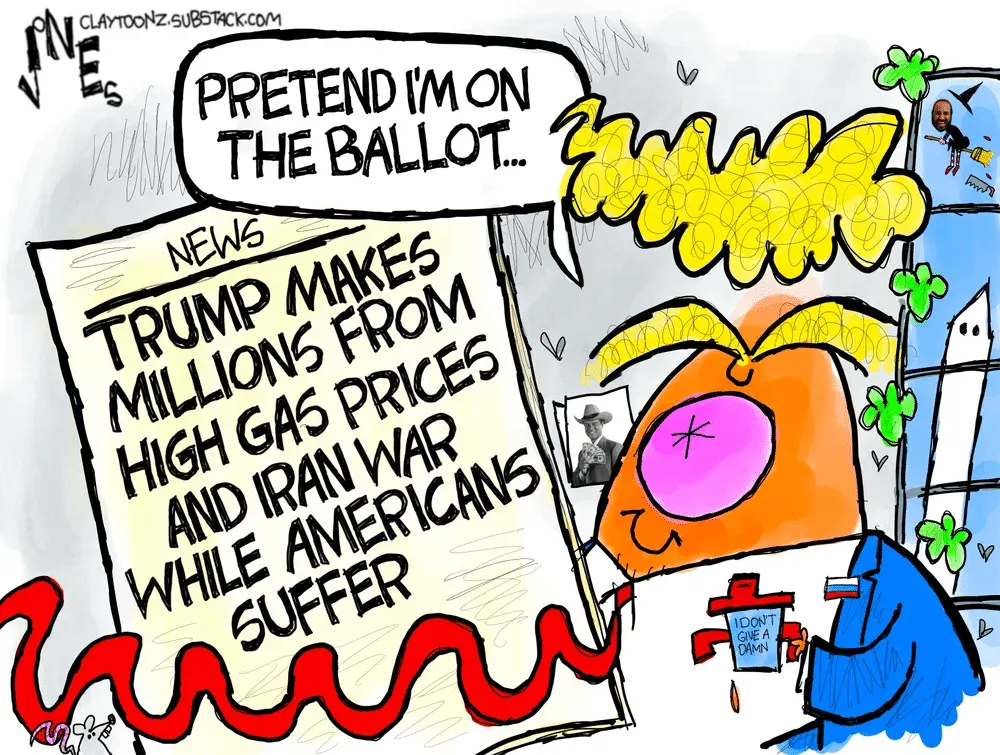
Already the U.S. has done much more damage than it can hope to back away from easily, but this could be bonanza time for Trump. How much further can he go into the arms of the Kremlin? I do not even dare really ask.