Member-only story
From Raw Documents to Structured Knowledge: The Practical Future of RAG
Traditional RAG helped developers build useful AI apps, but structured knowledge format may become the cleaner, faster, and more reliable layer for enterprise AI.


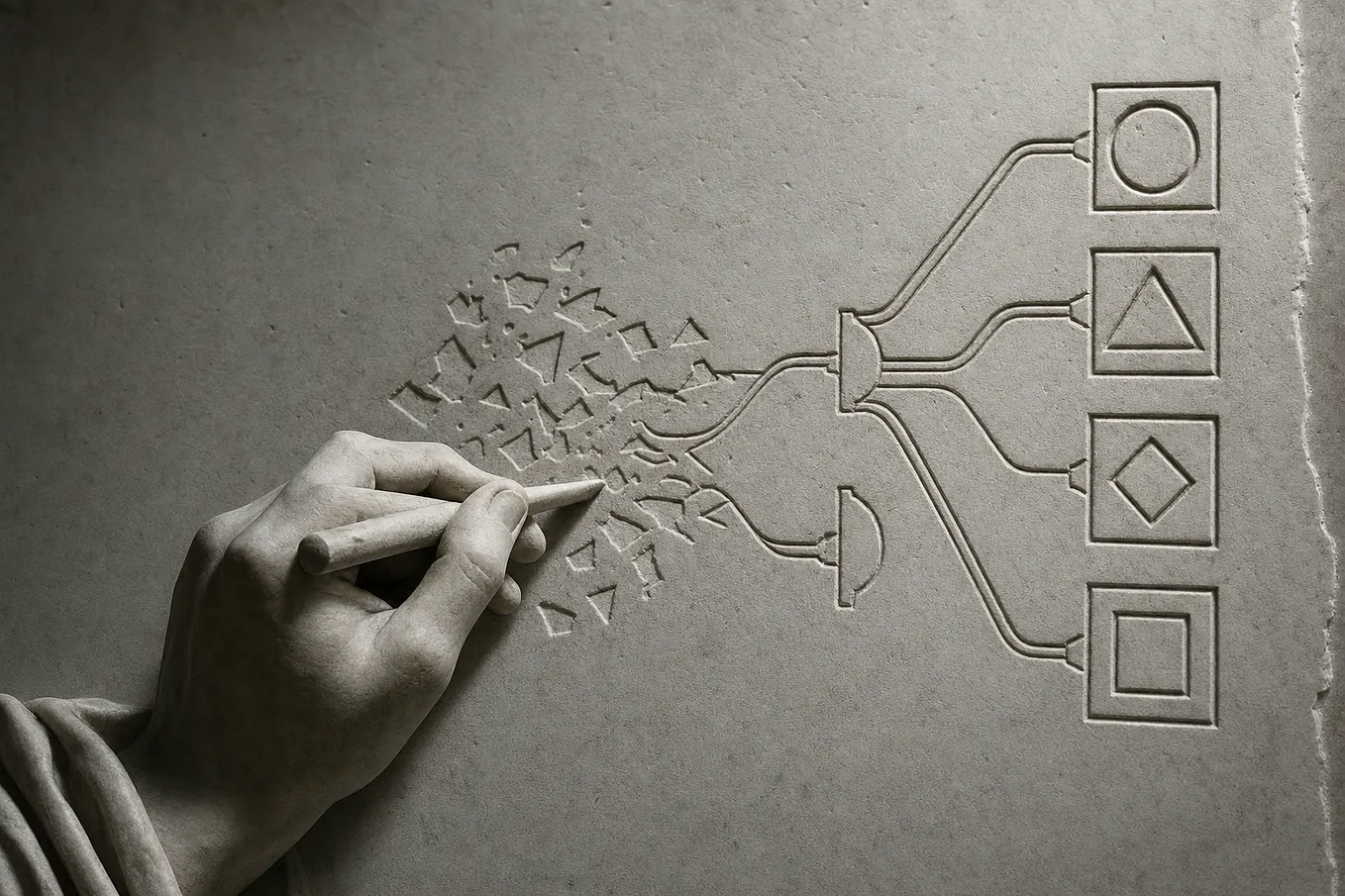
Retrieval-Augmented Generation, or RAG, became the norm for creating AI applications because it gave teams a practical way to connect large language models with sensitive data. It is a rather simple pattern to upload files, divide them into chunks, create embeddings, save those embeddings in a vector database, retrieve the closest chunks, and ask the LLM to respond according on that context.
That approach still works. It is not dead. But in real enterprise systems, the pressure points become visible very quickly. Documents grow. Policies overlap. Business rules hide inside long PDFs. Retrieval starts returning partial context. Costs increase. Latency increases. Debugging becomes harder because the actual reasoning path is often hidden inside embedding similarity scores.
The idea explored in this document is a feasible next layer: OKF, or Open Knowledge Files. Instead of considering raw texts as the main source every time a user asks a question, an AI…