Member-only story
Angular 22 Deferrable Views in Tutorial

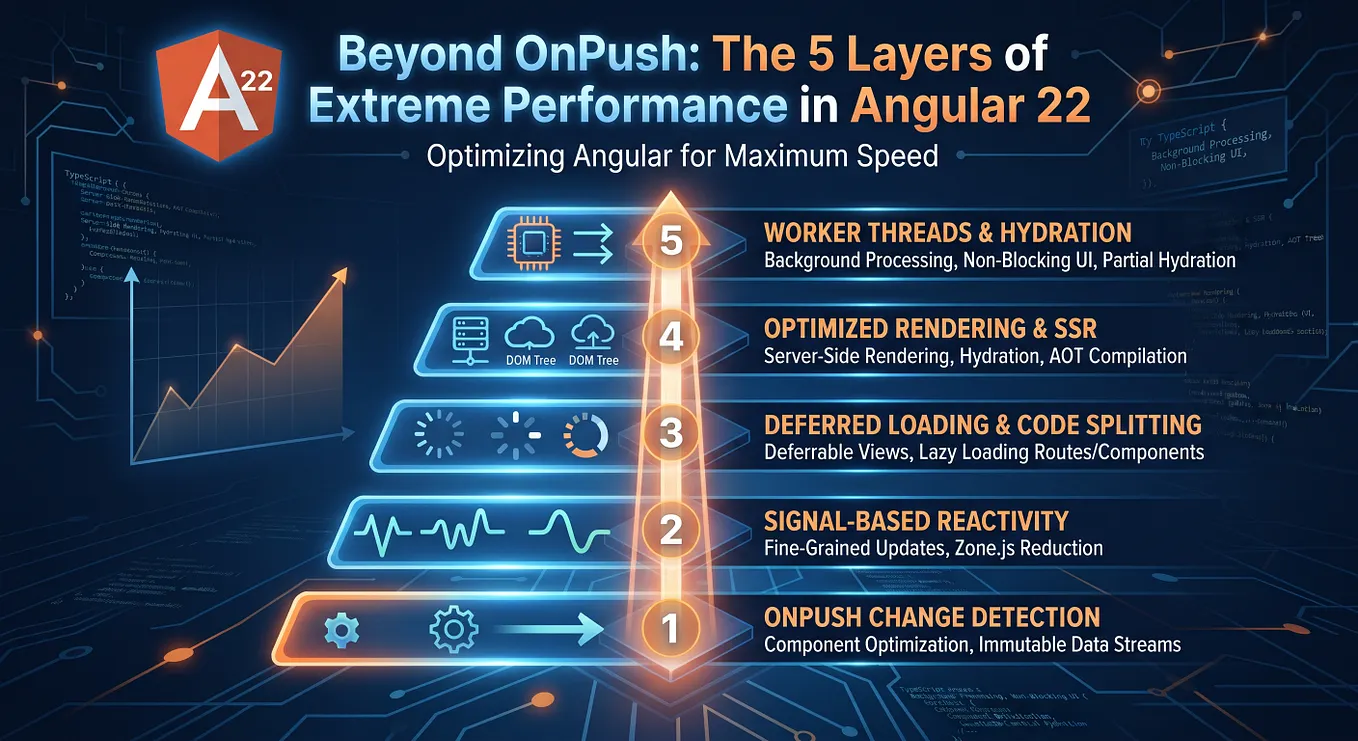
Among the array of optimization strategies, deferrable views, also known as @defer blocks, emerge as a powerful tool to streamline initial load times and enhance user experience.
Deferrable views offer developers the ability to defer the rendering of certain components until they are needed.
By utilizing @defer blocks strategically, developers can delay the loading of non-critical components, reducing the initial bundle size and enhancing the perceived speed of the application.
In this article, we delve into the benefits, syntax, and implementation of deferrable views in Angular applications.
Why use Deferrable Views?
Deferrable views, also referred to as @defer blocks, offer several compelling benefits:
🟡 Reduced Initial Bundle Size: By deferring the loading of certain dependencies, developers can minimize the initial bundle size of their Angular applications. This reduction in initial payload size contributes to faster load times and improved performance.
🟡🟡 Deferring heavy components until later can significantly improve metrics such as Largest Contentful Paint (LCP measures the time it takes for the largest content element within the viewport to become visible to the user) and Time to First Byte (TTFB…