Drunken Noodles Is the Hottest Queer Film at the New York Film Festival

In his third feature, writer/director Lucio Castro focuses on the exploration of queer sex, cruising culture, and the never-ending desire for more.

Among the lavish lineup of the 63rd edition of the New York Film Festival sits a hidden gem: Drunken Noodles, a low-budget queer drama written and directed by NYC-based Argentine filmmaker Lucio Castro. The film premiered earlier this year in Cannes’ parallel section ACID and is now having its U.S. premiere at Lincoln Center. Tickets for all three showings sold out within hours of going on sale (rumor has it, additional screenings may be added).
Drunken Noodles follows an art student named Adnan (played by the magnetic Laith Khalifeh), who comes to New York for a summer internship at an art gallery. He is young, gay, horny, and presumably single, so the city streets quickly lead him to cruising spots where desire lives and thrives. The film opens by giving us a portal into Adnan’s sexual encounters and history, told in three chapters sequenced in reverse chronological order.
Watching Drunken Noodles, I found myself triggered. As a queer single man in his late 30s living in New York City, I am all too familiar with transactional sex between gay men, hookup app addiction, and cruising culture. Seeing its portrayal in the film raised questions about desire and love in the queer community, where the two notions often feel more like opposites than parallels. John Updike once said, “A writer’s job is to, by way of fiction, somehow describe the way we live.” In Drunken Noodles, writer-director Lucio Castro powerfully depicts a restless, almost chaotic sexual energy that many queer people know intimately.
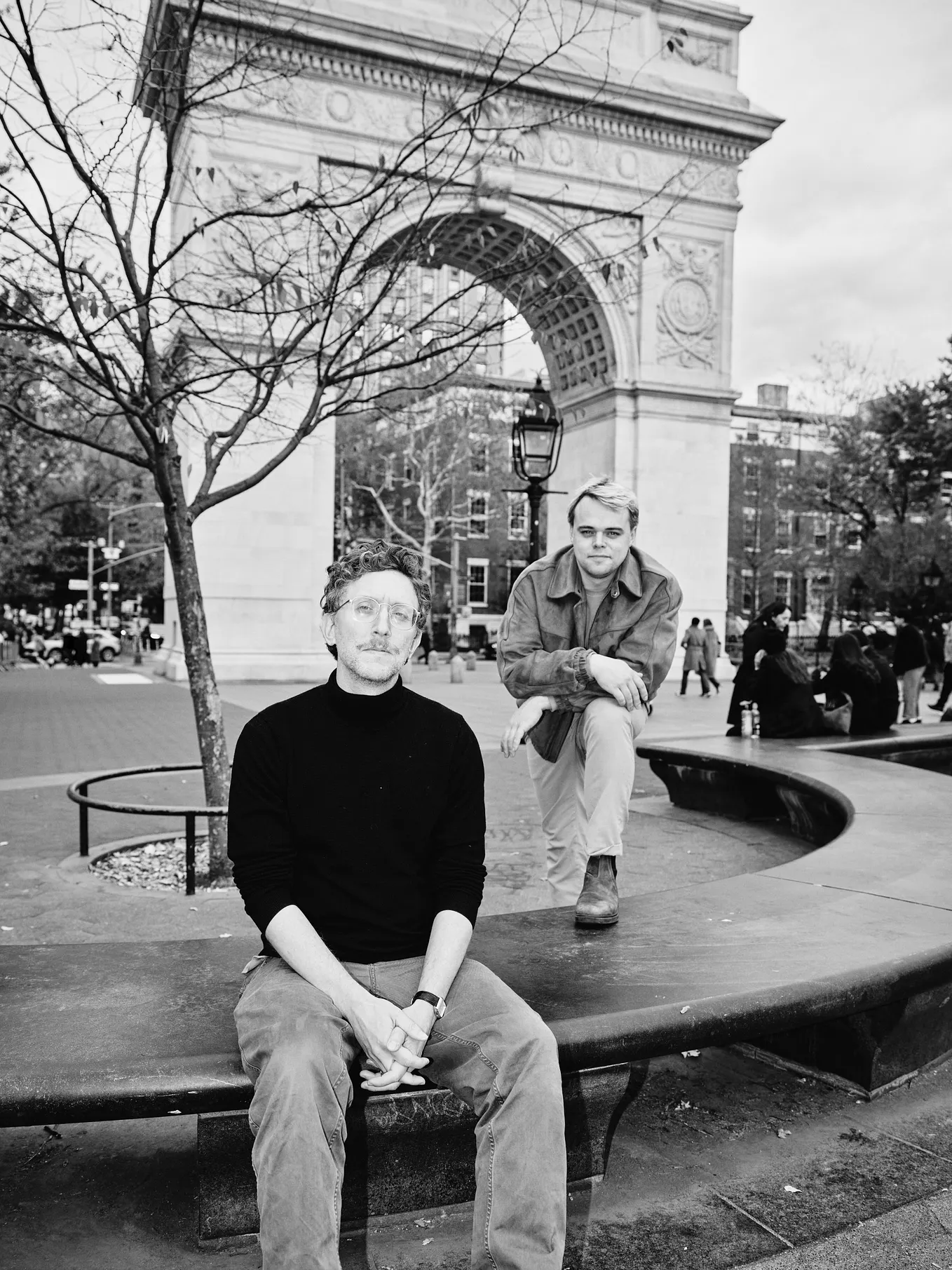
Right before the film’s U.S. premiere, I sat down with Lucio to talk about Drunken Noodles and the motivation behind it.
This conversation has been edited and condensed.

Would you take me back to the moment you first decided to write this film?
The movie began when I discovered Sal Salandra’s paintings at my friend’s gallery — embroidered sexual tableaux, flat and childlike yet unmistakably explicit. I learned he had only recently begun this work, after decades of traditional needlepoint, and by then he was in his late seventies. I went to meet him in Long Island with a camera, hoping for an intimate interview, but the exchange felt like pure performance — me asking questions just to ask them, and him performing in his responses. Instead of feeling closer to his work, I felt further away. That was in 2021, and I spent the next three years figuring out how to create something fictional — my own truth — through his paintings.
Get Sasha Korbut’s stories in your inbox
Join Medium for free to get updates from this writer.
Desire — its absence and its return — is central to Drunken Noodles and also runs through your earlier films, End of the Century and After This Death. What sparked you to return to this theme?
I am interested in the space before the physical sexual act — the space where desire lives. I was also thinking about how many queer friends of mine, particularly gay men, live under constant pressure shaped by desire — often structured around hookup and dating apps. The film doesn’t mention particular apps, but that dynamic is present: the endless cycle of craving, waiting, and responding. Cruising fascinates me because it predates these apps yet maps desire in a similar way — direct, simple, but emotionally complex. The film uses an old cruising park as a space that becomes more than sex; it transforms desire into something deeper — closeness, intimacy, and a fantasy that breaks their previous reality; they come out of casual sex changed, forever altered.
There’s a line in the film that refers to Salandra’s artwork: “There is no desire unless you’re looking at them next to somebody else. The shared viewing is the only fuel to that desire.”
It came from thinking about how we experience art. Looking at sexual art alone — in a gallery or museum — is one thing, but when someone else is in the room, the atmosphere shifts. Sharing the moment transforms the work and amplifies the desire around it.
Is that how you would like your film to be watched?
Definitely. Some scenes were designed for the shared cinema experience, including the sound design. A good example is the central sex scene — there’s complete silence, no soundtrack, not even room tone. You hear the person next to you breathing or shifting in their seat, which heightens your awareness of everyone around you.
I was struck by the lead actor, Laith Khalifeh. It felt like you wrote the role for him.
I was looking for fresh faces, people I didn’t already know, and during the casting process I found Laith on Backstage. With him, there was something I couldn’t fully decode — something in his presence, beyond his face. Even now, I don’t fully understand him, and that’s a gift for a director. That mystery is what holds an audience’s attention. Laith gives the audience that work to do.
Congratulations on premiering at the New York Film Festival. You mentioned earlier to me that it was a lifelong dream.
Yes, because that’s where I got my film education. For the past 25 years, I’ve been watching films at Walter Reade, seeing the movies that shaped me as a filmmaker. To have my work shown there now is surreal.
Drunken Noodles is part of a very rich lineup at the festival. What films by fellow filmmakers are you looking forward to watching?
Mare’s Nest by Ben Rivers — he’s a director I admire. Also Gavagai by Ulrich Köhler and Dry Leaf by Alexandre Koberidze. Those are high on my list.