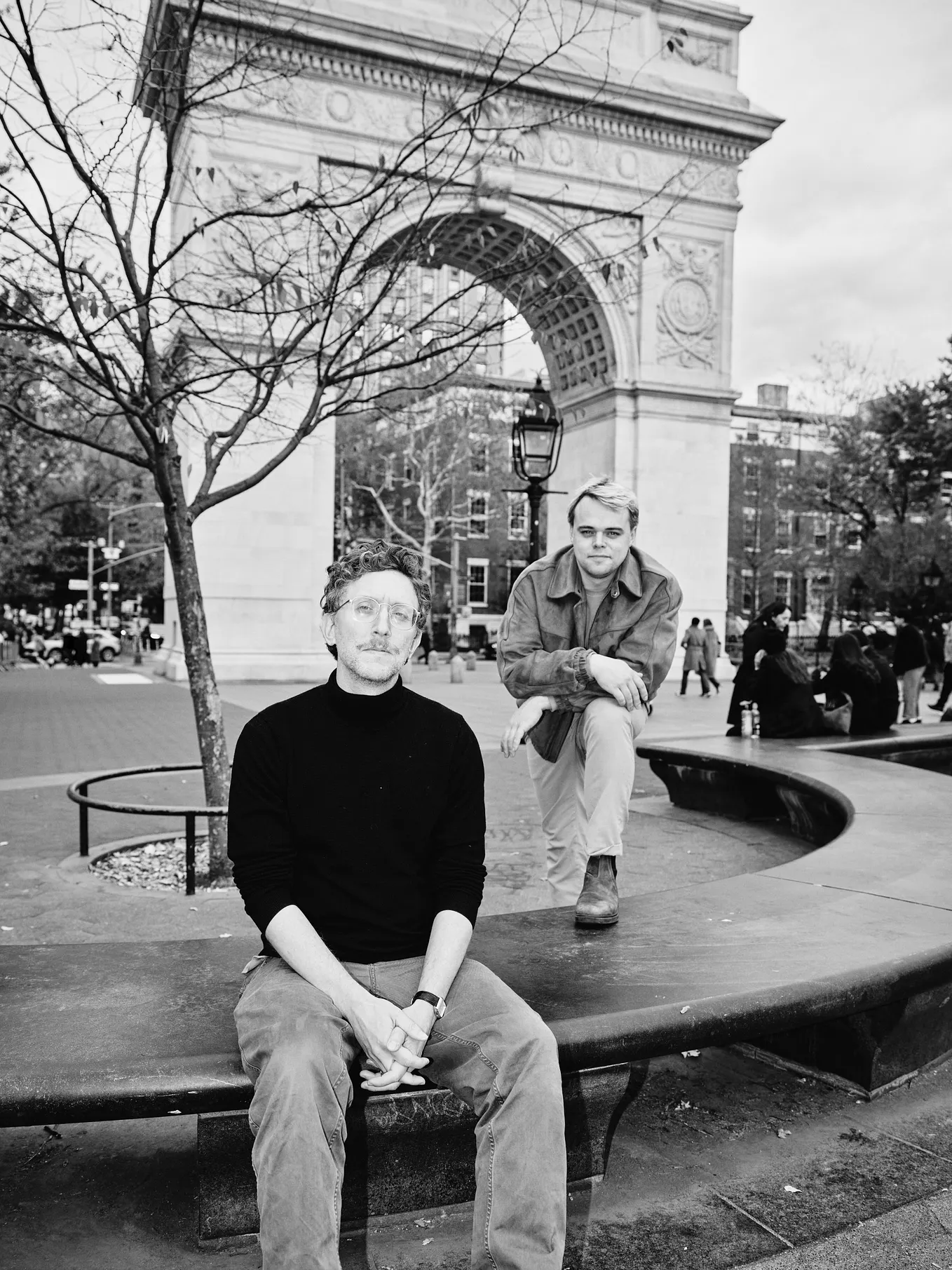
From Russia with Loveless. A conversation with Andrey Zvyagintsev.

Oscar nominated drama Loveless represents contemporary Russia. Or does it?
It has been six months since I watched Loveless for the first time however my memories remain so vivid that it seems like only yesterday. When I walked out of the theater after watching the film I felt an immense amount of pain in my heart caused by an undeniable sense of hopelessness for my homeland. I immediately recognized those emotions. Only one Russian filmmaker has provoked me to feel this way. His name is Andrey Zvyagintsev.

It all comes from my inner conflict with Andrey’s way of portraying our home country: in his films he shows Russia as bleak and hopeless yet in reality I see it slowly progressing and hopeful.
Loveless is the story of a young, nearly divorced couple with one thing left in common, the burden of their 12-year old son. They throw his custody at each other like a hot potato: “You take him! No, you take him!” Their child, overhearing the debate, decides to run away.
The plot is simple, the rest is complex.
Loveless gives a clear portrait of Zvyagintsev’s Russia (similar to the one seen in his previous films). Through the main character’s search for their child we see a severe Russian reality: a place of rampant poverty and government corruption, where religious values supersede law on one hand, indifference and hate are common cultural qualities on the other. Introducing the film back at the Telluride Film Festival last fall, Andrey Zvyagintsev nevertheless warned the audience that despite the specific location, “Loveless is universal, a modern story that could have been set anywhere.“
If you have not heard of Andrey Zvyagintsev perhaps it is time to learn a few things about him. Today, he is one of the most celebrated filmmakers in Russia, who has been proclaimed a descendant of Soviet treasure Andrey Tarkovsky (Stalker). Yet, there is a common critique that Zvyagintsev makes films about Russia specifically for foreign audiences. I have been following his work since his directorial debut, the breakthrough drama The Return for which he won best film at the Venice Film Festival in 2003. Since then he has directed a new film every three years. Each drama has had a critical success accompanied by prizes at major international film festivals, eventually earning him an Oscar nomination in 2014 for Leviathan. As with his previous films, Loveless received similar acclaim: the winner of the Jury Prize at the latest Cannes Film Festival it has also been nominated for a Golden Globe Award and now an Academy Award nod for best foreign film.
Needless to say, I’ve been dreaming to meet with Andrey for years. I finally had the opportunity to sit and talk to my countryman during his final screening of Loveless in Telluride.
Once Andrey finished his opening speech and the lights in the theater went off we sat in a dim theater hallway in front of each other. Andrey seemed fragile, his voice sounded quiet. He was almost whispering to me, as if he were about to share a secret of Loveless that I needed to know.

Andrey, after watching your film I believe I understand what the word ‘loveless’ means to you. Then how do you define ‘love’?
Well, you started with the most complicated question.
My understanding of love is close to the Ancient Greek definition. They recognized seven types of love and divided it into components. It speaks about the diversity of love, about different stages, an evolution. It’s important to highlight that love has numerous parts, because in our contemporary understanding of its definition we merge those stages of love into a one single state.
We also mistakenly define passion as a state of love. Because when passion is gone it seems to us that love is gone as well, but in reality it is just taking another form. Passion gets substituted with companionship, respect for each other, living together…
As a side note, but related to it, I believe Leo Tolstoy said in Anna Karenina that “people invented respect for one another in order to substitute a sense of love, the one that we are trying to achieve.” I think in the question of love I also resonate with Dostoevsky who said that “love is not a feeling, but an action.”
It’s an ongoing topic and I can endlessly give you references like this….
Have you ever been in love?
Get Sasha Korbut’s stories in your inbox
Join Medium for free to get updates from this writer.
I believe I was close to this feeling. I think being in love is a constant journey, not just a temporary state. It’s a search for love inside yourself, note not in someone’s else, but in yourself.
Coming back to your film: on one hand you are saying that Loveless is a universal film, yet on the other hand the film takes place in Russia and we observe specific aspects of our country. I just want to understand…
Well, indeed it takes place in Russia, but the issue I am talking about in my film is universal. I am 53 years old I have been living in Russia for all my life, hence it serves me as a foundation, as a reference for my films.
Andrey, you are one of the few Russian filmmakers that are known in the international arena and particularly in the United States. When you show your film abroad, especially in America, do you have a feeling that you represent Russia in a certain way?
No!
When I make a film I don’t ask myself what nationality is going to watch it. I have no goal to target this film to a certain audience, culture or nationality, because, when you think about those types of things, while you are making movie, it is no longer about art - it’s a marketing strategy.
Numerous times I have been asked that question in a different ways.
I’m personally asking it because being Russian and living in the U.S. I often get asked by my friends if Russia is the way it’s portrayed in the media. And I got similar questions after my American friends watched your film.
Well, I am sorry that you have to justify my art!
My question is more about the way you portray Russia, which seems to me in your films as bleak and dystopic. Is this the way our country is nowadays?
I film what I witness.
I basically tell my story, the story of the people that surround me and the story of a country that I am living in. How can I be responsible for that? The one responsible is the one who created this type of a political climate.
My task as a director is to awaken the audience, to show them the direction we are moving to, to show that if we continue like this, ultimately there is no happy end. And if that’s what it takes to awaken people I will continue making movies like Loveless.
And is this the only way to awaken them by showing hopelessness?
I don’t know another one.
I make films the way I feel. Once the film is done it lives its own life. I cannot be responsible for an audience’s feelings as I don’t know what they feel.
It reminds me of the saying, “I am responsible for what I said but I am not responsible for what you heard”. Does that seem right to you?
Yes. My responsibility ends when the movie credits start.
(Special THANKS to Jessica Uzzan, and eugene hernandez for making this interview happen. Telluride, 2017)