Funders Pivot Strategy. Why Didn’t We See It Coming?

Why impact reporting should make relational mechanisms visible before boards, funders, and partners need to make hard portfolio decisions.

Funders pivot strategy for many reasons. In the current funding environment, those pivots — past, present, and future — are on many colleagues’ minds. My social media and inbox are full of meetings, updates, and advocacy efforts aimed at influencing decisions, especially from stakeholders proximate to those decisions.
Yet one of the most common questions I hear from funders’ staff and implementing partners who are not proximate to those decision processes is:
“Why didn’t we see this earlier, so we could prepare for the pivot?”
Often the answer isn’t that they weren’t paying attention. It’s that the reporting system structuring their communication with funders was not designed to make the right things visible in a timely and decision-relevant way. A recent conversation convened by ACIJ Asociación Civil por la Igualdad y la Justicia and Comunidad Latinoamericana de Empoderamiento Juridico helps illustrate this proximity gap at work and why infrastructure to address it and build resilience is more critical than ever.
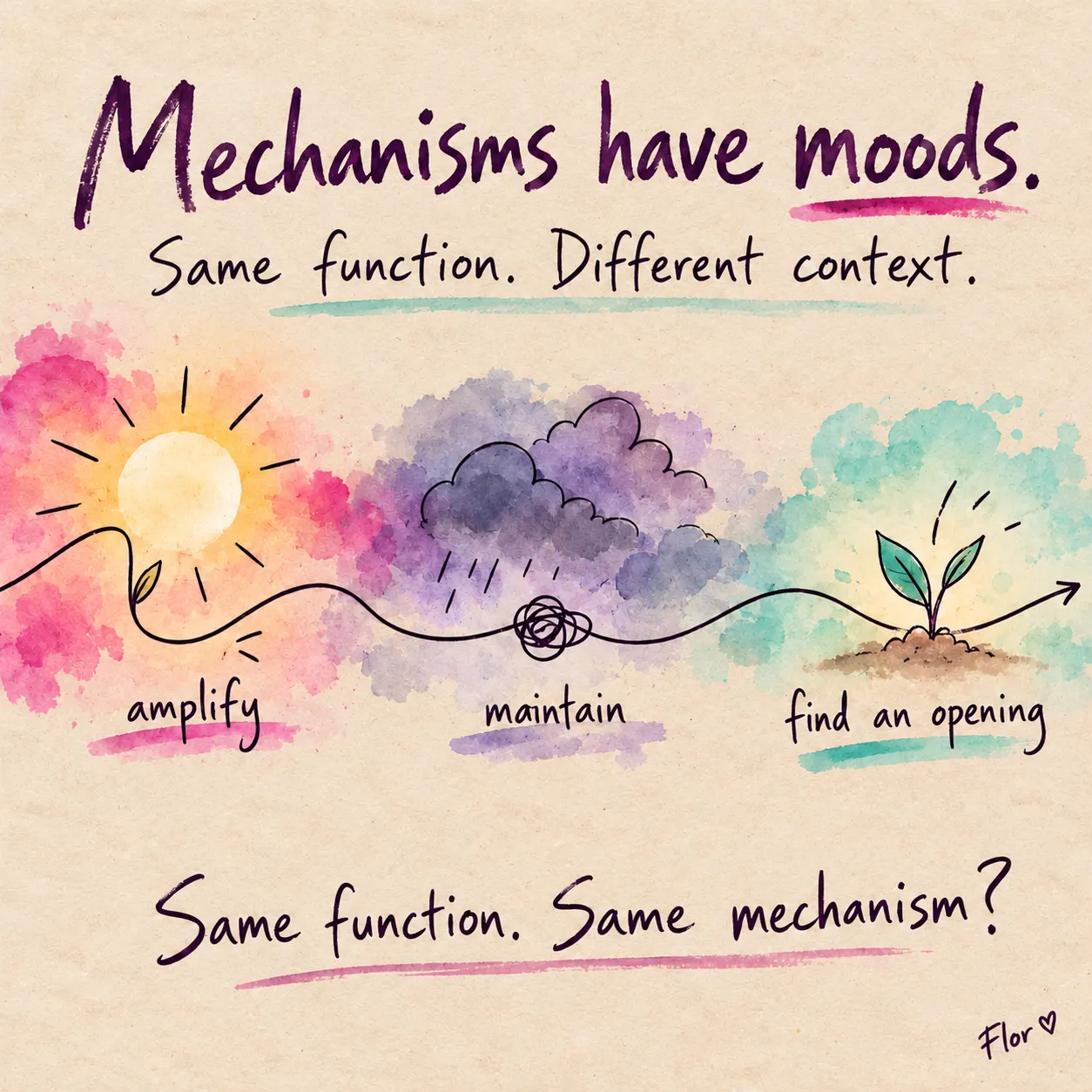
Across complex portfolios, different components rarely evolve at the same pace. Political conditions change. Partnerships strengthen or weaken. One pathway starts generating traction while another quietly stalls. Some relationships become more valuable; others become bottlenecks. Sometimes these issues become visible all at once. Yet many reporting systems continue to ask whether activities were delivered rather than whether the mechanisms that make change possible are still holding.
Get Florencia Guerzovich’s stories in your inbox
Join Medium for free to get updates from this writer.
By the time boards need to decide whether to continue, reallocate, or stop funding, they often have plenty of information — but not the information that matters for the decision. In parallel, partner organisations — and many funders’ programme staff — often realise they do not have the evidence needed to explain how their work contributes under the new strategic direction, not only to the current funder but to the next one as well.
That isn’t simply a measurement or trust problem. It’s not a communications problem, either.
It’s a governance problem that undermines the resilience of investments
(Anna Muoio and Rob Ricigliano make a related point here).
One of the most thoughtful responses I’ve received since the article came out came from Julia Coffman, who observed that in multi-component portfolios different pathways often end up in different situations at the same time: one still viable, one blocked, another waiting for political conditions to shift. The real question then becomes whether the mechanism through which each component was expected to create change still exists — and if not, how funders and partners can have an honest conversation about what the current moment actually allows.
That is exactly the kind of conversation reporting, monitoring, and evaluation more generally should support. It is also about investing in evidence that travels across programme teams, boards, strategy cycles, and ultimately, different funders.
If this resonates, my latest article for Philanthropy Impact explores these ideas in more depth:
When the Work Is Relational: Reporting That Supports Real Pivots
I argue for making relational mechanisms more visible — not because relationships are “normatively important,” but because they often determine whether portfolios can adapt intelligently, including as contexts evolve and funders change. The article offers practical tips, synthesized in the figure above.